
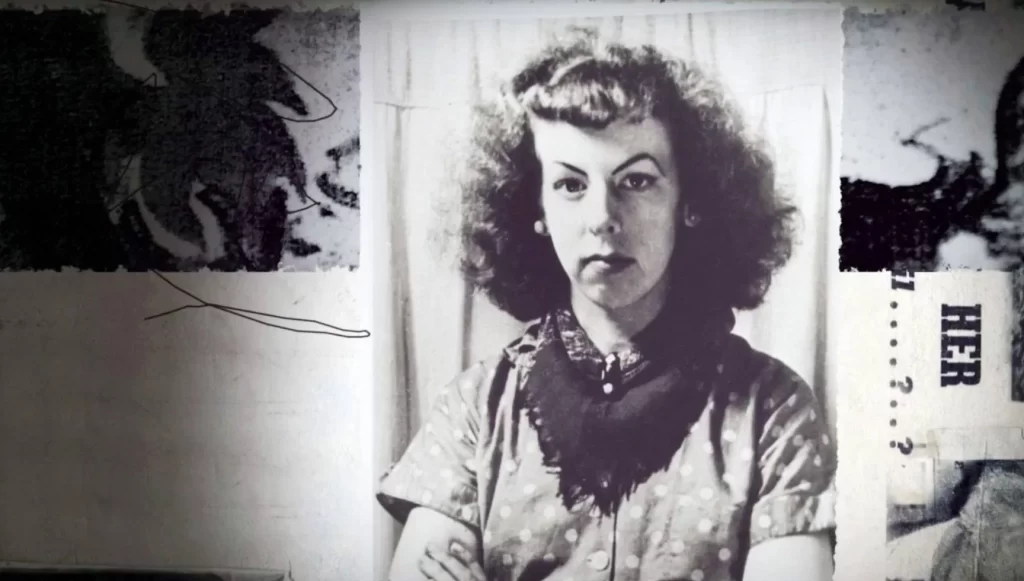
The First Satanic Witch
There are people who spend their lives carefully constructing an image that will please the society around them. They learn what to say, how to dress, what to believe and which parts of themselves should remain hidden.
Rosaleen Norton had no interest in any of that.

She called herself a witch. She worshipped the Greek god Pan. She filled her work with pagan gods, demons, serpents, hermaphroditic beings and bodies twisted together in ritual ecstasy. She practised trance magic, explored sex magic and spoke openly about realities that respectable Australia preferred to keep locked behind the bedroom door.
She wore black, drew her eyebrows into dramatic arches and wandered around Kings Cross with the confidence of someone who had already accepted that polite society would never understand her.
Naturally, the newspapers loved her.
They called her dangerous, depraved, obscene and Satanic. They accused her of conducting Black Masses and sacrificing animals. Police watched her, searched her home, confiscated her work and dragged her into court. Her paintings were removed from exhibitions. Her book was censored in Australia and burned by customs officials in the United States.
Yet behind the headlines and the theatrical photographs was a serious occult artist with a deeply developed personal philosophy. Rosaleen Norton was not playing the witch to sell records, T-shirts or tickets. She lived her beliefs at a time when doing so came with genuine consequences.
Long before occult imagery became fashionable, Rosaleen Norton was making conservative Australia deeply uncomfortable.
And she enjoyed every minute of it.
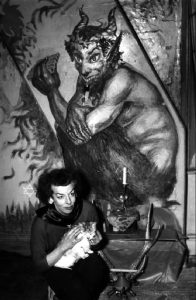
Born Beneath a Storm
Rosaleen Miriam Norton was born in Dunedin, New Zealand, on 2 October 1917. She was the third daughter of Albert Thomas Norton, a master mariner, and Beena Salek Norton. The family moved to Sydney in 1925, when Rosaleen was seven years old.
Norton later claimed that she had been born during a thunderstorm and arrived bearing several physical signs traditionally associated with witchcraft. These included pointed ears, unusual blue marks on her knee and a small strand of flesh near the base of her spine.
Whether these details were literal memories, family stories or pieces of personal mythology hardly matters. Norton understood the power of creating her own identity. She did not wait for society to tell her who she was. She built her own legend from childhood.
She described experiencing strange visions from a very young age. These included encounters with a woman in grey and a dragon-like being. She also experienced unusual trance states in which her sense of physical size and location appeared to shift. Norton called these episodes “Big Things and Little Things.”
Her childhood appears to have been lonely and difficult. She disliked the expectations of middle-class family life and reportedly spent several years sleeping in a tent in the family garden. Her companions included cats, lizards, tortoises, toads, dogs, a goat and a pet spider named Horatius.
Already, the pattern of her adult life was taking shape. Norton preferred animals to most people, the night to the daylight and imagination to social obedience.
At 14, she was expelled from the Church of England Girls’ School in Chatswood. Her offence was producing drawings of vampires, ghouls and werewolves that teachers feared would corrupt the other students.
It is difficult to imagine a more suitable beginning for the future Witch of Kings Cross.
Art, Horror and the Sydney Underground
After leaving school, Norton studied for two years at East Sydney Technical College. There she worked under sculptor Rayner Hoff, who encouraged her interest in pagan subjects and recognised that her strange imagination had genuine artistic value.
Norton supported herself through a series of poorly paid jobs. She worked as a kitchen maid, waitress, postal messenger, pavement artist and artists’ model. She occasionally modelled for Norman Lindsay, whose own work had repeatedly provoked Australia’s moral guardians.
She also found employment at Smith’s Weekly, first contributing horror stories and later working as a cadet journalist and illustrator. Her earliest published fiction appeared while she was still a teenager. Even at that age, she was writing about strange beings, supernatural encounters and dark psychological territory.
Her illustrations eventually proved too unsettling for the newspaper. Respectable employers were never going to remain comfortable with Rosaleen Norton for long.
In 1940 she married Beresford Lionel Conroy, a spray painter. The marriage ended in divorce in 1951. Norton had already left her family home as a teenager and established herself in inner Sydney, where she could live with far more freedom than the North Shore could offer.
She contributed illustrations to the avant-garde magazine Pertinent, which published several of her fantasy works in 1941. Through these artistic circles, she encountered writers, painters, poets and other people living beyond the narrow limits of conventional Australian society.
Eventually, Norton settled in Kings Cross.
Today, Kings Cross has been cleaned, regulated and stripped of much of its old character. In Norton’s time it was Sydney’s great zone of disreputable possibility. Artists, sex workers, sailors, musicians, criminals, writers, gamblers and wealthy thrill-seekers shared the same streets.
For someone such as Norton, it offered something far more valuable than respectability. It gave her room to exist.
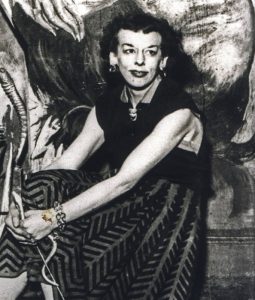 Gavin Greenlees and a Magical Partnership
During the late 1940s Norton met the young poet Gavin Greenlees. He became her lover, creative collaborator and magical partner.
Greenlees was considerably younger than Norton and came from a more conventional background, but he shared her attraction to surrealism, poetry and occult experimentation. Together they explored trance states, ritual magic and various forms of esoteric practice.
Their relationship was never easily defined. They were lovers, friends, artists and fellow travellers. At times they lived in poverty, surviving through small sales, temporary work and assistance from supporters. Their physical circumstances were often miserable, but their imaginative lives were anything but ordinary.
Norton and Greenlees explored ideas drawn from Western occultism, psychology, Eastern religion and ceremonial magic. They studied Aleister Crowley, Carl Jung, the Qabalah, Tantra and Kundalini. They borrowed from these traditions freely, combining them with Norton’s own experiences and personal mythology.
Norton did not simply copy Crowley or follow an established magical order. Her system was personal, improvised and centred upon direct experience. She used self-hypnosis and trance to alter her consciousness, then attempted to record what she encountered through drawing.
In correspondence written in 1949, she explained that her aim was to induce an abnormal state of consciousness and transfer the results onto paper. She believed that the beings she encountered during these states possessed an existence independent of her imagination.
To Norton, these figures were not fictional characters invented for dramatic effect. They were inhabitants of another level of existence.
Her art became a record of those meetings.
The Art of Trance
Rosaleen Norton’s work remains difficult to classify.
There are traces of surrealism, symbolism, British vorticism and the influence of Norman Lindsay. Comparisons have also been made with the English occult artist Austin Osman Spare, who used automatic drawing and altered states of consciousness to explore the hidden structures of the mind.
Norton’s figures seem to emerge from a world in constant motion. Bodies twist into roots, horns, wings, claws and sexual organs. Faces appear within smoke and shadow. Human, animal and divine forms merge together until the distinction between them disappears.
Her compositions often feel crowded, yet the figures remain precise. They are rarely simple monsters. Many possess a cold intelligence, staring directly at the viewer as though we have interrupted something.
Norton’s work could be erotic, but it was rarely soft or inviting. Sex appeared as power, transformation, conflict, ritual and release. Male and female characteristics frequently coexisted within the same figure. Her entities resisted neat categories because Norton herself resisted them.
These images were never going to sit comfortably in post-war Australia.
The country remained overwhelmingly Christian and culturally conservative. Censorship laws were strict, sexuality was heavily policed and women were expected to occupy clearly defined roles. Norton ignored all of it.
She dressed in men’s clothing when she felt like it. She smoked publicly. She lived with lovers outside marriage. She practised magic. She made art that connected sexuality with paganism and personal liberation.
The Melbourne Exhibition
In 1949, Norton and Greenlees hitchhiked from Sydney to Melbourne, where Norton arranged her first major solo exhibition at the Rowden White Library at the University of Melbourne.
The exhibition contained 46 works. Among them were drawings titled Lucifer, Witches’ Sabbath, Triumph and Individuation.
Within days, members of the Victorian Police Vice Squad entered the exhibition and confiscated several pieces. Norton was charged under the Police Offences Act for displaying obscene material.
The case could easily have destroyed an unknown artist. Norton chose to fight it.
In court, she carefully explained the symbolism within each picture. What police had interpreted as pornography, she described as representations of psychological, magical and spiritual ideas. Her defence also pointed out that similar or more explicit material appeared in books already permitted by Australian censors.
The magistrate dismissed the charges and ordered police to pay Norton four guineas in costs. Contemporary newspapers reported that the court had found the seized pictures were not obscene.
It was a remarkable victory.
A young female artist had faced the Vice Squad and forced a court to consider her work as something more than indecent material. Norton demonstrated that the authorities judging her art had little understanding of symbolism, mythology or the occult traditions they claimed to find dangerous.
The victory did not end the persecution. It gave the press a story and provided Norton with the public identity that would follow her for the rest of her life.
The witch had arrived.
The Great God Pan
At the centre of Norton’s occult world stood Pan.
In ancient Greek religion, Pan was associated with wild landscapes, shepherds, animals, music, sexuality and the untamed forces of nature. He was commonly represented with the legs, horns and ears of a goat.
For Norton, Pan embodied instinct without apology. He represented natural energy, sexual freedom, mystery and resistance to the artificial restraints imposed by civilisation.
She referred to herself as the High Priestess at the Altar of Pan and created a private shrine to him. She performed rituals alone and with members of her magical circle. Pan appeared repeatedly in her paintings and drawings.
Norton explained that Pan’s pipes represented magic and mystery, while his horns and hooves stood for natural energy and freedom. Her devotion was closely connected with her love of animals and her rejection of the idea that human beings stood apart from nature.
Christian culture had spent centuries turning the physical features of older pagan gods into the image of its Devil. Goat legs, horns and sexual vitality became signs of corruption. Because Norton openly worshipped Pan, journalists had little difficulty presenting her as a servant of Satan.
The distinction meant nothing to a tabloid editor looking for a headline.
Norton repeatedly denied practising animal sacrifice. The accusation particularly angered her because of her affection for animals. She was also falsely accused of conducting Black Masses, a claim repeated so often that it hardened into part of her public legend.
Rosaleen Norton was not a Satanist in the LaVeyan tradition. Her worldview was pantheistic, polytheistic and magical. She believed in gods and independent spiritual entities. Her rituals attempted to contact and work with those forces.
Her outlook does, however, contain features that anyone familiar with the Left-Hand Path will recognise: personal authority, antinomianism, the deliberate exploration of forbidden experience and a refusal to accept Christian morality as the natural law of the universe.
Nevill Drury, who studied Norton’s magical system extensively, argued that she is best understood as a Left-Hand Path magician rather than simply as a modern witch. He placed her work beside the trance practices of Austin Osman Spare and within the wider revival of Western ceremonial magic.
That description feels far more accurate than the cartoon Devil worshipper created by the newspapers.
The Art of Rosaleen Norton
In 1952, publisher Walter Glover released The Art of Rosaleen Norton.
The book combined Norton’s illustrations with poetry by Gavin Greenlees. It presented her art as part of a coherent magical and philosophical system rather than a collection of shocking pictures.
The volume included 31 reproductions of Norton’s work. Images such as The Adversary, Fohat, Black Magic and Rites of Baron Samedi combined occult symbolism, erotic imagery and grotesque forms. The book was beautifully produced, but its timing could hardly have been more dangerous.
Authorities quickly moved against it.
Glover and the printing company Tonecraft were charged with producing an obscene publication. Glover was fined £5 and Tonecraft £1. Certain illustrations had to be blacked out before copies could be distributed. The book was later placed under customs restrictions, and copies sent to New York were confiscated and burned by United States Customs.
Imagine that for a moment.
A book of Australian art was considered so dangerous that government officials physically destroyed copies rather than allow adults to look at it.
The authorities focused particularly on images such as Fohat, which included a goat-like figure, serpentine symbolism and an unmistakably phallic element. Norton explained the goat as a symbol of creativity and energy, while the serpent represented elemental force and eternity. The courts saw obscenity. Norton saw an occult cosmology.
The prosecution brought attention to the book, but it devastated Walter Glover financially. He was declared bankrupt, leaving Norton and Greenlees without the limited support he had provided.
Once again, the people claiming to protect society from corruption caused far more real harm than the pictures ever could.
Creating the Witch of Kings Cross
The Australian press gradually transformed Rosaleen Norton into a public monster.
Journalists described her appearance with extraordinary cruelty. They obsessed over her eyebrows, teeth, clothing and facial features. Photographers encouraged her to pose with skulls, cats, ritual objects and pointed hats.
Norton understood what was happening. Rather than begging to be accepted, she began manipulating the image for her own amusement and advantage.
She gave the newspapers their witch.
This decision protected her in one sense. By exaggerating the character, Norton could maintain some control over the circus surrounding her. The public persona created a barrier between the press and the more private details of her beliefs.
It also trapped her.
Once “the Witch of Kings Cross” became established, everything Norton did was interpreted through that label. Serious discussion of her art disappeared beneath stories of orgies, demons, rituals and sexual scandal.
Even sympathetic visitors arrived expecting to meet a supernatural creature.
Photographer Rennie Ellis visited Norton in her small Kings Cross room around 1970. He later recalled its smell as something resembling an ancient book. After finding her friendly, he reportedly told her that she seemed quite human despite everything he had heard.
Norton responded that she might be many things, but she was certainly not human.
It was a perfect answer.
She understood that the legend had become larger than the woman. She chose to feed it rather than apologise for it.
 Sex Magic and Private Ritual
Norton believed sexual energy could be used within ritual to alter consciousness, break psychological restrictions and create magical change.
She and Greenlees explored sex magic through a mixture of ceremonial practice, Crowleyan ideas and their own experimentation. Their rites could involve multiple participants and forms of sexuality considered criminal or obscene at the time.
Norton was bisexual and lived outside the accepted sexual boundaries of 1950s Australia. The police and press treated her private life as public property, particularly when stolen photographs of ritual scenes entered circulation.
Some of the photographs appear to have depicted staged or simulated ceremonies. That distinction did little to reduce the scandal. In 1956, Norton faced charges relating to alleged “unnatural” sexual acts after police obtained images connected with her group.
It is worth remembering the climate in which this occurred.
Adults could be prosecuted, humiliated and professionally destroyed for private consensual behaviour. Police devoted resources to watching artists and occultists while newspapers printed lurid rumours as fact.
Norton became an easy target because she refused to pretend that sexuality belonged under the permanent control of church, state and police.
Sir Eugene Goossens
The most damaging scandal associated with Norton involved Sir Eugene Goossens, one of the most important figures in Australian classical music.
Goossens was an internationally recognised conductor and composer. He arrived in Australia in 1947 to lead the Sydney Symphony Orchestra and direct the New South Wales State Conservatorium. He helped introduce Australian audiences to major modern composers and played a significant role in the campaign to build what would become the Sydney Opera House. He was knighted in 1955.
After obtaining a copy of The Art of Rosaleen Norton, Goossens contacted Norton and Greenlees. He was already familiar with occultism and the work of Aleister Crowley. Far from being an innocent man corrupted by a wicked woman, he actively sought them out and became involved in their magical and personal lives. (ABC News)
Goossens appears to have possessed more experience with ceremonial magic than Norton and Greenlees initially realised. Surviving letters indicate that he discussed advanced practices with them and signed some correspondence using the magical name “Djinn.”
Their relationship became known to police and journalists. Private letters were discovered, and Goossens was placed under increasing scrutiny.
In March 1956, he returned to Sydney after an overseas trip. Customs officials searched his luggage and found books, photographs, films and ritual objects considered prohibited under Australian law.
Goossens was charged with importing obscene material. He pleaded guilty, was fined £100, resigned from his positions and returned to Britain. His Australian career ended in disgrace.
The press presented Norton as the corrupting force behind his downfall. It was a convenient story. A respected male authority had been seduced and destroyed by an evil witch.
The evidence suggests something far less dramatic. Goossens was an adult with a long-standing interest in occultism. He made his own choices, pursued Norton himself and knowingly participated in practices that could damage his career if exposed.
Norton became the villain because society found it easier to blame an unconventional woman than admit that one of its most respected men possessed a private life.
A Manufactured Satanic Panic
Long before the phrase “Satanic Panic” became widely associated with the hysteria of the 1980s, Australia had already rehearsed the basic routine around Rosaleen Norton.
Start with an outsider.
Add unconventional sexuality, strange art and unfamiliar religious symbols.
Encourage the public to confuse pagan gods with Satan.
Print unverified accusations involving rituals, orgies and animal sacrifice.
Then allow police, churches and newspapers to present themselves as the guardians of public morality.
Norton made the process easy because she would not behave like a frightened victim. She laughed at journalists, posed for photographs and openly described herself as a witch.
Her humour was interpreted as evidence of evil. Her refusal to apologise became proof that she was dangerous.
The panic surrounding her also relied heavily upon class and gender. Wealthy men could privately purchase erotic material, visit sex workers and experiment with occultism while maintaining respectable public identities. Norton had no such protection.
She was poor, female, bisexual, openly pagan and visibly unconventional.
Her real crime was refusing to hide.
Gavin Greenlees and Tragedy
The life Norton shared with Gavin Greenlees eventually became far more painful.
Greenlees suffered serious mental illness and was admitted to Callan Park Hospital during the 1950s. He was later diagnosed with schizophrenia. Norton continued to visit and support him during periods of treatment and temporary release.
Their relationship remained complicated and, at times, dangerous. During one severe episode, Greenlees reportedly attacked Norton with a knife. He spent much of his later life in psychiatric care.
It would be easy to turn this part of their story into another gothic tale, but mental illness does not need supernatural decoration. Norton’s loyalty to Greenlees continued long after their bohemian partnership had collapsed.
Behind the photographs and tabloid characters were two vulnerable people living with poverty, instability and illness.
The witch persona could not protect Norton from any of that.
The Later Years
By the 1970s, Norton had largely withdrawn from public life.
She lived in a basement flat in Roslyn Gardens, close to her sister Cecily Boothman. Her health deteriorated, but she continued to paint, perform rituals and spend time with animals.
The Australia around her had begun to change. The sexual revolution, counterculture and growing interest in Eastern religion and occultism made many of Norton’s former scandals appear far less shocking.
Younger people could buy books on witchcraft, Crowley, Tantra and ceremonial magic with relative ease. Artists could use sexual and religious imagery without automatically facing police raids.
Norton had endured the punishment before the culture caught up.
She was diagnosed with colon cancer at 61 and died at the Sacred Heart Hospice in Darlinghurst on 5 December 1979. She was 62 years old.
There was no grand state recognition, no major retrospective and no public apology for the years of harassment.
For a long time, she remained a curious footnote in histories of Sydney. The witch who ruined a conductor. The strange woman from Kings Cross. The artist with the dirty pictures.
Thankfully, that view has begun to change.
The Artist Behind the Witch
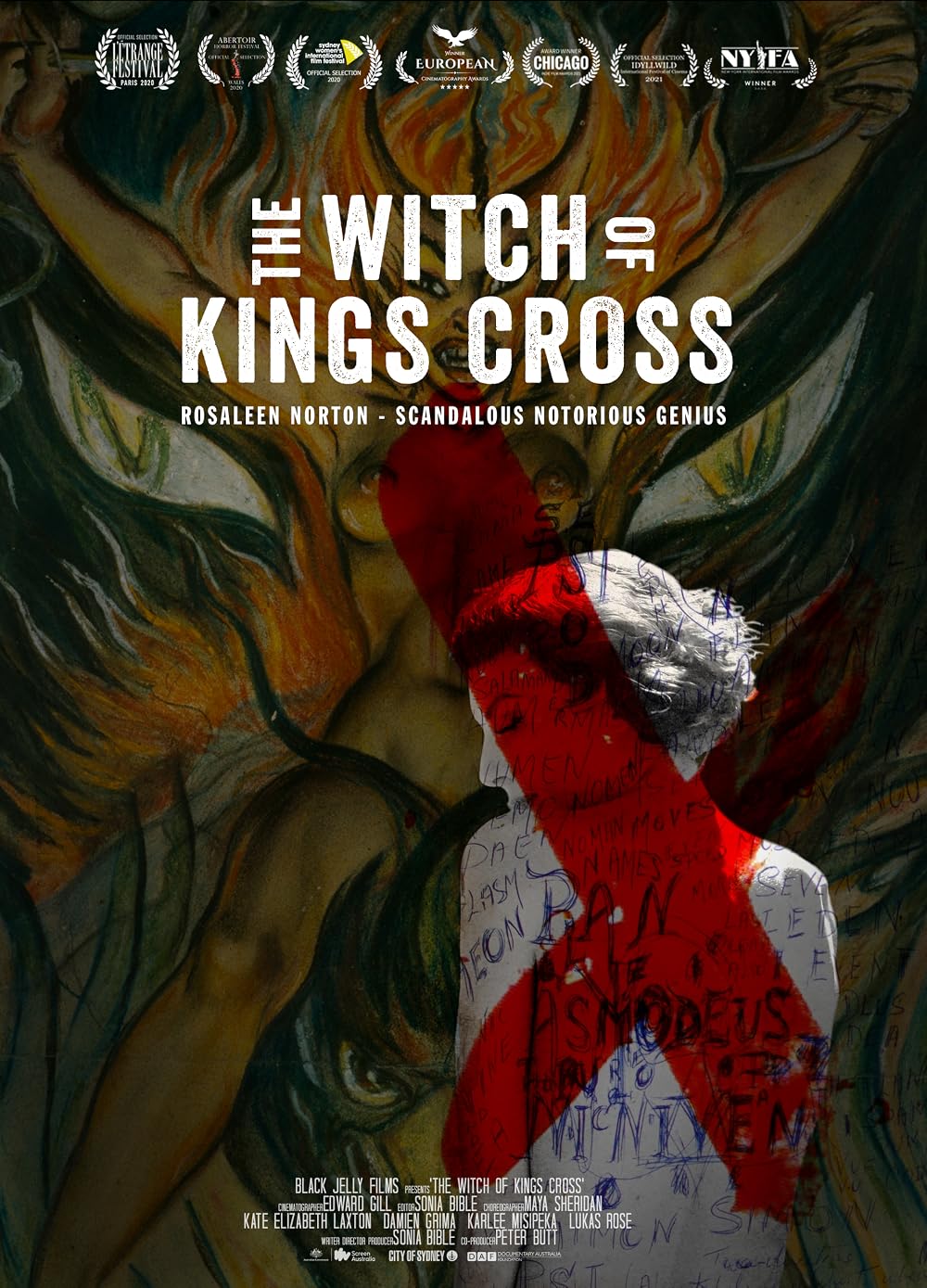
Norton’s work has received renewed attention through exhibitions, biographies, academic research and Sonia Bible’s documentary The Witch of Kings Cross.
Her paintings are now being examined as part of Australian art history and the wider history of Western esotericism. Scholars have considered her relationship with visionary art, paganism, sex magic, feminism, censorship and the Left-Hand Path.
Norton herself did not identify as a feminist. She had little interest in joining movements or accepting political labels. Even so, her life remains important to the history of women who resisted the roles assigned to them.
She rejected the expected life of wife, mother and obedient citizen. Rare footage captures her discussing the prospect of conventional domestic life and declaring that it would drive her mad.
There is something refreshingly direct about that.
Norton did not argue that everyone should live as she did. She demanded the right to determine her own life, beliefs, relationships and artistic expression.
That remains the strongest part of her legacy.
What Rosaleen Norton Was Really Fighting
Rosaleen Norton’s story is often presented as a battle between a witch and conservative Australia.
The reality runs deeper.
She was fighting against the idea that morality belongs to the loudest church, the most powerful newspaper or the police officer holding the search warrant.
She challenged the assumption that art must remain pleasant, sexuality must remain hidden and women must remain agreeable.
Her occult beliefs may appear strange to many people, including those of us who approach Satanism through reason, symbolism and the philosophy of Anton LaVey. Norton believed in independent spiritual beings and magical realities that LaVeyan Satanism would regard with considerable scepticism.
Still, I find far more to respect in Norton’s honest commitment to her own path than in the frightened authorities who tried to silence her.
She lived according to her nature.
She paid dearly for it.
The Witch Remains
Rosaleen Norton was flawed, theatrical, contradictory and entirely her own creation.
She could play with the press while resenting its intrusions. She rejected conventional society but occasionally relied upon the notoriety it gave her. She treated her magical visions with complete seriousness while maintaining a sharp and mischievous sense of humour.
That complexity is precisely what makes her worth remembering.
The Witch of Kings Cross was never simply a newspaper invention. Rosaleen Norton really did practise magic. She really did worship Pan. She deliberately explored altered consciousness, sexuality and the hidden regions of her own mind.
The lies began when the press turned those facts into stories of animal sacrifice, Black Masses and diabolical corruption.
Norton frightened Australia because she represented something the culture could not control. She was a woman who had rejected Christian morality without collapsing into shame. She refused the safe domestic life prepared for her and built an identity out of everything society had told her to fear.
The police took her pictures.
The courts censored her book.
The newspapers mocked her face.
Yet decades later, Rosaleen Norton is still here. Her art survives. Her ideas are being studied. Her legend continues to grow.
Most of the moral guardians who persecuted her have been forgotten.
I suspect the Witch of Kings Cross would have found that extremely amusing.
SOURCES: