
All Posts By

IOANNIS

Arcana – An Exhibition Of Tarot, Mythology & Symbolism

By Music

Arcana is a group exhibition that explores the timeless and mysterious symbolism of the tarot through a collection of newly created artworks. Each participating artist will reimagine one or more of the 22 major arcana cards, responding to and transforming traditional archetypes.

The works will span a range of mediums and embrace a spectrum of styles from whimsical and quirky to darkly atmospheric and gothic. Together, they will form a cohesive yet diverse narrative, inviting audiences to step into a gallery that feels like walking through a living tarot deck.

Featuring original works by Mr Dimples, Dale Harris, Chris Duffy – Ha Ho Art, Cheryl Bailey, Peta Tron, Margaret Jolley, Rowany Mills, Ella Bailey, Ivan Sun, Rosalee Clark, Rhayven Jane, Leah Hartley, Sara McQueenie, Electric Siren, Sarah Harris, JoBird Art, Kara Vena Cava, Amy Woodward, Kaz, Amy Bailey, Emily Fisher, Kate Smith, Bridie O’Toole, Narsha Kang and more. Curated by Dale Harris

Tarot imagery has fascinated artists and storytellers for centuries.
Its archetypes — the Fool’s journey, the Wheel of Fortune, the Tower’s collapse, the Star’s hope — are deeply rooted in European mythology and folklore, yet their symbolism remains universal and timeless.

Arcana will draw on this rich visual and cultural history while pushing beyond tradition. By blending mythology, mysticism, and creative expression, the exhibition transforms tarot into a living, breathing art form – one that invites audiences to find their own reflections within its symbols.

Exhibition Opening: Saturday 13th June 2026 at 2pm

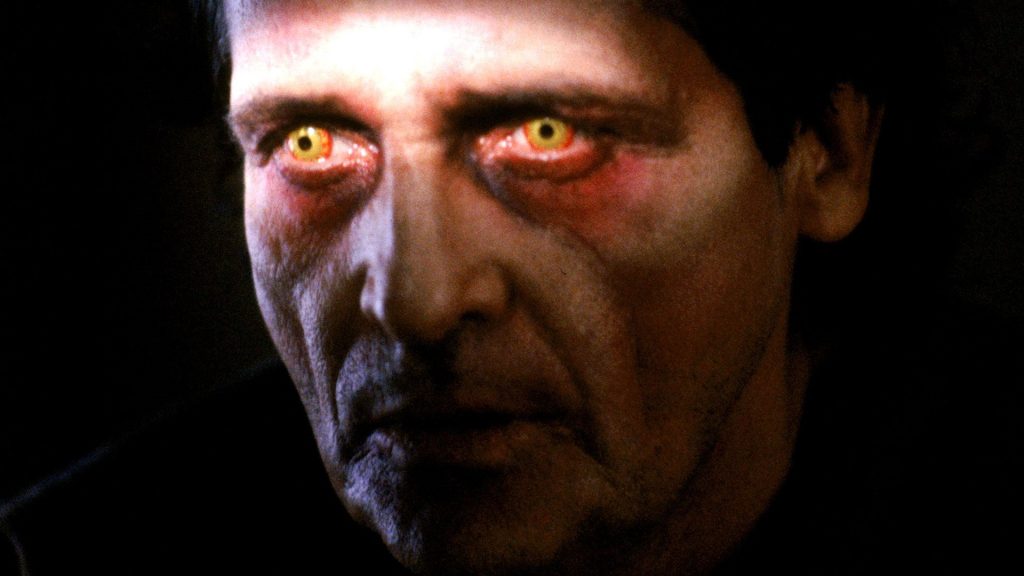
The Exorcist III: Legion

By Cinema

The Sequel That Crawled Out Of The Shadow Of A Masterpiece

I have a strange relationship with The Exorcist III.

For years, it sat in that awkward little corner of horror history where certain films get dumped because nobody quite knows what to do with them. It wasn’t the original, obviously. Nothing is. And it sure as hell wasn’t Exorcist II: The Heretic, that bizarre fever accident of a film that still feels like somebody tried to make a religious sci-fi epic after eating bad seafood. The Exorcist III was the other one. The George C. Scott one. The hospital corridor one. The one horror fans whispered about like it was some half-buried secret.

But the more I return to it, the more I think it may be one of the most genuinely haunted horror sequels ever made.

Not haunted in the cheap sense. Not in the creaky-door, loud-noise, ghost-in-the-corner sense. Haunted by grief. Haunted by faith. Haunted by the original film. Haunted by the idea that Father Karras’ sacrifice at the end of The Exorcist may not have been the clean victory we all wanted it to be.

And that, to me, is where The Exorcist III gets under the skin.

The original Exorcist is one of the great horror films because it feels like evil has broken into an ordinary room. A mother. A child. A house. A priest losing his faith. Another priest old enough to know exactly what he is facing. It is intimate, ugly, terrifying, and completely serious about the battle it is showing us. William Friedkin directed it like a man trying to make a documentary about Hell.

The Exorcist III cannot recreate that. It would be foolish to even try. The first film had already kicked open the door. The shock of it, the cultural weight of it, the sheer violation of that little girl’s bedroom, all of that belonged to 1973. You cannot just wheel it out again, sprinkle in some pea soup, and expect lightning to hit the same crucifix twice.

William Peter Blatty seemed to understand that.

So instead of giving us a retread, he gives us something stranger. Older. More bitter. A film about what remains after the screaming stops.

At its centre is Lieutenant Kinderman, now played by George C. Scott. And what a piece of casting that is. Scott does not play Kinderman as a tidy movie detective. He plays him as a man whose soul has been worn down by years of murder, bureaucracy, stupidity, grief, and the dawning suspicion that the world may be far worse than even a homicide cop is prepared to admit.

He is cranky. He is funny. He is theatrical. He talks like a man who has too many thoughts and not enough peace. He can be tender one moment and volcanic the next. Scott gives the film a huge, bruised human presence. You feel the weight of him in every scene. He does not glide through the movie. He stomps, mutters, complains, mourns, and rages his way through it.

And somehow, that is exactly what the film needs.

Because The Exorcist III is not really about a demon jumping out from behind the curtains. It is about a man trying to understand why evil keeps repeating itself.

The murders that draw Kinderman back into the nightmare are grotesque, ritualised, and impossible. They appear to be the work of the Gemini Killer, a serial murderer who should not be able to kill anyone because he is already dead. That alone would be enough for a solid horror-thriller. But Blatty is not interested in just making a supernatural serial killer film. He is interested in punishment. In desecration. In the long afterlife of cruelty.

Then comes the horrible revelation: the spirit of the Gemini Killer has been placed inside the body of Father Damien Karras.

That idea is obscene.

And I mean that as praise.

Karras, the man who gave his life to save Regan in the original film, has not been allowed rest. His body has become a jail cell. His sacrifice has been mocked. Evil has taken the most sacred act in the first story and spat on it.

That is why The Exorcist III matters. It does not simply say, “The demon is back.” It says, “What if evil remembered? What if evil held a grudge? What if the victory at the end of The Exorcist was real, but not final?”

That is a much nastier idea than another spinning head.

And then you have Brad Dourif.

Good grief.

Dourif as the Gemini Killer is one of those performances that feels like it was smuggled in from a stage play being performed in a condemned asylum. He does not just chew scenery. He poisons it. He turns words into weapons. One moment he is whispering like a broken man. The next he is roaring with this awful, smug, theatrical hatred. He makes the cell scenes feel dangerous even when he is just sitting there.

The brilliance of Dourif’s performance is that he understands vanity. The Gemini Killer is not frightening because he is physically powerful. He is frightening because he wants to be admired for his evil. He wants an audience. He wants authorship. He wants his crimes to have style. That makes him pathetic, but it also makes him revolting.

There is a particular kind of evil that cannot stand being ignored. Dourif nails it.

Jason Miller’s presence hangs over the film as well, even though the production history around Karras and Patient X is messy. But emotionally, it works. Every time Karras seems to surface through the horror, you remember the ending of the original film. You remember him taking the demon into himself. You remember him throwing himself down those steps. You remember that this man already paid.

And yet here he is.

Still suffering.

That is what gives the film its ache.

For all its reputation as a cult horror sequel, The Exorcist III is incredibly sad. It is full of old men, sick rooms, institutional corridors, religious doubt, and conversations that feel like they are happening at three in the morning when nobody has the strength to lie anymore. Even the humour has a tiredness to it. Kinderman and Father Dyer have this lovely, lived-in friendship, full of bickering and warmth. They talk about movies and food and the absurdity of existence. They feel like real old friends, not screenwriting devices.

That makes what happens later feel like a violation.

The horror in this film often comes from desecration. Bodies are desecrated. Faith is desecrated. Friendship is desecrated. Karras himself is desecrated. It is not about blood for blood’s sake. It is about the humiliation of the sacred.

That is very Blatty.

Blatty’s Catholicism was not decorative. It was not there for spooky wallpaper. His work is full of anguish over the existence of evil, but also a stubborn belief that goodness matters even when it looks ridiculous, even when it loses, even when it is exhausted. That is one of the reasons I love both The Exorcist and The Exorcist III. They do not treat evil like a cool aesthetic. Evil is not fun in these films. Evil is cruel, vain, parasitic, and childish. It breaks things because it cannot create anything worth loving.

That is a far more serious view of evil than most horror films are willing to offer.

Of course, we have to talk about the scare.

The hallway scene.

It has been praised to death, and somehow it still deserves every word. A nurse doing her rounds. A static corridor. Normal movement. Silence. Doors. Waiting. Waiting a little longer than is comfortable. Then that sudden white figure coming in with the shears.

It is a perfect jump scare because the film earns it. Blatty does not just crank the music and throw something at the lens. He lets the frame breathe until you start to relax into it. You begin watching the wrong things. You begin trusting the routine. And then the film punishes that trust.

It is beautiful, vicious filmmaking.

But I almost hate that the scene has become the film’s calling card, because The Exorcist III is so much more than one famous shock. The atmosphere around that scene is what makes it work. The hospital already feels wrong. Too clean. Too quiet. Too drained of life. The whole place feels like death has learned to use fluorescent lighting.

The film is full of that kind of dread. Not constant terror. Dread. There is a difference. Terror jumps out. Dread sits in the chair beside you and waits.

And this film waits.

That may also be why some people bounce off it. The Exorcist III is talky. Very talky. Characters do not just exchange plot points. They ramble. They argue. They philosophise. They complain about carp. They speak in long, strange, theatrical bursts that would probably be laughed out of a modern studio note session.

But I love that about it.

The talk gives the film character. It makes the people feel as though they existed before the camera arrived. Kinderman does not speak like a streamlined protagonist. Father Dyer does not speak like a stock priest. The Gemini Killer does not speak like a modern horror villain delivering trailer lines. Everyone in this movie has too much going on inside them, and sometimes it spills out in odd ways.

That is human. Messy, yes, but human.

The film itself is messy too. There is no getting around that. The studio interference is obvious. The added exorcism material at the end does not feel entirely organic. Father Morning turns up late, and you can almost hear the executives saying, “Can we please have an actual exorcist in our Exorcist movie?” The final act becomes louder and more conventional than the film wants to be.

But here is the thing: even compromised, it still works.

Not perfectly. But emotionally, it works.

Because the ending comes back to Karras. It comes back to mercy. It comes back to Kinderman, this tired, furious, decent man, having to perform one final act for his friend. That is the part that lands. Not the spectacle. Not the lightning. Not the ritual noise. The sadness.

The sadness is the soul of the film.

That is why I find The Exorcist III so much more valuable than a cleaner, safer sequel would have been. It has fingerprints all over it. Blatty’s fingerprints. Studio fingerprints. Actor fingerprints. Scars. Clashes. Strange choices. Odd humour. Big speeches. Sudden brutality. Moments of genius. Moments that wobble. It feels alive in a way many horror sequels do not.

It feels argued into existence.

And I will take that any day over a slick franchise product that knows exactly where every scare goes and has nothing rattling around inside its head.

The other thing that strikes me more and more is how much The Exorcist III feels like a bridge between eras. It has the moral seriousness of 1970s horror, the serial killer dread that would dominate parts of the 1990s, and the psychological moodiness that later horror would try to dress up as prestige. It is not fashionable. It does not feel engineered for teenagers on a Friday night. It feels like a grim little sermon delivered by a man who has had enough of easy answers.

And maybe that is why it has aged so well.

The original Exorcist will always stand alone. It is one of the monuments. You do not improve it. You do not replace it. You stand in its shadow and hope you brought something worth saying.

The Exorcist III did.

It brought grief. It brought rage. It brought Brad Dourif in a cell, tearing language apart. It brought George C. Scott barking at the darkness like he could bully Hell into explaining itself. It brought back Damien Karras, not for a cheap cameo, but as a wound reopened. It brought one of the greatest scares in horror history. It brought a strange, bruised, deeply religious sadness that no other sequel in this series has come close to matching.

For me, that is the reason the film lasts.

Not because it is flawless. It is not.

It lasts because it feels like somebody meant it.

There is conviction in it. Pain in it. A real anger at evil. A real love for the characters who have been damaged by it. And underneath all the murder, possession, police work and studio-mandated exorcism, there is a question that has been sitting there since the first film:

What does a good man do when the Devil refuses to leave the room?

In The Exorcist, Father Karras answers by sacrificing himself.

In The Exorcist III, Kinderman answers by remembering him.

That is why I keep going back to it. Not just for the scare. Not just for Dourif. Not just because it is underrated, although it is. I go back because it understands that horror is not only about the moment evil appears.

Sometimes it is about what evil leaves behind.

And The Exorcist III is absolutely covered in fingerprints.

Synopsis:

The Exorcist III: Legion follows Lieutenant Kinderman as he investigates a series of brutal murders in Georgetown that appear to mimic the work of the long-dead Gemini Killer. His search leads him to a psychiatric ward, where a mysterious patient bears a horrifying connection to Father Damien Karras, the priest who sacrificed himself at the end of The Exorcist. As Kinderman digs deeper, he discovers that evil has not vanished at all. It has simply waited, wearing a dead man’s face and turning Karras’ final act of faith into one last cruel torment. A grim, intelligent and deeply unsettling sequel, the film blends supernatural horror, serial killer dread and spiritual anguish into a story about faith, grief and the terrible things evil leaves behind.

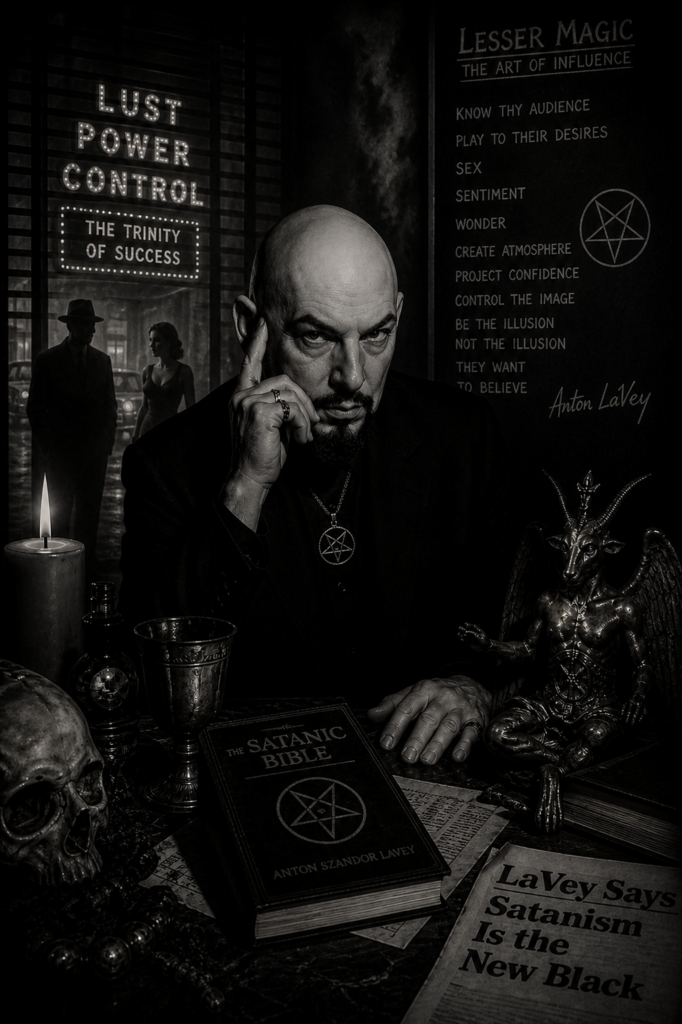
The Hidden Machinery of Influence: Understanding Anton LaVey’s Lesser Magic

Anton LaVey’s Lesser Magic

By Satanism

The Personal Art Of Shaping Perceptions

One of the biggest misconceptions about Anton LaVey is that people assume everything he talked about revolved around rituals, black candles, curses, and supernatural power. That image followed him everywhere for decades. The media loved it because it sold magazines and frightened suburban America. But buried underneath the theatrics was something much more grounded and, honestly, much more unsettling.

LaVey believed most people could be manipulated with surprising ease.

Not through supernatural force. Through psychology.

That was the foundation of what he called “Lesser Magic.” He described it as the art of influence. Knowing how to read people. Understanding weakness, vanity, insecurity, attraction, ego, and emotional desire. It was about learning how human beings actually operate beneath the polite masks they wear in public.

And if you really look at the modern world, it is hard to argue that he was completely wrong.

Advertising works because people are emotionally manipulated. Politicians manipulate audiences constantly. Influencers build entire careers around image and emotional projection. Dating apps are built on appearance and presentation. Corporations spend billions studying human behavior to increase sales. Social media algorithms prey on outrage, insecurity, loneliness, and validation.

LaVey simply stripped the moral language away from it and spoke about manipulation openly.

That was what shocked people.

He saw Lesser Magic as a survival skill. In his eyes, society itself was one giant performance where everybody was trying to influence everybody else, whether they admitted it or not. Religion did it. Television did it. Attractive people did it. Businesses did it. Even ordinary social interaction involved subtle forms of manipulation.

The difference was that most people pretended otherwise.

LaVey had no interest in pretending.

A lot of his ideas on Lesser Magic came from observing people long before he founded the Church of Satan in 1966. He spent years around carnivals, burlesque houses, bars, clubs, and nightlife. Those environments exposed him to every side of human behavior imaginable. Lust, greed, loneliness, desperation, fantasy, insecurity, ego. He became obsessed with watching how people reacted to image, atmosphere, and temptation.

He noticed that confidence alone could completely transform how somebody was perceived. He noticed how easily crowds could be emotionally steered. He noticed how desperately people wanted fantasy injected into their lives.

That became central to his worldview.

LaVey understood something many intellectuals completely miss. Human beings are not primarily rational creatures. Most decisions are emotional first and logical second. People buy emotionally and justify intellectually afterward. You can see this everywhere once you start looking for it.

A person buys an expensive leather jacket because it makes them feel powerful. Somebody joins a religion because it gives emotional comfort and identity. Fans worship musicians because they project danger, rebellion, glamour, or freedom. None of this is purely logical.

LaVey believed the individual who understood these emotional triggers possessed enormous power.

One of his better known ideas connected to Lesser Magic was something he called the “synthesizer clock.” He argued that most people fell into a few dominant psychological categories. Some were driven by sex and physical desire. Others were ruled by emotional sentimentality. Others craved mystery, fantasy, spectacle, or wonder.

The key, according to LaVey, was identifying what motivated someone and tailoring your approach accordingly.

A person obsessed with nostalgia reacts differently than somebody drawn toward sexuality or mystery. Politicians know this. So do advertisers. So do cult leaders.

So do rock stars.

Heavy metal and shock rock owe more to Anton LaVey than many people realize. Even artists who had little connection to Satanism borrowed heavily from his understanding of atmosphere and image. Alice Cooper, Marilyn Manson, King Diamond, and countless others understood the value of spectacle. Dramatic lighting. Ritual imagery. Dangerous symbolism. Mystery. Sexual tension. Controlled controversy.

LaVey recognized early that image could become a weapon.

And he absolutely weaponized his own image.

The shaved head. The black robes. The pointed beard. The organ music. The gothic rooms filled with strange objects and dark decor. The infernal symbols. None of it happened by accident. Anton LaVey understood cameras better than most celebrities. He instinctively knew what made people uncomfortable and fascinated at the same time.

The media could not get enough of him because he looked like the villain in a forbidden film.

That itself was Lesser Magic.

People often overlook how much of LaVey’s philosophy revolved around aesthetics. He believed appearance mattered enormously because human beings react instinctively before they react intellectually. Clothing changes perception. Lighting changes mood. Voice changes authority. Smell changes attraction. Atmosphere changes emotion.

Modern branding is built on these exact principles.

Walk into an Apple store and look at the lighting, spacing, sound, colors, and presentation. It is psychological theater. Luxury brands do the same thing. Nightclubs do it. Casinos do it. Influencers do it every day on Instagram and TikTok.

In some ways, social media became the ultimate evolution of Lesser Magic.

People now build carefully controlled versions of themselves online. They construct identities through photos, music taste, fashion, captions, aesthetics, and curated emotion. Mystery becomes marketable. Attractiveness becomes currency. Attention becomes power.

LaVey would have understood that world instantly.

What makes Lesser Magic uncomfortable is that it forces people to confront how artificial society often is. Most people want to believe human interaction is built on honesty and authenticity. LaVey argued that performance sits underneath almost everything.

Job interviews are performances.

Dating is performance.

Politics is performance.

Religion is performance.

Even rebellion becomes performance eventually.

That cynical worldview is part of why LaVey remains such a divisive figure. Some people see him as an insightful observer of human nature. Others see him as somebody who encouraged narcissism and emotional manipulation. There is truth on both sides.

He could be extremely perceptive, but also deeply cynical.

There is no question that Lesser Magic can slide into exploitation if taken too far. Learning how to influence people is one thing. Treating every human interaction like psychological warfare is something else entirely. Critics often accused LaVey of reducing relationships into power games and transactional exchanges. Reading some of his writing, it is not difficult to understand why.

Compassion was never really the center of his philosophy.

Strength was.

Control was.

Self-interest was.

That harshness is precisely why many people were drawn to him in the first place. LaVey emerged during a period when traditional religion still held enormous social authority. He offered an alternative built around indulgence, ego, rebellion, and personal freedom. To some followers, it felt liberating. To others, dangerous.

But whether people admired him or hated him, they paid attention to him.

And that may have been his greatest skill of all.

Anton LaVey understood attention before the modern attention economy even existed. He knew controversy created magnetism. He knew mystery attracted curiosity. He knew fear could become entertainment. He knew image could overpower substance if presented correctly.

Look around today and it almost feels prophetic.

Influencers manufacture personalities for engagement. Corporations create emotional identities around products. Politicians become brands instead of leaders. Viral outrage spreads faster than facts. Entire careers are built on aesthetics and carefully controlled perception.

Lesser Magic never really disappeared.

It just went mainstream.

That is probably the strangest part of revisiting LaVey now. Decades later, many of the techniques and observations that once made him seem shocking have become completely normalized. The world caught up to him in ways few people expected.

The candles and pentagrams were always the easy part.

The real magic was understanding people.

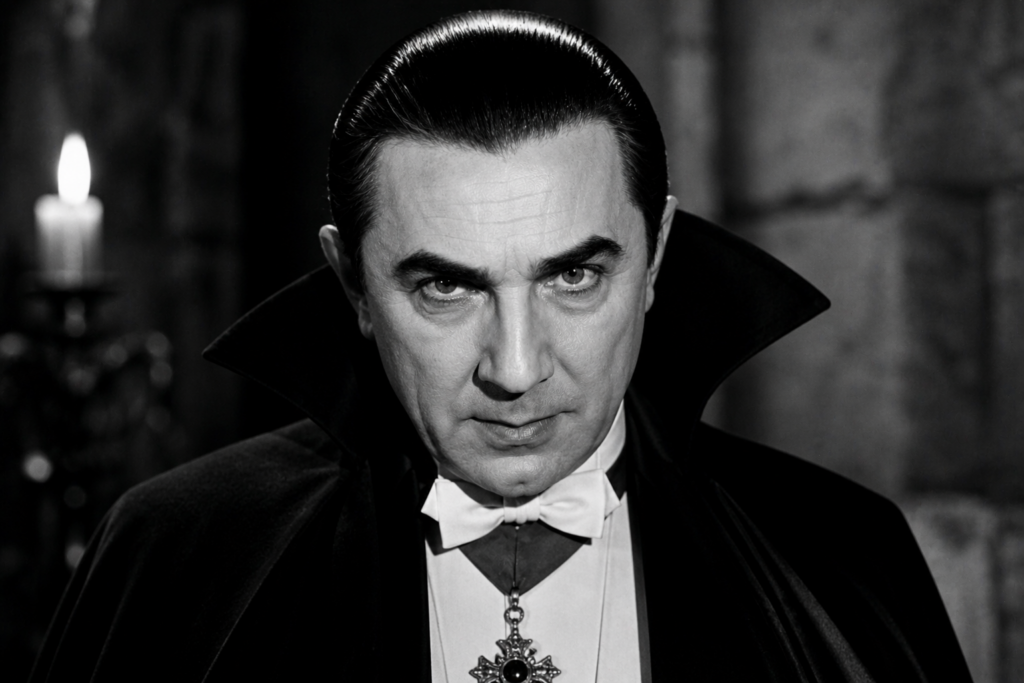
The Legend Of Bela Lugosi

By Cinema

The Man Who Became Dracula

Bela Lugosi was born Béla Ferenc Dezső Blaskó on October 20, 1882, in the small town of Lugos in the Kingdom of Hungary, now Lugoj in modern-day Romania. The town itself would later become inseparable from his identity, because “Lugosi” literally means “from Lugos.” Long before he became cinema’s most famous vampire, he came from a rigid, conservative household shaped by discipline, religion, and the social tensions of late 19th century Eastern Europe.

His father, István Blaskó, worked as a banker and expected strict obedience from his children. Accounts from those who knew Bela later in life suggest the relationship was tense and authoritarian. Bela did not grow up in an artistic or bohemian environment. The family valued structure, respectability, and hard work. His mother, Paula de Vojnich, reportedly provided more warmth and emotional balance inside the home, but the household overall was still deeply traditional. Bela was the youngest of four children, and from an early age he showed signs of rebellion against authority.

The Hungary Bela grew up in was politically unstable beneath the surface. National identity, class division, and social unrest simmered throughout the Austro-Hungarian Empire. These tensions would later shape his politics and worldview. As a child, however, Bela was more interested in imagination and performance than academics. He disliked school and reportedly struggled with formal education. He eventually left school as a teenager, which deeply disappointed his father.

One of the most important aspects of Lugosi’s childhood was his fascination with storytelling and theatre. In the late 1800s, traveling theatrical productions moved through towns across Hungary and Transylvania, bringing melodrama, folklore, gothic literature, and romantic tragedy to rural audiences. Young Bela became obsessed with these productions. The theatricality that later defined Dracula was rooted in these early experiences. He admired actors not simply for fame, but because they seemed larger than life. Theatre represented escape from the constraints of his upbringing.

As a teenager he ran away from home several times. This was not a symbolic act of teenage rebellion. It was literal. He wanted independence and refused to accept the path his father envisioned for him. During these years he worked odd jobs including factory labor and mining work. The physical hardship mattered because it gave him an outsider mentality he carried throughout his life. Unlike many polished stage actors of the era who came from privilege or formal education, Lugosi built himself from almost nothing.

There is also an important regional influence that shaped his future image. Lugosi grew up geographically close to the region associated with vampire folklore and superstition. Even though Dracula was an Irish invention by Bram Stoker, Western audiences later connected Lugosi’s accent and Eastern European background with “authentic” gothic mystery. As a child, Bela would have grown up hearing local legends, folk stories, and rural superstitions common throughout Hungary and Transylvania. Death rituals, religious imagery, and fear of the supernatural were woven into everyday life in many villages during that era. This atmosphere later became part of his screen presence even if indirectly.

By his late teens he was already gravitating toward acting troupes and small theatre companies. He adopted the stage surname “Lugosi” as a way of reinventing himself and tying his identity to his birthplace. Reinvention became a recurring theme throughout his life. Bela Lugosi was not born as the aristocratic, hypnotic figure audiences later saw onscreen. He constructed that identity piece by piece through ambition, performance, and survival.

His difficult childhood also left emotional scars. Throughout adulthood, Lugosi often seemed caught between pride and insecurity. He desperately wanted recognition as a serious actor, not merely a horror novelty. Many biographers trace this tension back to his early life, where approval was difficult to earn and rebellion came with consequences.

What makes Bela Lugosi’s childhood so compelling is how unlikely his eventual rise truly was. A boy from a strict provincial Hungarian family, with limited education and few advantages, would eventually become one of the most recognizable faces in horror history. Yet even at the height of fame, traces of that young outsider from Lugos never disappeared. The accent remained. The intensity remained. The hunger to transform himself remained. Those elements began long before Dracula ever stepped from the shadows.

Bela Lugosi’s path into film was anything but immediate. Before Hollywood ever discovered him, he spent years on the Hungarian stage developing the dramatic intensity that later became his trademark. In the early 1900s he worked with regional theatre companies before eventually earning roles at the National Theatre of Hungary, a significant achievement for someone with little formal education. He performed in classical dramas and romantic roles, often playing soldiers, aristocrats, or emotionally tortured men. At this stage there was no indication he would become permanently associated with horror.

His earliest film appearances came during the silent era in Hungary around 1917. These films are largely lost today, but they showed Lugosi experimenting with cinema at a time when motion pictures were still developing as an art form. He appeared in romantic dramas, adventure stories, and patriotic productions during World War I. The collapse of the Austro-Hungarian Empire and political turmoil following the war changed everything. Lugosi became involved in actors’ unions and political activism during the short-lived Hungarian Soviet Republic of 1919. When the government fell, many associated with it faced persecution. Lugosi fled Hungary and spent time in Germany before eventually immigrating to the United States in the early 1920s.

America was not immediately welcoming. Lugosi arrived speaking very little English and had to rebuild his career from scratch. He worked in immigrant theatre circles, particularly among Hungarian-speaking communities in New York. His heavy accent, which later became legendary, initially limited opportunities in mainstream productions. Yet the very thing Hollywood viewed as a problem eventually became his greatest weapon.

The breakthrough came on stage rather than film. In 1927 Lugosi was cast in the Broadway adaptation of Bram Stoker’s Dracula. His performance stunned audiences. He played the Count not as a snarling monster but as an elegant predator. Calm. Hypnotic. Controlled. He used stillness and voice in ways that felt unsettlingly intimate. Critics and audiences became fascinated with him. The production ran for hundreds of performances and turned Lugosi into a sensation.

Universal Pictures eventually adapted Dracula into film in 1931. Lugosi desperately wanted the role but studio executives initially hesitated. They considered him too foreign and not well known enough for a major production. Some accounts suggest he even accepted a relatively small salary just to secure the part. The gamble changed horror cinema forever.

Dracula (1931) became one of the defining films of the Universal monster era. Directed by Tod Browning, the film was atmospheric, theatrical, and strange compared to later horror movies. Lugosi dominated it completely. His thick Hungarian accent, piercing stare, formal movements, and measured delivery created a vampire unlike anything audiences had seen before. Lines such as “I never drink… wine” became immortal largely because of how he delivered them. The cape, slicked-back hair, medallion, and aristocratic demeanor all became foundational vampire imagery for generations afterward.

The success of Dracula should have made Lugosi a major Hollywood star across many genres, but the industry quickly trapped him inside horror and “foreign villain” roles. Studios saw him less as a versatile actor and more as a novelty. Lugosi resisted this typecasting because he considered himself a serious dramatic performer. Nevertheless, horror kept pulling him back.

In Murders in the Rue Morgue (1932), he played the deranged Dr. Mirakle, a scientist obsessed with grotesque experiments involving apes and human blood. The film allowed Lugosi to lean into madness and theatricality. White Zombie (1932) followed soon after and became one of the earliest feature-length zombie films ever made. Lugosi played Murder Legendre, a sinister voodoo master controlling the dead through hypnotic power. His wide-eyed performance remains one of the eeriest of his career and heavily influenced later horror villains.

Throughout the 1930s Lugosi became one of Universal’s defining horror faces alongside Boris Karloff. The two actors were often presented as rivals, though reality was more complicated. Karloff generally received stronger scripts and more prestigious productions after Frankenstein became a massive success. Lugosi reportedly resented this imbalance. He had famously rejected the Frankenstein monster role because he disliked the idea of heavy makeup and mute performance. That decision haunted him for years because Karloff’s career exploded afterward.

The studio paired the two men together in several films including The Black Cat (1934), The Raven (1935), and Son of Frankenstein (1939). These movies became landmarks of gothic horror. The Black Cat in particular stands out because it feels psychologically dark and unusually modern for its time. Lugosi plays a deeply traumatized man seeking revenge against Karloff’s satanic architect. Their onscreen chemistry created tension that audiences loved.

By the late 1930s and early 1940s, however, Lugosi’s career had begun declining. Horror films themselves were increasingly viewed by studios as lower-budget entertainment. Lugosi often found himself in weaker productions with limited resources. Yet even in lesser films, he brought intensity and dignity to roles that could easily have become ridiculous.

One of his strongest late performances came in The Wolf Man (1941), where he played the gypsy Bela who passes the curse of lycanthropy onto Lon Chaney Jr.’s character. He later appeared as Frankenstein’s monster in Frankenstein Meets the Wolf Man (1943), though much of his dialogue was cut from the final film, leaving the performance awkwardly misunderstood by audiences for decades.

Outside Universal, Lugosi worked constantly because he needed money. Financial problems, career frustration, and chronic pain eventually contributed to a morphine addiction after being prescribed medication for leg injuries and exhaustion. By the early 1950s he was no longer viewed as a major star by Hollywood, though horror fans still adored him.

His final chapter became permanently tied to director Ed Wood. Wood worshipped Lugosi and saw him not as a washed-up relic but as a genuine legend. Together they made films including Glen or Glenda (1953), Bride of the Monster (1955), and footage later used in Plan 9 from Outer Space. These productions were chaotic and low-budget, but they gave Lugosi something Hollywood had largely denied him in later years: affection and central importance.

When Bela Lugosi died in 1956 at age 73, he was buried wearing one of his Dracula capes. Whether chosen by family or inspired by legend, the image became symbolic of his entire life. He spent decades trying to escape Dracula’s shadow, yet ultimately the role made him immortal. Long after many technically “greater” actors faded from public memory, Lugosi endured because he created something timeless. He did not simply play Dracula. For millions of people, he became Dracula.

Bela Lugosi’s struggles with drug addiction were tragic, complicated, and deeply tied to both physical pain and the collapse of his Hollywood career. By the time the public became fully aware of his addiction in the 1950s, Lugosi was already a fading star carrying years of frustration, financial pressure, and emotional isolation.

The addiction centered primarily around morphine and later methadone. Unlike many Hollywood addiction stories built around partying or excess, Lugosi’s began through medical treatment. During the 1930s and 1940s he suffered from chronic pain, reportedly linked to severe sciatica and leg injuries sustained over years of physically demanding stage work and film productions. Doctors prescribed painkillers, which at the time were handed out far more casually than they would be today.

What started as pain management slowly became dependence.

Hollywood itself did little to help him. After Dracula made him famous in 1931, Lugosi expected a career filled with major dramatic roles. Instead, studios increasingly treated him as a horror novelty. He watched Boris Karloff rise to prestige status while he himself became trapped in low-budget horror films and stereotyped foreign villain roles. Lugosi took this personally. Friends and biographers later described him as proud, sensitive, and deeply aware that Hollywood no longer respected him.

By the late 1940s the work had dried up significantly. He was earning far less money than audiences probably assumed. At times he accepted almost any role available simply to survive financially. Many of the productions were exploitative and cheaply made. For an actor who once commanded Broadway stages and helped redefine horror cinema, the decline was emotionally brutal.

The addiction worsened during these years. Lugosi reportedly hid the extent of it from many people around him. Unlike alcohol addiction, which often played out publicly in Hollywood circles, morphine dependence could remain hidden behind exhaustion, mood swings, or erratic behavior. There were periods where Lugosi seemed functional and articulate, followed by stretches where he appeared frail and physically diminished.

One important thing often overlooked is that Lugosi still maintained a remarkable level of professionalism despite his struggles. Co-stars frequently noted that he remained polite, theatrical, and committed to performances even when productions themselves were disastrous. He still carried himself with the elegance and old-world formality that had defined him since the Dracula years.

His addiction became public knowledge in 1955 when he voluntarily entered treatment at the Metropolitan State Hospital in California. This was a major moment because celebrity addiction was rarely discussed openly during that era. Lugosi’s decision to seek help publicly required courage. Newspapers covered the story heavily, often with a mix of sympathy and sensationalism. Some articles portrayed him almost like a fallen gothic figure, blurring the line between the man and the Dracula persona that had followed him for decades.

After treatment, Lugosi genuinely tried to rebuild himself. He appeared on television interviews speaking candidly about recovery. In one famous appearance he openly acknowledged his addiction in front of a national audience, something very unusual for the mid-1950s. There was vulnerability in these moments that audiences had rarely seen from him before.

Around this same period he continued working with Ed Wood, the eccentric filmmaker who idolized him. Their relationship has often been misunderstood or mocked because of the bizarre nature of Wood’s films, but there was genuine loyalty between them. Wood gave Lugosi work when much of Hollywood had abandoned him. Lugosi, in turn, seemed grateful simply to still be performing.

Sadly, his health continued declining. Years of addiction, stress, financial instability, and aging had taken a severe toll. Bela Lugosi died of a heart attack on August 16, 1956, at the age of 73.

One reason Lugosi’s addiction story still resonates is because it feels inseparable from the darker side of old Hollywood itself. He was a pioneering immigrant actor who created one of cinema’s most enduring icons, yet the industry often discarded him once it no longer knew how to market him. The morphine addiction became part of a larger narrative about isolation, typecasting, physical suffering, and the psychological cost of fame.

Even so, his legacy survived far beyond those final difficult years. Modern audiences tend to remember the hypnotic stare, the cape, the accent, and the elegance. But behind that image was a man who spent much of his life fighting to retain dignity in an industry that repeatedly reduced him to a caricature of his own success.

Late Night With The Devil

Late Night With The Devil

By Cinema


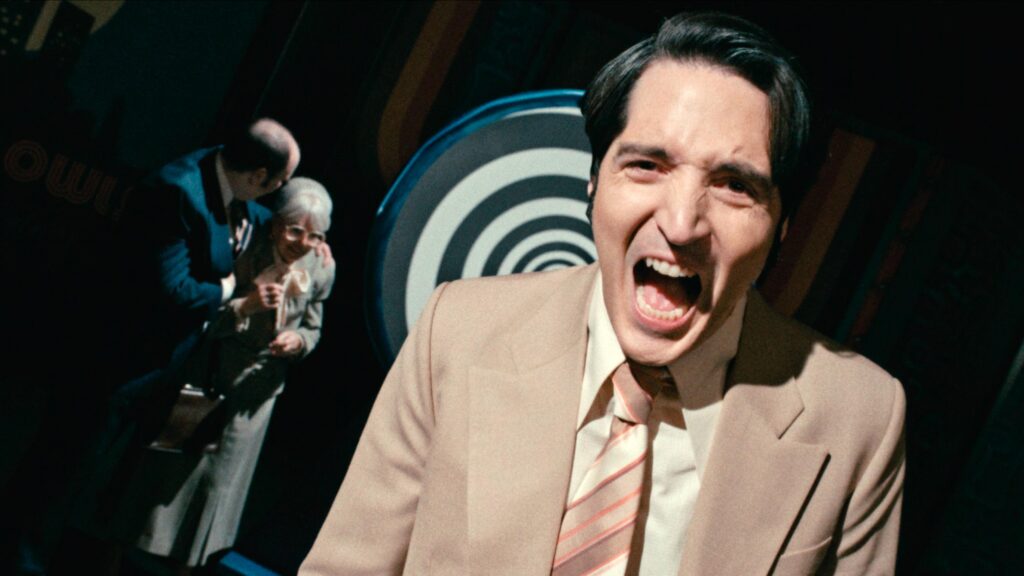
Late Night with the Devil

There’s a reason this one cut through the noise. On paper it sounds like a gimmick. A possessed girl goes on a 1970s talk show and chaos unfolds live on air. In practice it plays like something much stranger. It feels like a cursed broadcast that somehow slipped through time and landed intact.

The film is set on Halloween night, 1977, during a fictional episode of Night Owls with Jack Delroy. Jack is a struggling late night host trying to claw back ratings after personal tragedy. That hook matters more than it first appears. This isn’t just about a possession. It’s about desperation, ego, and what someone is willing to invite into the room when their career is dying in front of them.

David Dastmalchian carries the whole thing. He doesn’t play Jack as a caricature. There’s a quiet sadness under the charm. You buy him as a man who has spent years smiling for the camera while something hollow grows underneath. That emotional grounding is what lets the film escalate into full-blown horror without tipping into parody.

Late Night With The Devil

The structure is where it really gets clever. Most of the film is presented as the “live broadcast,” complete with period-accurate cameras, clunky transitions, ad breaks, and studio audience reactions. Between segments, you get black and white behind-the-scenes footage. Those moments are crucial. They strip away the performance and show the tension building in real time. Crew members get uneasy. Guests start to feel off. Jack himself becomes harder to read. It creates this creeping sense that whatever is happening isn’t contained to the show anymore.

From a production standpoint, the attention to detail is obsessive. The Cairnes brothers leaned hard into authenticity. The set design mirrors 70s network television down to the wood paneling, lighting rigs, and slightly cheap-looking props. The cameras behave like actual broadcast cameras from the era, not modern gear pretending to be old. Even the pacing feels right. There’s that slow, almost awkward rhythm those shows used to have, which makes the later breakdown hit harder.

They also made a key decision that pays off massively. Practical effects over heavy CGI. When things start to go wrong, it feels tactile. There’s weight to it. You’re not watching polished digital horror. You’re watching something messy, immediate, and uncomfortable, like it’s happening in front of an audience that didn’t sign up for it.

Behind the scenes, the filmmakers have talked about wanting the movie to feel like a recovered tape. That idea shapes everything. The lighting is imperfect. The audio dips and distorts. The edits aren’t clean. Even the performances lean slightly heightened, like television personalities of the time. It all feeds into the illusion that this could be real.

The occult layer is where it gets interesting for you. The film doesn’t just throw in possession as a shock device. It pulls from real 1970s occult paranoia. That era was obsessed with demons, cults, and televised spirituality. Think The Exorcist, the Satanic panic building in the background, and the rise of self-help gurus mixing psychology with mysticism.

Jack himself is tied to a shadowy group called “The Grove,” which carries a very clear nod to real-world elite societies and secret rituals. It never over-explains this, which is the right call. The suggestion is enough. It frames Jack not as an innocent host who stumbled into horror, but as someone who may have brushed up against darker ideas long before the show went off the rails.

The possession narrative also plays with control and performance. The young girl, Lily, is introduced through a parapsychologist as a survivor of a satanic cult. The film never fully confirms where the truth ends and manipulation begins. Is this a genuine demonic presence, or a constructed spectacle that goes too far? That ambiguity is key. It keeps the horror grounded in psychology while still allowing the supernatural to bleed through.

Reactions have been strong for a reason. Audiences tend to fall into two camps. One group gets completely pulled into the illusion and finds it genuinely unsettling. The other admires the craft but keeps a bit of distance because of the format. Either way, almost everyone agrees Dastmalchian’s performance and the commitment to the bit are what sell it.

Where it really lands is in its final stretch. Without giving anything away, the film abandons its controlled format and lets things unravel. That shift can be divisive. Some people love the escalation. Others prefer the tighter, broadcast-driven tension of the earlier acts. But even if you don’t love the ending, it sticks. It doesn’t fade out quietly.

At its core, this isn’t just a horror film. It’s about the cost of chasing attention. Jack isn’t battling a demon in the traditional sense. He’s dealing with the consequences of needing to be seen, to be relevant, to win. The occult becomes a vehicle for that. A force that steps in when the performance stops being enough.

If you’re coming at it from an occult angle, it hits a sweet spot. It respects the aesthetic and mythology without turning into cheap shock tactics. It understands that the real tension comes from belief, suggestion, and the thin line between ritual and showmanship.

It feels like something that could have existed. And that’s what makes it linger.

Marilyn Manson Announces Antichrist Superstar 30th Anniversary Shows

By Music

“I’m celebrating 30 years of Antichrist Superstar at The Wiltern with a set that dives deep into this defining record and spans the milestones that followed. “It’s a tribute to where I began – and everything I have become.”

Marilyn Manson may still have more to reveal from the One Assassination Under God cycle, but before that next chapter fully unfolds, he is preparing to summon the ghost of the album that first turned him into a genuine cultural firestorm. This year, Manson will mark 30 years of Antichrist Superstar with two special performances at Los Angeles’ Wiltern, revisiting the record that dragged his name out of the underground and into the glare of controversy, spectacle and infamy.

Released in 1996, Antichrist Superstar was not simply another rock album. It was an eruption. A snarling, theatrical, blasphemous statement that hit with the force of a manifesto, it captured Marilyn Manson at the precise moment he stopped being a fringe provocation and became one of the most talked-about and feared figures in popular music. The album’s mix of industrial aggression, glam decay, apocalyptic imagery and total confrontation made it a defining release of the era, and nearly three decades later it still stands as one of the darkest and most uncompromising landmarks in his catalogue.

Manson announced the two Wiltern dates on March 9, making it clear these performances are intended as a celebration of Antichrist Superstar and the long shadow it continues to cast. In his own words, the shows will dive deeply into the material from that record while also reaching into the key moments that followed, framing the event as both a return to the beginning and a reflection on the transformation that came after. That alone suggests these will be more than ordinary tour dates. They feel positioned as a deliberate resurrection of the era that built the Marilyn Manson myth.

The concerts are locked in for October 31 and November 1, which could hardly be more fitting. Halloween weekend has always felt like natural territory for Manson, and the timing only adds to the sense that these shows are being staged as something ceremonial, almost ritualistic. There has been no official confirmation that Antichrist Superstar will be performed in full, front to back, but the language surrounding the announcement points strongly toward a setlist rooted in that period. Fans will no doubt be hoping for a heavy emphasis on the record’s most iconic material, including “The Beautiful People,” while also digging further into the album’s more corrosive and theatrical depths.

Marilyn Manson Antichrist Superstar Album Cover

There is every reason to expect strong demand for these shows. Anniversary performances built around a record as notorious and influential as Antichrist Superstar already carry serious weight, but the fact that these dates are being presented as special events rather than standard stops on a tour only adds to their pull. Presales for both Wiltern performances begin March 10, with the code ACSS30, giving longtime devotees the first shot at stepping inside what could become one of the year’s most talked-about live spectacles.

These Los Angeles dates also slot into a much bigger stretch of activity for Manson. In the months leading up to the Wiltern shows, he is set to return to the road for a North American run featuring headline dates with VOWWS in support, alongside a small number of festival appearances. Then, later in the year, he will once again join Rob Zombie for the co-headlining Freaks on Parade tour, continuing a live partnership that already feels built for maximum grotesque grandeur.

What makes these Antichrist Superstar anniversary shows especially compelling is that they are not just trading on nostalgia. They are reaching back to the exact moment Manson became larger than the music itself, when every performance felt dangerous, every image looked like a challenge, and every song seemed designed to provoke outrage. Whether the Wiltern sees a full-album performance or a broader career-spanning set built around that era, the intention is clear. This is a return to the furnace. A celebration of the record that made Marilyn Manson impossible to ignore and, for many, impossible to forget.

Pandemonium By John Martin

John Martin & The Architecture Of Damnation

By Art, History

When considering the works of John Martin, one can’t help but see that he’s not an artist who paints scenes, but rather one who builds worlds, and when he turned his attention to the subjects of Satan, Hell and the apocalypse, he didn’t portray evil as a character, he engineered it as a system, an enormous, crushing structure that’s already seen the collapse of rebellion and the beginning of punishment.

Coming from the Northumberland in 1789, during the peak of the British Romanticism movement, Martin was an artist who never quite fit in with his fellow artists. While Turner blurred reality into light and movement, and Blake transformed biblical myth into visionary mysticism, Martin constructed pictures of apocalyptic annihilation that are more real than anything else. Well-known for his dark works, these feel more like plans for the end of the world than anything else.

It’s because of this that his Satan lives on.

Martin’s most famous infernal paintings originate from John Milton’s Paradise Lost, particularly his 1841 work Satan Presiding at the Infernal Council. At first glance, it may seem that Satan is the boss and sits above his defeated angels in Pandemonium, but the longer you look, the less he seems to be in control. The massive layout of his kingdom, which includes endless arched ceilings, towering columns and bottomless voids crushes every figure in the image, including Satan. Even his throne is up for grabs, perched on a structure that resembles less of a palace and more of a prison masquerading as grandeur.

Martin’s Hell is not a whirlwind of chaos, but instead has a stern and orderly system, colossal in scale and that’s what makes it truly terrifying. In a stark contrast to the way earlier artists depicted the devil as grotesque, horned monstrosities and savage tormentors, Martin stripped away any obscenity from his version of Satan and changed it into a tragic heroism, someone who’s in charge over the aftermath of a cosmic catastrophe. Looking at the work of Martin you’ll see that he’s obsessed with the size of things. And people, angels, devils, get completely lost in the grandeur of the backdrops they’re set against. Coming racing into any one of his paintings is like being dropped into the middle of an almost impossible space, hurtling over dizzying heights, bridges, staircases and bottomsless pits until you finally stumble upon the characters, if at all.

Well-known for this sort of composition, Martin’s work is philosophical in its outlook.

Martin’s idea of Satan isn’t scary because of his power, it’s because he’s condemned to live in a world that already thinks he’s wrong. The enormous spaces in his paintings mean that there isn’t any escape, they go on forever and suggest that eternity isn’t happiness, but a long, unrelenting grind.

Light plays a huge part too, Martin was a master of using jarring contrasts, scorching hot flames meet absolute blackness, cities are burning on the edge of what you can see, and molten lava slices through the darkness like a fresh wound. Your eyes are constantly being yanked between the thrill of revelation and the horror of annihilation.

This use of chiaroscuro does more than add drama to his paintings, it’s basically a way of laying out the way he sees the world, and God is practically invisible in his work, but the universe itself is always doling out moral justice, so there’s no need to chain up the devil, he’s already trapped.

Coming from a Victorian audience, Martin’s work was mesmerizing. He was at the top of his game in Britain, and his shows packed in the crowds, his apocalyptic scenes and depictions of the devil were even printed as engravings and hung in middle-class homes all over England. This wasn’t fringe art, it was mainline culture staring down the face of damnation in the age of industrialisation and colonial power.

Some critics didn’t like him, they said he went over the top, was too much show-off, too heavy-handed, too unsubtle, but in the years that followed his death, we now know they didn’t have a clue what they were talking about.

When you look at the landscape of gothic horror cinema, heavy metal album art, epic fantasies, dystopian science fiction and comic book illustrations of Hell, you’ll see the fingerprint of John Martin, a British painter who didn’t get the recognition he deserves.

Well-known as the creator of the first gothic horror art, Martin’s works set the stage for how we envision Hell. It’s not a cave anymore, it’s a city. The devil doesn’t have claws, he’s a leader who commands. And when buildings themselves become the bad guys, Martin is usually there.

Coming from someone who was deeply rooted in his faith, Martin’s paintings don’t pull back from the hard realities of the world. Salvation isn’t something he promises; it’s something that’s far off, and more of an idea than a fact. What he does show us is the price we pay.

His Satan is a character who’s understood perfectly, and got what was coming to him: total control, but with no joy, eternal life with no hope. This is why his Satan is still so popular.

Martin’s paintings are not meant to seduce, but warn. He gave Hell a form so vivid, it’s stuck in the collective imagination of humanity and has been for nearly two centuries.

Satan Presiding at the Infernal Council

Satan Presiding, the Birth of Infernal Architecture, and the Visual Language of Metal

Looking at Martin’s Infernal Council you can’t help but think that the scene still has a very contemporary feel to it. Well-known artist and scholar, Martin, didn’t paint a picture, he basically constructed a design for a place of eternal torment.

Coming across this scene might lead you to believe that it’s a classical composition.

The devil sits on his throne, a gathering of evil spirits, and order is restored after a rebellion. But Martin quietly subverts that sense of stability all over the place.

Satan’s throne may be high up, but it’s precariously balanced and doesn’t have a solid foundation. The cavernous space surrounding him is filled with mind-boggling arches, bridges and steep drops that go way beyond the edge of the picture. The structure doesn’t radiate out from him, it swallows him whole. He isn’t the source of power here, he’s just stuck in the midst of it all.

Well-known to be a radical thinker, Martin takes a very different view of Satan, he doesn’t see him as a heroic figure, or a misunderstood rebel. Instead, he’s an absolute loser who has been crushed. What’s left is a soulless bureaucracy, and an endless administration over the condemned. Hell is no longer a battlefield, it’s a prison, a cold and uncaring institution.

If you look at the fallen angels, they’re basically faceless, they blur into a mass, their identities completely gone, their rebellion has completely eroded any sense of individuality.

The starkly symmetrical architecture and repetition of arches in the picture is meant to hammer home the idea that Hell is an endless, purposeless city, and its inhabitants are just contained. In many ways it’s got a chilling totalitarian feel to it.

Light in this picture is surgical and doesn’t warm anything up.

It’s more like a cold, heartless examination of its surroundings. The highlights are sharp and slice through the edges of stone and metal, sending everything else into the dark depths of despair. The light doesn’t come from the devil, it’s coming from the machinery of the underworld itself. When heavy metal music burst onto the scene in the 1970s and 80s it instinctively turned away from the outdated medieval images of the devil, and instead gave us something much closer to the picture that Henry Fuseli had painted. Satan as a ruler, somebody who is above the rest of us, a presence that is hard to ignore, and a part of a much bigger system. Well-known artists in the metal scene, like Iron Maiden and Dio, have run with this idea of taking the listener on a tour of epic realms, but they’re still stuck with the idea that it’s not the size of the individual that matters but the environment they’re in.

As death metal and black metal started to appear in the latter half of the 80s, the whole aesthetic of album covers became more about imposing buildings, cathedrals and crumbling ruins, cities that seem to go on forever, where people are often tiny and sometimes completely absent. This is pure Fuseli. Even when the devil shows up in metal art he’s usually sitting back on his throne, or at the top of a massive structure. He doesn’t celebrate his victories, he rules, and takes charge.

Well-known word, “presiding”, comes to mind here. It means duty, obligation, endless routine. Fuseli’s Satan is not destined to torment others but will be stuck in the mess he created, and forever feel the consequences of his rebellion. Film has picked up on this language too, from the silent movies to modern Gothic horror, hell has started to feel like a place of scale rather than entertainment. Vast halls, endless staircases, monolithic cities ablaze with fire and darkness are all coming straight from Fuseli’s engravings that were circulating through Victorian culture. It’s no coincidence that his reputation has seen a huge boost in recent years.

Today, we’re living in a world where systems are bigger than individuals, and don’t even know who we are anymore. Bureaucracies, megacities, networks, they all sound like things that are straight out of Fuseli’s hell. His devil is now less like a monster and more like someone who manages the disaster zone. That’s why his artwork is hitting such a chord with underground culture, heavy metal and occult aesthetics.

John Martin

A Short History of Fire, Ruin, and Obsession

When John Martin was born in 1789 in the Northumberland town of Haydon Bridge, he was part of a massive family, being raised by a father who was a fencing master. Coming from a background marked by financial struggles, passionate religious beliefs and being right out in the wilds of northern England. Well-known as a place of awe-inspiring cliffs, ravines and dramatic skies, these landscapes would later be reimagined in Martin’s paintings into something more than life-sized and cosmic.

He moved to London as a teenager and became an apprentice coach painter, an occupation that polished his expertise in precision, architectural detail and vibrant finishes.

Something that set him apart from the rest of the fine artists of his time.

John’s introduction to the Royal Academy in the early 1810s didn’t sit well with him, and his complicated relationship with the art establishment continued to be strained. He presented to the public with regularity but the critics thought he was too ambitious, and that his paintings were just too large, too overdone and too emotional, and were basically sacrificing subtlety in favour of wow factor.

Well-known and highly publicised, Martin’s breakthrough came with Belshazzar’s Feast back in ‘21, a biblical scene that showed God sending down his wrath amidst the decadence of the royal court. People flocked to see it, the critics made fun of it, and Martin overnight became famous. This rollercoaster of response would be his pattern for the rest of his life.

Throughout the ’20s and ‘30s, Martin zeroed in on disaster, painting cataclysmic scenes on a monumental scale.

Cities collapsing, divine retribution and fire raining down from above. Paintings such as The Great Day of His Wrath and The Last Judgment sealed his reputation as the painter of the end of the world, and his unrelenting fixation on the moment when order fails and consequence kicks in.

Interestingly, Martin was not just an artist, he was also a prolific engraver. When John Martin’s mezzotint prints became widely known, they made his work accessible to a growing middle class and it was this mass reproduction that turned his haunting visions of Hell and judgment into deeply ingrained in the popular consciousness.

The pictures he made for John Milton’s Paradise Lost, were really the culmination of all he knew about the underworld. Coming heading into his later career, these images are unmistakable for their massive buildings, teeny-tiny characters, explosive contrasts between light and dark, and the feeling that there’s no escape.

Well-known as a tortured soul, Martin’s life was troubled. Financial struggles and personal tragedies marked his years, and though he was deeply religious, he started to lose faith. The death of several of his children, mental illness within his family, and his brother Jonathan’s infamous burning down of York Minster in ’29 shook him badly, and made him even more fixated on divine judgment and insanity.

By the ’40s the public’s tastes were changing. Critics started to slam him for being too flamboyant, out of touch and even disgusting, and gradually his name began to fall from the art scene. His financial situation was in shambles and he died in ‘54, basically out of fashion.

However, the verdict on Martin has been revised over time and in the 1900s, artists, filmmakers and musicians re-discovered his work, realising what the Victorian critics had missed. He was predicting the future of cinema, science fiction, dystopian art and horror movies, his enormous scales feel modern, his Hells are industrial, and his Satan looks more like a CEO than a monster, because he’s portrayed it as a system, not a being.

Guillermo del Toro’s Frankenstein

Guillermo del Toro’s Frankenstein

By Cinema

Dark Masterpiece of Creation and Consequence

Guillermo del Toro has finally done it. After decades of circling the idea, sketching monsters in notebooks, dropping hints in interviews, his long-awaited adaptation of Frankenstein has arrived — and it’s every bit the dark, melancholic dream you’d expect from him. The film stars Oscar Isaac as Victor Frankenstein, Jacob Elordi as the Creature, and Mia Goth as Elizabeth, with Netflix backing it on a reported budget of around US$120 million.

When watching Victor Frankenstein, you can’t help but feel the sadness that the film is conveying. As a surgeon of ambitious means, supported by an arms dealer, Frankenstein gathers his materials from the battlefields and execution sites of the past. The movie is less about horror and more about the results of creating something.

Well-known as a silent, imposing figure, the Creature has been reimagined by Del Toro and Elordi, and now it has a voice, a body, and an unmistakable humanity. Its tentative steps and ever-changing facial expressions speak of his pain and longing and also show a lot of what’s been passed down from his creator.

Oscar Isaac’s performance as Frankenstein is nothing short of mesmerizing.

An artist who has fallen under the curse of his own ego, he doesn’t fit into the common image of a’mad scientist’.

He’s someone who gets completely absorbed by his work, and can’t live with the limits that nature has set. Coming into contact with his creation is a bit like a sacramental ritual for him, but this sense of devotion turns into dread and denial when the creature starts to stir and grow more self-aware.

Frankenstein is very much divided between its characters, Victor as God and child, crafting something that he can’t love, and running away from its reflection. The film gives its main character the softest look when portraying him as the newborn Creature. In his journey from innocence to wounded exile, he becomes the emotional anchor of the movie, and when he confronts his creator, turns it into a Greek tragedy.

Mia Goth brings the film its heart and sense of purpose. She is not just a heartbroken fiancée, she is basically the moral compass of the story, stuck between her love and her disgust for Frankenstein. It’s one of her best performances, delicate, clever, and chilling, and completely redefines the story’s power dynamics. Visually, Frankenstein is a masterpiece.  Ruined hospitals and metallic glint of surgical tools, when watching Frankenstein you can’t help but feel you’re gazing at the decaying grandeur of 19th-century Europe, a time of flickering gaslights. Del Toro’s camera moves through the scenes in a way that shows each frame as if it’s been painted on an easel, and splits the colors between warm, comforting sepia tones and chilling industrial blues, in a poetic tribute to the circle of life and death and the machinery that brings them together. There isn’t any digital overindulgence, the effects are all practically applied, rough and visceral and soaked in blood. Every stitch, every morgue slab leaves its mark on you.

Coming from a thematic standpoint, Frankenstein takes on the same fundamental ideas as the original novel, creation, identity, and duty. Del Toro is very much avoiding clichés in the monster movie genre, instead plunging into a study of emotional inheritance. The things that we pass on to what we create, including our imperfections, fears and loneliness. The Creature, seen through the eyes of Victor Frankenstein, is also a reflection of the director’s own, and one that he calls “the patron saints of imperfection” and is omnipresent in this movie.

Marc Desplat’s score is a masterpiece that glides like a requiem mass, dripping in cellos and mournful choruses.

Rather than traditional horror music it is a wistful dirge: the sound of something sacred falling apart.

When Frankenstein premiered at the Venice Film Festival it earned a ten minute standing ovation, up to thirteen minutes, and it’s easy to see why, because it’s not a film that plays for the masses, but it’s emotionally haunting in a way that most movies don’t dare to be. It’s not horror film, it’s basically love, asking you to look at the monster and to see yourself.

Well-known for its sumptuousness, the film’s most stirring moments are very small: the Creature’s very first breath, Victor’s quivering hand, and Elizabeth’s beautiful gaze over a candlelit room. Del Toro is not only adapting the source material, but is in a way communing with the spirit of Mary Shelley.

Inside the Lab: The Making of Guillermo del Toro’s Frankenstein

You’ll notice the film’s haunted, otherworldly feel, and that’s not just because of the monstrous creature at the heart of the story, Mary Shelley’s Frankenstein, when you watch Guillermo del Toro’s Frankenstein. The movie is also haunted by the years of fixation, sketchbooks, rewrites and setbacks that made it finally come to life in ’25, and for del Toro, marks the climax of a lifelong romance with his creation.

Well-known for speaking out about wanting to bring Frankenstein to the big screen since the ’90s, when he called it his “holy grail” and “a story that won’t let me go,” del Toro had the Creature in his mind for years before the movie was greenlit and wouldn’t rest until he could bring it to the screen on his own terms, and that sense of pride and perfection is present in every frame.

When Netflix came aboard with a reported $120 million budget, del Toro’s vision of the film started taking shape. The movie was filmed in Toronto, Edinburgh, and Lincolnshire, in locations with a haunting, gothic decay. Even the hotel where del Toro stayed in Scotland was allegedly haunted, and he didn’t mind sharing space with the dead as long as they didn’t disturb him during filming, a strange but funny statement.

The look of the film was a collaboration with production designer Tamara Deverell, who built imposing, gut-wrenching sets that eerily recall the twisted nightmares of Shelley’s.

The disintegrating anatomy tower, the dripping autopsy room and the massive ship Horisont, which serves as the backdrop for a lot of scenes. Everything, bar a couple of exceptions, was constructed practically, with the help of a minuscule amount of green screen and making it all look so real. The air is heavy with metallic smells and formaldehyde.

The Cinematographer, Dan Laustsen, who’s worked with del Toro on Crimson Peak and The Shape of Water, described the approach as painting with darkness. He and the director went by the mantra “don’t be afraid of the darkness, but make sure you can see into it”, which, gave a picture that’s got depth, where shadows reveal more than they hide. Looking at back on the film Frankenstein, every flicker of candlelight, every reflection in a puddle feels alive.

Coming hotfooting from the initial casting of Andrew Garfield, the part of the Creature was remade when Jacob Elordi took over. The makeup team had a nine-week deadline to completely rebuild the prosthetics, re-jig the outfit to fit Elordi’s physique and took cues from some of the earliest Universal monster designs, Goya’s pencil sketches and del Toro’s own artwork. The final result is hauntingly beautiful, it’s skin as rough as old stone, eyes that are overflowing with heartache, and stitches that seem almost ritualistic.

Mia Goth’s wardrobe, on the other hand, was an entirely different world. The costume designer Kate Hawley collaborated with del Toro to create a brand-new language of color for each character. The red of Victor’s madness, the pale blue of Elizabeth’s ethereal calmness, and the black of the Creature’s silhouette, all symbolic of the character’s transformations. The concentric circles that can be seen in the film, from the windows of the lab to the patterns on the floor represent the cycle of creation and destruction that entangles all of them.

There’s poetry in the disarray behind the scenes. During filming, del Toro is said to have played classical music, from Mahler, Bach and the early ideas for the score by Desplat. The actors would move through fog machines as soft organ melodies waft through the studio. It wasn’t done for show, it was a tradition. Del Toro calls it “the liturgy of creation”.

One of the most striking behind-the-scenes moments came during the scene of the Creature’s rebirth. The entire cast and crew was silent, no one said a word. As Elordi opened his eyes for the very first time under blinding laboratory lights, del Toro leaned forward and said, “He’s alive” and stepped back with tears in his eyes and let the cameras roll.

Del Toro has always thought of monsters as metaphors for the brokenness of human beings, a philosophy that was palpable in all aspects of the film, the sets, and prosthetics, designed to breathe and deteriorate, and so nothing in Frankenstein is neat and sterile, it’s all lived-in, rotting and holy.

The Magic Of Robert Eggers

By Cinema
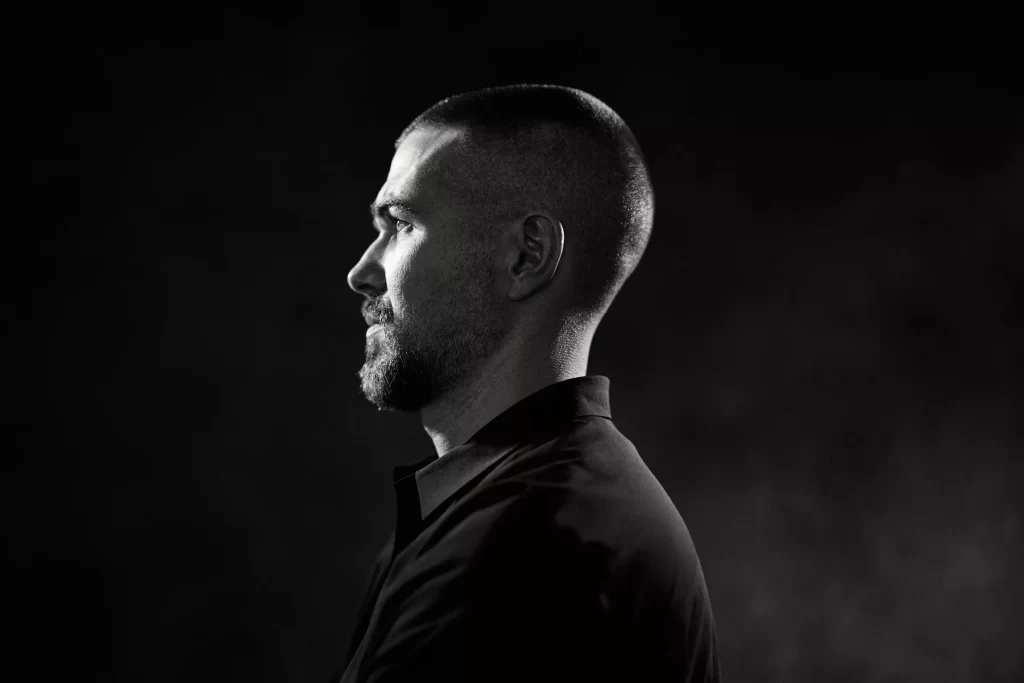
Robert Eggers’ path to cinema was anything but accidental. As a child, he seemed magnetically pulled toward the unseen and the forgotten. While his peers escaped into glossy entertainment, he wandered into older, darker corners. Folklore collections and volumes on European myths found their way onto his shelf, alongside art books and scraps of local history. He read about witches and devils not out of idle curiosity but because the stories felt present, as though they were stitched into the land and air of his home. When he walked through a New England forest or stared at a crooked barn roof, he did not see something quaint. He saw ghosts of the people who had lived there, the superstitions that had ruled their lives, the fear of isolation and punishment that had guided their days.

School years revealed that he was less performer and more builder. Acting did not interest him so much as the construction of worlds. He sketched costumes, studied old buildings, and immersed himself in the mechanics of stagecraft. Every production he worked on became a kind of laboratory where he could test ideas of tone, space, and atmosphere. His teachers noted how obsessive he was about detail. A prop could not just look convincing; it had to belong. A wall could not simply stand on stage; it had to breathe as though it had existed for centuries. These instincts separated him early, marking him not as a dreamer but as someone preparing for a future in which storytelling and authenticity would merge.

Leaving for New York at seventeen was more than a leap of faith. It was a natural continuation of the life he had already chosen. The city exposed him to a range of influences that sharpened his instincts. He studied theatre design formally, but his education spilled into museums, libraries, and the city’s streets. He haunted the Metropolitan Museum of Art, soaking in medieval armor, tapestries, and religious paintings. He visited antique shops and pored over volumes of architectural studies, teaching himself how to recognize periods by the slope of a roof or the cut of a cloak. He was training himself to see the world through layers of history.

Eggers carved out a career in theatre and production design across New York’s experimental stages. The work was not glamorous but it was rigorous. Budgets were tight, deadlines were punishing, and audiences were demanding. He learned how to stretch materials, how to build worlds from almost nothing, and how to keep an eye on precision even under pressure. His dedication made him valuable to directors who wanted sets that could carry a story rather than simply hold it. Each production refined his ability to blend narrative with environment, a skill that would later make his films feel immersive to the point of suffocation.

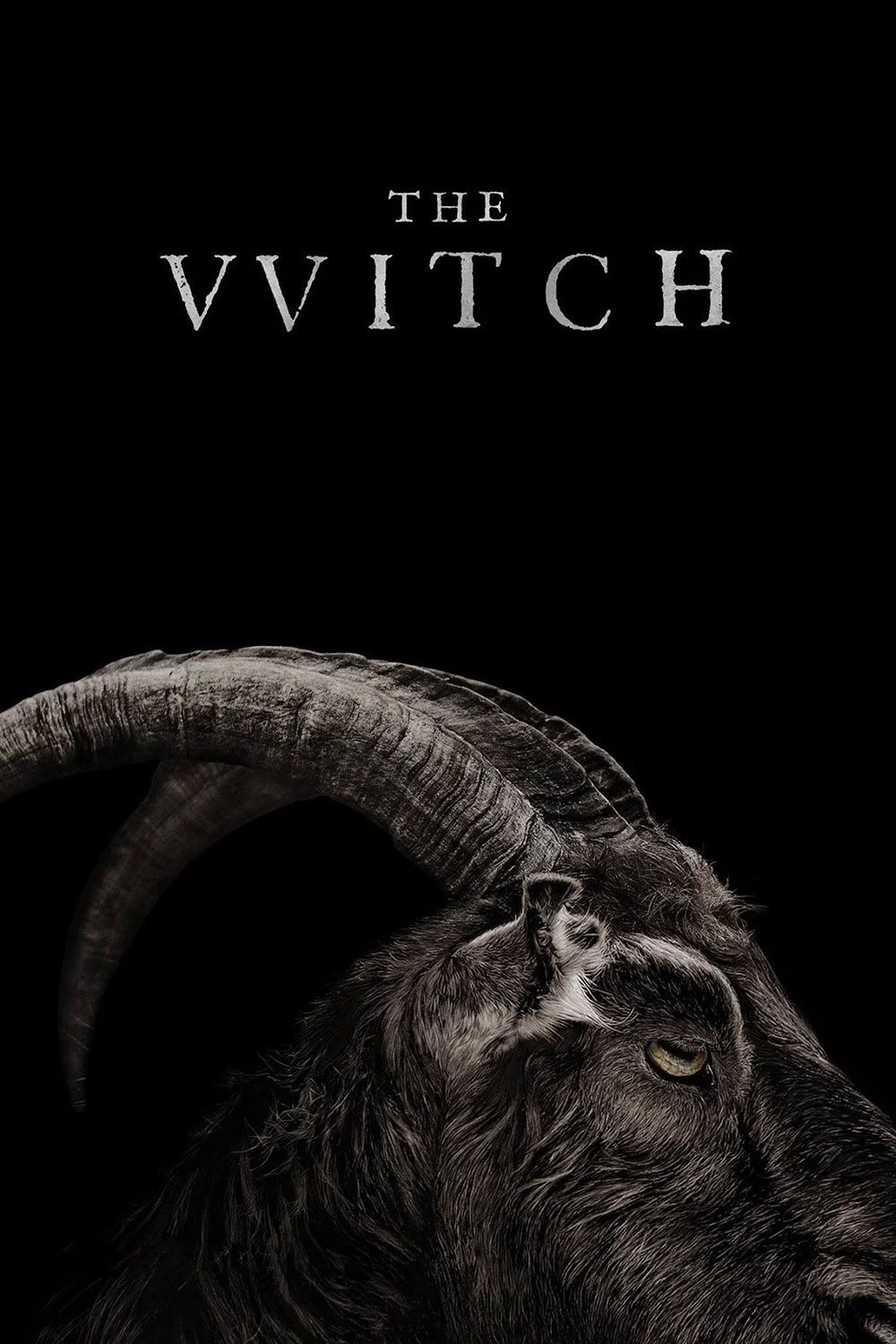
During this period he also experimented with short films, testing how his obsession with atmosphere and detail could translate to the screen. These early works did not reach large audiences but they became proving grounds. He realized that cinema gave him tools theatre could not. The camera could linger on the grain of wood, the flicker of candlelight, the nervous glance of an actor inhabiting a bygone world. It was here that Eggers began to imagine how his lifelong love of folklore and his theatre discipline could merge. He was still years away from The Witch, but the scaffolding was being built with care and intention.

By the late 2000s and early 2010s, Eggers had forged a reputation within design circles as someone unusually committed to authenticity. He was not content with shortcuts or casual approximations. His research process became legendary among collaborators. He scoured archives, tracked down forgotten craft manuals, and studied diaries from centuries past to understand how people spoke, dressed, and moved. This obsession was not a quirk but a philosophy. To him, the past was not distant. It was alive, and his job was to resurrect it without compromise.

That philosophy was waiting for a canvas large enough to contain it. The transition from designer to filmmaker was inevitable. By the time he reached his early thirties, Eggers had spent more than a decade preparing, consciously or not, for a project that would fuse his childhood obsessions with his professional discipline. The Witch was not yet born, but all the elements that would define it were already assembled within him. He had the folklore of New England in his veins, the discipline of theatre etched into his hands, and the hunger for authenticity driving every choice. The world just had not seen it yet.

Robert Eggers’ years in New York were shaping him into more than a designer. By his late twenties he had begun to feel the limits of theatre. The sets he created were convincing, but they lasted only as long as the production did. Once the curtain closed, the world he had built disappeared. Cinema offered something different. Film preserved atmosphere. It allowed him to construct an environment that would live on, with every detail captured in perpetuity. He began to treat short films as experiments, miniature laboratories where he could refine the visual vocabulary he had been gathering since childhood.

These early shorts showed flashes of what would become his signature. Sparse dialogue, an oppressive sense of place, and a constant awareness of the unseen forces surrounding his characters. They were not polished works in the traditional sense, but they carried a seriousness of purpose that set them apart from the disposable projects common to young filmmakers. Eggers had no interest in clever tricks or trendy aesthetics. He was after something older, something elemental.

To get there, he buried himself in research. If he wanted to make a film about New England folklore, he needed to inhabit that world completely. He read court documents from the Salem witch trials, studied the diaries of Puritan settlers, and combed through manuals on farming, carpentry, and domestic life from the seventeenth century. He listened to scholars of folklore describe how fear shaped communities, and he absorbed their language until it felt like his own. The goal was not to imitate the past, but to resurrect it with such fidelity that the audience would forget they were watching a film at all.

This obsession with authenticity made financing his first feature a difficult task. Producers admired his vision but worried about its precision. Period horror films were not often commercial, and Eggers was unwilling to compromise. He wanted actors to speak in archaic dialects, costumes stitched with historically accurate techniques, and sets constructed from the same materials used in the seventeenth century. For many backers, it seemed unrealistic, even reckless. Eggers refused to bend. His conviction was that only through this rigor could he capture the suffocating spiritual atmosphere of early colonial life.

Those years of searching for support tested him. The theatre background that had given him discipline now gave him patience. He had been building sets under impossible deadlines and inventing solutions with scraps; he knew persistence was everything. Eggers began to surround himself with collaborators who shared his hunger for authenticity. Costume designers, set builders, and cinematographers were drawn to his seriousness. They understood that this was not another horror film, but a chance to immerse themselves in history and conjure something that had never been seen in cinema before.

By his early thirties, the project that had once seemed an impossible obsession began to solidify. Eggers had a script rooted in folklore, a design philosophy anchored in authenticity, and a small but devoted circle of allies who believed in his vision. The New England of his childhood, haunted by superstition and shadowed by history, was finally being built again, this time not in a theatre or on the page but in the language of film.

He had not yet shot a frame, but the shape of his future was clear. Everything he had lived through — the forests of New Hampshire, the haunted atmosphere of Massachusetts, the unforgiving training grounds of New York theatre — had been preparation. What began as a boy’s obsession with ghost stories had become the architecture of a world. All that remained was to open the door and invite the audience inside.

The Witch (2015)

When Eggers finally began shaping The Witch, it felt less like a debut and more like an arrival. Everything he had been collecting since childhood — the folklore, the stagecraft, the obsession with detail — had been building toward this moment. The forests of New England that had once frightened him now became his canvas. He wanted not a story set in the seventeenth century, but a story that breathed with the same air those settlers had inhaled.

He started where he always did, with research. Court records from the Salem witch trials, diaries of Puritan families, guides on farming, carpentry, and prayer books worn thin from use. He did not just want dialogue that sounded old; he wanted language lifted directly from the mouths of the people who lived it. Costumes were stitched with the same methods colonists had used. Houses were built from raw timber in the same way. Even the animals on set were chosen for their period accuracy. Nothing was to feel borrowed. Everything had to belong.

Producers and investors were nervous. Period horror was a risk, and Eggers’ refusal to compromise made it riskier. Yet the severity of his vision became its strength. The film that emerged was stripped down and relentless. A family torn apart by isolation and superstition, left to face a darkness that could not be explained away. The details of their world were so precise that audiences began to believe in it before the horror arrived. When the fear took hold, it felt inevitable, as if it had been waiting all along in the woods.

Critics responded with the same unease as audiences. The Witch did not play like a traditional horror film. There were no jump scares, no familiar rhythms. It was slow, suffocating, and exacting. It asked viewers to live inside the terror of a family whose faith and fear were inseparable. Some called it too severe, others called it a masterpiece, but no one could ignore it.

For Eggers, the film was a declaration. He proved that rigor and obsession could yield something both haunting and original. The Witch was not simply a period piece, nor was it another genre exercise. It was the meeting point of folklore, history, and cinema, pulled from the soil of New England and lit by the flicker of candlelight. What began as a child’s fascination with ghost stories had grown into a vision capable of unsettling the world.

The Witch did not ease its way into the world. It crashed into Sundance in 2015 like an omen. Critics were divided but no one was indifferent. Some were unsettled by its severity, the archaic speech, the suffocating pace. Others praised it as a revelation, a work that broke horror free from its usual formulas. For many, it was the rare debut that felt fully formed, as though Eggers had stepped into cinema already knowing exactly who he was.

The film’s marketing leaned on the horror label, but what audiences found was something closer to folklore given flesh. Word of mouth carried it beyond the festival circuit. Viewers argued over its meaning, whispered about its imagery, and turned scenes into cultural shorthand. The goat, Black Phillip, became a figure of fascination, not just a character but a symbol of the film’s unnerving power. Anya Taylor-Joy’s performance, radiant and strange, marked the arrival of a new star.

Eggers, for his part, resisted the sudden hype. He remained almost monkish in interviews, always steering conversation back to the process, the research, the texture of history. Success hadn’t softened his rigor. If anything, it gave him proof that audiences could embrace a film built on uncompromising authenticity. He did not have to bend to convention. He could build worlds his way, down to the last nail and stitch, and people would follow him into them.

Awards followed, though they were not the usual genre nods. The Witch picked up the Directing Award at Sundance and earned recognition from critics’ groups across the country. What stood out was not just its artistry but the seriousness with which it was received. Horror films were often dismissed as entertainment. Eggers’ debut was treated like art. That shift mattered. It placed him in a lineage with filmmakers like Bergman, Tarkovsky, and Dreyer, directors who used atmosphere and folklore to explore the darker reaches of faith and fear.

For audiences, the film was unforgettable precisely because it did not try to please. The Witch was a slow poison, a vision that lingered long after the credits. It left viewers unsure whether they had witnessed the supernatural or simply the collapse of a family under crushing belief. That ambiguity was the point. Eggers had forced modern audiences to inhabit a world where faith and paranoia were indistinguishable, where the devil might not exist but could still destroy lives.

In the wake of its success, Eggers’ reputation hardened quickly. He was no longer just a production designer with a fascination for folklore. He was a filmmaker with a singular voice, a craftsman who demanded precision not for its own sake but because it unlocked a kind of truth that cinema rarely reached. The Witch had not only introduced Robert Eggers to the world. It had marked him as one of the few directors willing to risk everything for authenticity, even if it meant unnerving the very people who had come to be entertained.