Category

Cinema

The Exorcist III: Legion

By Cinema

The Sequel That Crawled Out Of The Shadow Of A Masterpiece

I have a strange relationship with The Exorcist III.

For years, it sat in that awkward little corner of horror history where certain films get dumped because nobody quite knows what to do with them. It wasn’t the original, obviously. Nothing is. And it sure as hell wasn’t Exorcist II: The Heretic, that bizarre fever accident of a film that still feels like somebody tried to make a religious sci-fi epic after eating bad seafood. The Exorcist III was the other one. The George C. Scott one. The hospital corridor one. The one horror fans whispered about like it was some half-buried secret.

But the more I return to it, the more I think it may be one of the most genuinely haunted horror sequels ever made.

Not haunted in the cheap sense. Not in the creaky-door, loud-noise, ghost-in-the-corner sense. Haunted by grief. Haunted by faith. Haunted by the original film. Haunted by the idea that Father Karras’ sacrifice at the end of The Exorcist may not have been the clean victory we all wanted it to be.

And that, to me, is where The Exorcist III gets under the skin.

The original Exorcist is one of the great horror films because it feels like evil has broken into an ordinary room. A mother. A child. A house. A priest losing his faith. Another priest old enough to know exactly what he is facing. It is intimate, ugly, terrifying, and completely serious about the battle it is showing us. William Friedkin directed it like a man trying to make a documentary about Hell.

The Exorcist III cannot recreate that. It would be foolish to even try. The first film had already kicked open the door. The shock of it, the cultural weight of it, the sheer violation of that little girl’s bedroom, all of that belonged to 1973. You cannot just wheel it out again, sprinkle in some pea soup, and expect lightning to hit the same crucifix twice.

William Peter Blatty seemed to understand that.

So instead of giving us a retread, he gives us something stranger. Older. More bitter. A film about what remains after the screaming stops.

At its centre is Lieutenant Kinderman, now played by George C. Scott. And what a piece of casting that is. Scott does not play Kinderman as a tidy movie detective. He plays him as a man whose soul has been worn down by years of murder, bureaucracy, stupidity, grief, and the dawning suspicion that the world may be far worse than even a homicide cop is prepared to admit.

He is cranky. He is funny. He is theatrical. He talks like a man who has too many thoughts and not enough peace. He can be tender one moment and volcanic the next. Scott gives the film a huge, bruised human presence. You feel the weight of him in every scene. He does not glide through the movie. He stomps, mutters, complains, mourns, and rages his way through it.

And somehow, that is exactly what the film needs.

Because The Exorcist III is not really about a demon jumping out from behind the curtains. It is about a man trying to understand why evil keeps repeating itself.

The murders that draw Kinderman back into the nightmare are grotesque, ritualised, and impossible. They appear to be the work of the Gemini Killer, a serial murderer who should not be able to kill anyone because he is already dead. That alone would be enough for a solid horror-thriller. But Blatty is not interested in just making a supernatural serial killer film. He is interested in punishment. In desecration. In the long afterlife of cruelty.

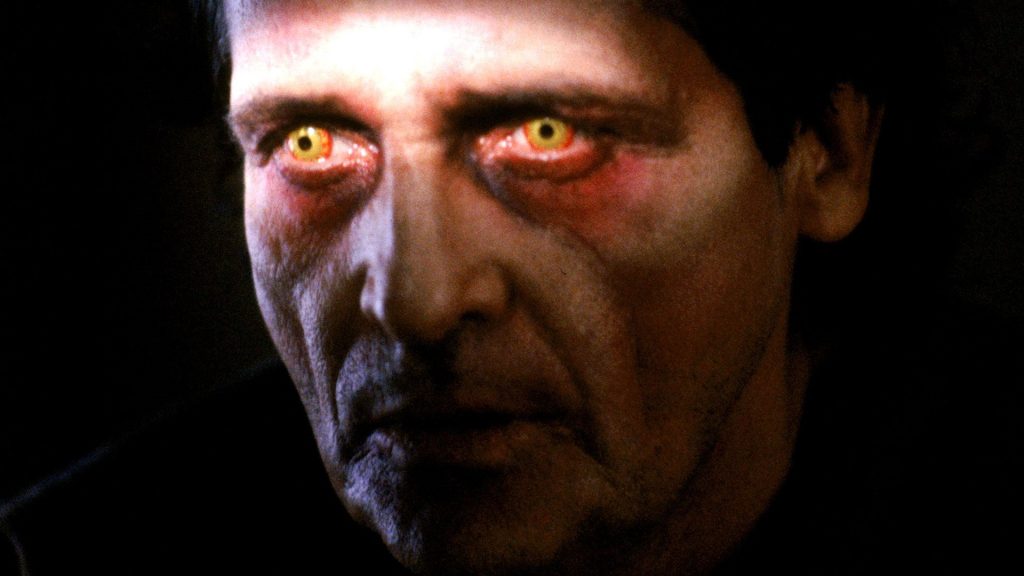
Then comes the horrible revelation: the spirit of the Gemini Killer has been placed inside the body of Father Damien Karras.

That idea is obscene.

And I mean that as praise.

Karras, the man who gave his life to save Regan in the original film, has not been allowed rest. His body has become a jail cell. His sacrifice has been mocked. Evil has taken the most sacred act in the first story and spat on it.

That is why The Exorcist III matters. It does not simply say, “The demon is back.” It says, “What if evil remembered? What if evil held a grudge? What if the victory at the end of The Exorcist was real, but not final?”

That is a much nastier idea than another spinning head.

And then you have Brad Dourif.

Good grief.

Dourif as the Gemini Killer is one of those performances that feels like it was smuggled in from a stage play being performed in a condemned asylum. He does not just chew scenery. He poisons it. He turns words into weapons. One moment he is whispering like a broken man. The next he is roaring with this awful, smug, theatrical hatred. He makes the cell scenes feel dangerous even when he is just sitting there.

The brilliance of Dourif’s performance is that he understands vanity. The Gemini Killer is not frightening because he is physically powerful. He is frightening because he wants to be admired for his evil. He wants an audience. He wants authorship. He wants his crimes to have style. That makes him pathetic, but it also makes him revolting.

There is a particular kind of evil that cannot stand being ignored. Dourif nails it.

Jason Miller’s presence hangs over the film as well, even though the production history around Karras and Patient X is messy. But emotionally, it works. Every time Karras seems to surface through the horror, you remember the ending of the original film. You remember him taking the demon into himself. You remember him throwing himself down those steps. You remember that this man already paid.

And yet here he is.

Still suffering.

That is what gives the film its ache.

For all its reputation as a cult horror sequel, The Exorcist III is incredibly sad. It is full of old men, sick rooms, institutional corridors, religious doubt, and conversations that feel like they are happening at three in the morning when nobody has the strength to lie anymore. Even the humour has a tiredness to it. Kinderman and Father Dyer have this lovely, lived-in friendship, full of bickering and warmth. They talk about movies and food and the absurdity of existence. They feel like real old friends, not screenwriting devices.

That makes what happens later feel like a violation.

The horror in this film often comes from desecration. Bodies are desecrated. Faith is desecrated. Friendship is desecrated. Karras himself is desecrated. It is not about blood for blood’s sake. It is about the humiliation of the sacred.

That is very Blatty.

Blatty’s Catholicism was not decorative. It was not there for spooky wallpaper. His work is full of anguish over the existence of evil, but also a stubborn belief that goodness matters even when it looks ridiculous, even when it loses, even when it is exhausted. That is one of the reasons I love both The Exorcist and The Exorcist III. They do not treat evil like a cool aesthetic. Evil is not fun in these films. Evil is cruel, vain, parasitic, and childish. It breaks things because it cannot create anything worth loving.

That is a far more serious view of evil than most horror films are willing to offer.

Of course, we have to talk about the scare.

The hallway scene.

It has been praised to death, and somehow it still deserves every word. A nurse doing her rounds. A static corridor. Normal movement. Silence. Doors. Waiting. Waiting a little longer than is comfortable. Then that sudden white figure coming in with the shears.

It is a perfect jump scare because the film earns it. Blatty does not just crank the music and throw something at the lens. He lets the frame breathe until you start to relax into it. You begin watching the wrong things. You begin trusting the routine. And then the film punishes that trust.

It is beautiful, vicious filmmaking.

But I almost hate that the scene has become the film’s calling card, because The Exorcist III is so much more than one famous shock. The atmosphere around that scene is what makes it work. The hospital already feels wrong. Too clean. Too quiet. Too drained of life. The whole place feels like death has learned to use fluorescent lighting.

The film is full of that kind of dread. Not constant terror. Dread. There is a difference. Terror jumps out. Dread sits in the chair beside you and waits.

And this film waits.

That may also be why some people bounce off it. The Exorcist III is talky. Very talky. Characters do not just exchange plot points. They ramble. They argue. They philosophise. They complain about carp. They speak in long, strange, theatrical bursts that would probably be laughed out of a modern studio note session.

But I love that about it.

The talk gives the film character. It makes the people feel as though they existed before the camera arrived. Kinderman does not speak like a streamlined protagonist. Father Dyer does not speak like a stock priest. The Gemini Killer does not speak like a modern horror villain delivering trailer lines. Everyone in this movie has too much going on inside them, and sometimes it spills out in odd ways.

That is human. Messy, yes, but human.

The film itself is messy too. There is no getting around that. The studio interference is obvious. The added exorcism material at the end does not feel entirely organic. Father Morning turns up late, and you can almost hear the executives saying, “Can we please have an actual exorcist in our Exorcist movie?” The final act becomes louder and more conventional than the film wants to be.

But here is the thing: even compromised, it still works.

Not perfectly. But emotionally, it works.

Because the ending comes back to Karras. It comes back to mercy. It comes back to Kinderman, this tired, furious, decent man, having to perform one final act for his friend. That is the part that lands. Not the spectacle. Not the lightning. Not the ritual noise. The sadness.

The sadness is the soul of the film.

That is why I find The Exorcist III so much more valuable than a cleaner, safer sequel would have been. It has fingerprints all over it. Blatty’s fingerprints. Studio fingerprints. Actor fingerprints. Scars. Clashes. Strange choices. Odd humour. Big speeches. Sudden brutality. Moments of genius. Moments that wobble. It feels alive in a way many horror sequels do not.

It feels argued into existence.

And I will take that any day over a slick franchise product that knows exactly where every scare goes and has nothing rattling around inside its head.

The other thing that strikes me more and more is how much The Exorcist III feels like a bridge between eras. It has the moral seriousness of 1970s horror, the serial killer dread that would dominate parts of the 1990s, and the psychological moodiness that later horror would try to dress up as prestige. It is not fashionable. It does not feel engineered for teenagers on a Friday night. It feels like a grim little sermon delivered by a man who has had enough of easy answers.

And maybe that is why it has aged so well.

The original Exorcist will always stand alone. It is one of the monuments. You do not improve it. You do not replace it. You stand in its shadow and hope you brought something worth saying.

The Exorcist III did.

It brought grief. It brought rage. It brought Brad Dourif in a cell, tearing language apart. It brought George C. Scott barking at the darkness like he could bully Hell into explaining itself. It brought back Damien Karras, not for a cheap cameo, but as a wound reopened. It brought one of the greatest scares in horror history. It brought a strange, bruised, deeply religious sadness that no other sequel in this series has come close to matching.

For me, that is the reason the film lasts.

Not because it is flawless. It is not.

It lasts because it feels like somebody meant it.

There is conviction in it. Pain in it. A real anger at evil. A real love for the characters who have been damaged by it. And underneath all the murder, possession, police work and studio-mandated exorcism, there is a question that has been sitting there since the first film:

What does a good man do when the Devil refuses to leave the room?

In The Exorcist, Father Karras answers by sacrificing himself.

In The Exorcist III, Kinderman answers by remembering him.

That is why I keep going back to it. Not just for the scare. Not just for Dourif. Not just because it is underrated, although it is. I go back because it understands that horror is not only about the moment evil appears.

Sometimes it is about what evil leaves behind.

And The Exorcist III is absolutely covered in fingerprints.

Synopsis:

The Exorcist III: Legion follows Lieutenant Kinderman as he investigates a series of brutal murders in Georgetown that appear to mimic the work of the long-dead Gemini Killer. His search leads him to a psychiatric ward, where a mysterious patient bears a horrifying connection to Father Damien Karras, the priest who sacrificed himself at the end of The Exorcist. As Kinderman digs deeper, he discovers that evil has not vanished at all. It has simply waited, wearing a dead man’s face and turning Karras’ final act of faith into one last cruel torment. A grim, intelligent and deeply unsettling sequel, the film blends supernatural horror, serial killer dread and spiritual anguish into a story about faith, grief and the terrible things evil leaves behind.

Lee Cronin’s The Mummy

By Cinema

Lee Cronin's The Mummy

If you don’t like horrific and brutal horror films then stop reading right now because Lee Cronin’s The Mummy is not the film for you. I’ve seen some pretty confronting horror films over the years, some so full-on they have never become general releases in cinema, but I have to admit that I have rarely seen a horror film that has had me looking away from the screen as often as this film did.

Before our deep dive into the film though let’s begin with the questions that most people have asked me about this film. Who the hell is Lee Cronin and why is his name in the title of the movie?

Decent questions because yes that honour is something normally only reserved for the likes of Steven Spielberg or James Cameron. But to answer the first question Lee Cronin is the person that brought us Evil Dead Rise and to answer the second – because Blumhouse Studios who made this film are trying to point out that this is Cronin’s version of The Mummy legend and has nothing to do with the Universal Monsters universe or the films starring Brendan Fraser.

Cronin’s The Mummy centres around an American family living and working in Egypt. The father, Charlie Cannon (Jack Reynor – Midsommar), is working as a television reporter while the mother, Larissa (Laia Costa – Only You), works as a nurse in a local hospital.

Their blissful lives are suddenly thrown into chaos when their daughter is kidnapped by a mysterious woman, known as The Magician (Hayat Kamille – Murder On The Orient Express). Charlie gives chase but a sand storm prevents him from catching up to them. Worse still the Police Unit investigating, which includes Detective Dalia Zaki (May Calamawy – Moon Knight), seems to think that Charlie is the prime suspect.

The story then picks up years later with Charlie, Larrisa and their other children, Sebastian (Shylo Molina – Deadly Illusions) and Maud (Billie Roy – Spirit Halloween) living with Larissa’s mother (Veronica Falcon – Jungle Cruise) back in the USA.

The family are fractured but suddenly receive good news – their missing daughter, Katie (Natalie Grace – Raymar), has been found alive. However, the happiness is short lived because when Katie is returned to them it is easy to see that she is disfigured and disturbed. Something is obviously horrifically wrong because she seems to want to cause pain and even death to all of those around her.

Lee Cronin’s The Mummy is one horror film that certainly doesn’t hold back any punches – this film is absolutely savage. Cronin’s screenplay basically uses the character of The Mummy to deliver a brilliantly written possession movie. And while most horror films these days seem to aim for a lower classification to boost audience numbers Cronin throws that playbook right out the window.

Nobody is safe in this film with the demon not caring whether it hurts children or even elderly women. People get hurt or meet grisly ends throughout this film and as you would expect that heightens the suspense that the film generates for the audience. Let’s be honest if they weren’t hiding their eyes behind a popcorn box then they would be sitting right on the edge of their seat.

Yes, there are some pretty gruesome scenes to sit through with his film – especially if you are like my wife and have issues with scenes depicting things like human finger and toenails. But to his credit Cronin hasn’t included those scenes just for the shock factor they do all play important parts when it comes to the plot.

In fact the only fault that I found with this film was that it felt that the suspicion on Charlie petered out fairly quickly – something that doesn’t happen in real life kidnapping cases. The screenplay does try to make up for that by allowing the audience to see scenes where Charlie and Larissa are basically blaming each other for Katie’s death, and while those scenes are well-written and dramatic it is not the same as law enforcement breathing down his neck. In fact the film is arguably stronger when the character of Detective Zaki is around so it is a shame that she goes missing for a huge chunk of the film.

When it comes to the acting performances the intensity of the film also plays a huge part. The child actors – Shylo Molina, Billie Roy and Natalie Grace – are all put through the ringer in their roles and to credit they deliver some truly remarkable performances. The star here though is Jack Reynor who throughout the films more dramatic scenes shows Hollywood that he is ready for leading man status.

Lee Cronin’s The Mummy is not always an easy film to watch but it needs to be praised for the fact that it is a horror film that doesn’t hold back. Cronin’s work here is creative and while the film is savage you do have to say that this is one of the most possession horrors to have surfaced in the last decade.

Return To Silent Hill

Return To Silent Hill

By Cinema

Return To Silent Hill

In 2006 we saw the release of Silent Hill – a film based on a horror themed video game that had a legion of fans. While the reviews of the film were lukewarm the film quickly became a cult favourite and to this day is still listed on a lot of ‘Must See’ horror lists.

Like was so often the case in the early 2000s a sequel was quickly put into production but something happened behind the scenes and director Christophe Gans exited the project. Eventually it was released under the title Silent Hill: Revelation with a different filmmaking team behind it. The film wasn’t well received and the Silent Hill franchise seemed to have been put to bed.

But now it has re-spawned with a new film and once again Gans has returned to the fold with the latest film in the franchise Return To Silent Hill. But don’t worry if you haven’t seen the previous films because this one is a stand-alone film that is loosely based on the Silent Hill 2 video game.

The film opens with young artist James Sunderland (Jeremy Irvine – War Horse) almost running over Mary Crane (Hannah Emily Anderson – X:Men – Dark Phoenix) while she waits for a bus high on a cliff top above her home town, Silent Hill.

He goes to help her and the chemistry between them is instant. A relationship starts and then years later James finds himself apart from her but finds a letter from Mary asking him to come back and find her.

He travels back to Silent Hill and discovers that it is very different place. It looks like an apocalypse has happened. Ash falls from the sky nearly constantly while mutated creatures walk through the streets. Humans are scarce and the ones he does come across seem both physically and mentally damaged.

Still James continues to search for Mary but there are also many questions that need to be answered. Who is the mysterious psychiatrist, known only as M (Nicola Alexis – Dune: Prophecy), who constantly tells James that Mary is dead, and how does the mysterious cult from Jame’s memories of Mary factor into her disappearance.

Whether you love or hate Return To Silent Hill is going to come down to how you feel about films that are a ‘little different’. While most will look at the film and think that it will be a piece of commercial pulp style wise it takes on all the artistic traits of an European arthouse film as Gans lets the audience explore this decimated city just as James is.

As the plot slowly meanders on with very little dialogue in patches and we are introduced to a myriad of creatures and mutants that now call Silent Hill home you could be excused for thinking you are watching an art installation or that Christophe Gans is auditioning to start directing black metal band’s video clips.

While that style might confuse and alienate some of the audience is does match with the game play of the original video game. I do have to admit though that the film itself does seem to work better during its flash-backs and really only comes to life during the present day scenes with the introduction of Maria as a character.

Still the boring parts of the film are largely over-shadowed by the audience’s curiosity. Once you begin this journey with James you will find that you want to stick with it to the end. You simply must have the answers to the all the questions and to the credit while it is done in a roundabout way every question is answered and I must admit the film’s ending is fairly fulfilling.

The various creatures that are revealed in Silent Hill are also amazingly creative but it does feel that they are never fully utilised throughout the film – to the point that I don’t think I ever felt like they posed a threat to James as well.

What does hold up throughout the film though is the performance of Jeremy Irvine. He basically carries this film from start to finish with a performance that actually makes him one of the most memorable things about the film. At times he has to portray his emotions to the audience without dialogue and he does that with ease – something that would have been made harder by the fact that most of the time he would have been reacting to a green screen.

Some may feel that Return To Silent Hill just looks like a creepy screensaver while others may choose to embrace the films artistic side. Either way I get the feeling this will become a cult classic that is very likely to divide audiences over its merit.

The Bride of Frankenstein

The Bride Of Frankenstein

By Cinema

The Bride of Frankenstein is one of those rare sequels that does not simply continue the original story. It sharpens it, twists it, and somehow becomes stranger, funnier, sadder, more elegant, and more emotionally dangerous than the film that came before it. Released in 1935 and directed by James Whale, it remains one of Universal Horror’s crown jewels, and arguably the finest film to come out of that entire classic monster cycle.

The first Frankenstein from 1931 gave the world Boris Karloff’s Monster as an icon: the flat head, the heavy eyelids, the bolts, the stiff walk, the wounded stare. But The Bride of Frankenstein gives him a soul. That is the crucial difference. The original film is powerful, but it is also blunt, grim, and mythic. The sequel is richer. It has wit. It has cruelty. It has beauty. It has camp theatricality sitting right beside genuine tragedy. It feels like a gothic fable told by someone who understands both horror and loneliness.

The film opens with Mary Shelley, Percy Shelley, and Lord Byron discussing the aftermath of the first story. It is a bold framing device, and a cheeky one. Rather than pretend this is a straightforward continuation, Whale reminds us that Frankenstein is already legend. Mary Shelley, played by Elsa Lanchester, becomes both creator and commentator. This is especially clever because Lanchester later appears as the Bride herself, linking the author, the imagined woman, and the failed dream of creation into one strange figure.

The story picks up after the burning windmill ending of Frankenstein. Henry Frankenstein has survived, though he insists he wants to abandon his experiments and return to ordinary married life with Elizabeth. Of course, ordinary life has no place in this universe. Enter Dr. Pretorius, played magnificently by Ernest Thesiger, one of the great ghoulish eccentrics in horror cinema. Pretorius is everything Henry fears becoming: vain, brilliant, decadent, and completely untethered from morality. He does not want to discover life for noble reasons. He wants to play god because it amuses him.

Thesiger nearly steals the film. Pretorius is sinister, but he is never dull. He glides through scenes with dry amusement, raising a glass to “a new world of gods and monsters,” one of the greatest lines in horror history. He is not a mad scientist screaming in a laboratory. He is worse. He is refined, persuasive, and delighted by blasphemy. His presence pushes the film into darker, stranger territory than the first.

But the heart of the film belongs to Karloff.

The Monster in Bride is not merely a creature to fear. He is a victim of existence itself. He did not ask to be made. He did not ask to be hated. Every time he reaches toward connection, the world answers with violence. The blind hermit sequence is the emotional centre of the film, and it still works beautifully. For a brief moment, the Monster finds shelter, warmth, music, food, and friendship. He learns words. He learns kindness. He learns that fire can comfort rather than destroy. Then, inevitably, humans arrive and ruin it.

That scene is why the film endures. The Monster’s tragedy is not that he is ugly. It is that he becomes human enough to understand rejection. Karloff plays that pain with astonishing restraint. His body language is heavy and awkward, but his face is full of longing. When he says “Alone: bad. Friend: good,” it could be ridiculous in lesser hands. Instead, it cuts right through.

Visually, the film is stunning. Whale and cinematographer John J. Mescall fill the screen with sharp shadows, towering laboratory equipment, expressionist angles, graveyards, crypts, stormy skies, and candlelit interiors. The design is pure gothic theatre, but it never feels cheap. The sets have a dreamlike quality, as though the whole film is taking place inside a nightmare staged by a lunatic with excellent taste.

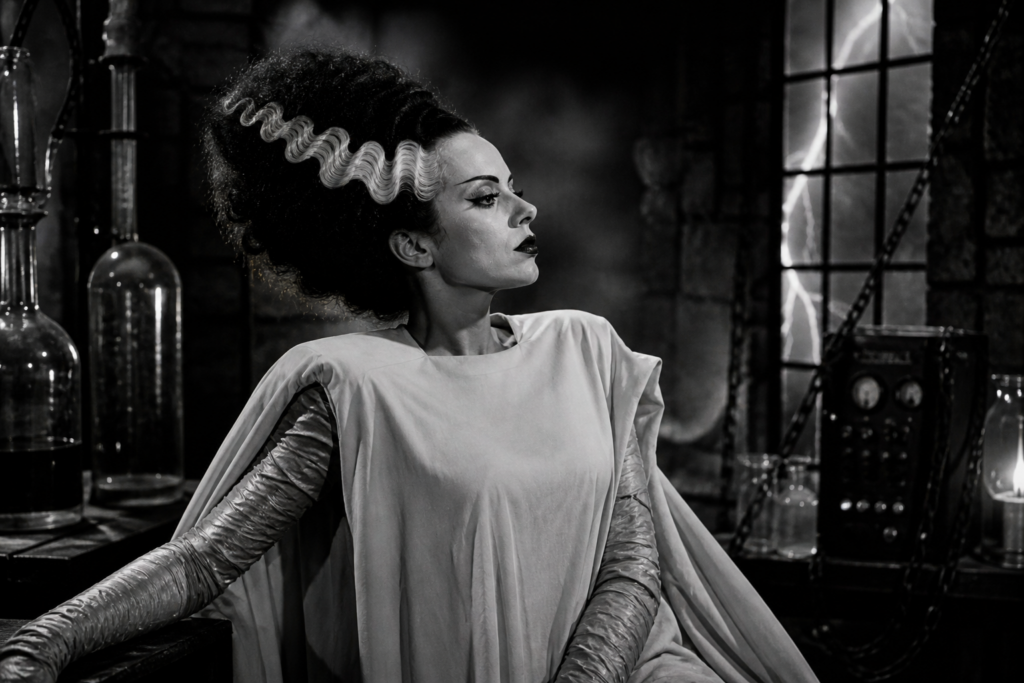
The laboratory climax is still one of the great scenes in monster cinema. The Bride’s creation feels ritualistic, almost religious. Electricity, machinery, bandaged flesh, stormlight, and madness all collide. Then Elsa Lanchester appears as the Bride, and the film becomes immortal. She is only onscreen briefly, but her impact is enormous. The tall hair with white lightning streaks, the birdlike movements, the hissing rejection of the Monster: it is unforgettable.

What makes the ending so painful is that the Monster finally gets what he asked for, and even she cannot bear him. The Bride is not a romantic reward. She is another being dragged into existence against her will. Her rejection is cruel, but it is also instinctive. She wakes into horror, sees the world that created her, and recoils. The Monster understands instantly. His dream dies in front of him.

The final line, “We belong dead,” is devastating. It is also the film’s thesis. These creations, these experiments, these broken imitations of life, cannot survive in a world built on fear and vanity. The Monster’s final act is not mindless destruction. It is judgment. He destroys the laboratory, Pretorius, and himself because the whole enterprise is rotten.

The Bride of Frankenstein

The film’s tone is one of its greatest strengths. It is genuinely eerie, but it is also funny, strange, and openly theatrical. Una O’Connor’s shrieking servant Minnie can be divisive, and some viewers may find her broad comic style too much. But even that excess belongs to the film’s odd personality. Bride of Frankenstein is not trying to be realistic. It is gothic melodrama with a wicked grin.

It also has a strong undercurrent of blasphemy, repression, social rejection, and outsider identity. Whale, who was openly gay in a time when that carried serious personal and professional risk, fills the film with coded strangeness. Pretorius, the Monster, the Bride, and even Henry all exist outside clean social order. The film is fascinated by forbidden creation, unnatural families, bodies that society rejects, and the ache of wanting companionship in a hostile world. That gives the movie a charge that still feels alive.

As a sequel, it does everything right. It respects the original but refuses to repeat it mechanically. It expands the Monster. It deepens the themes. It introduces a villain who is more intellectually dangerous than physically threatening. It gives the audience one of cinema’s most iconic female monsters, even though she appears for only a few minutes. It takes a familiar story and turns it into something more poetic and more perverse.

Nearly ninety years later, The Bride of Frankenstein still feels sharp. Some performances are deliberately heightened. Some comic beats are very much of their era. But the film’s emotional core has not aged. The Monster’s need for love, the horror of being created and abandoned, the arrogance of men who treat life as a toy, and the pain of rejection remain brutally clear.

The Bride of Frankenstein is not just one of the best Universal monster films. It is one of the best horror films ever made. It is elegant, macabre, funny, tragic, and visually magnificent. It understands that the greatest monster stories are rarely about monsters. They are about the people who make them, fear them, exploit them, and refuse to love them.

A masterpiece.

The Legend Of Bela Lugosi

By Cinema

The Man Who Became Dracula

Bela Lugosi was born Béla Ferenc Dezső Blaskó on October 20, 1882, in the small town of Lugos in the Kingdom of Hungary, now Lugoj in modern-day Romania. The town itself would later become inseparable from his identity, because “Lugosi” literally means “from Lugos.” Long before he became cinema’s most famous vampire, he came from a rigid, conservative household shaped by discipline, religion, and the social tensions of late 19th century Eastern Europe.

His father, István Blaskó, worked as a banker and expected strict obedience from his children. Accounts from those who knew Bela later in life suggest the relationship was tense and authoritarian. Bela did not grow up in an artistic or bohemian environment. The family valued structure, respectability, and hard work. His mother, Paula de Vojnich, reportedly provided more warmth and emotional balance inside the home, but the household overall was still deeply traditional. Bela was the youngest of four children, and from an early age he showed signs of rebellion against authority.

The Hungary Bela grew up in was politically unstable beneath the surface. National identity, class division, and social unrest simmered throughout the Austro-Hungarian Empire. These tensions would later shape his politics and worldview. As a child, however, Bela was more interested in imagination and performance than academics. He disliked school and reportedly struggled with formal education. He eventually left school as a teenager, which deeply disappointed his father.

One of the most important aspects of Lugosi’s childhood was his fascination with storytelling and theatre. In the late 1800s, traveling theatrical productions moved through towns across Hungary and Transylvania, bringing melodrama, folklore, gothic literature, and romantic tragedy to rural audiences. Young Bela became obsessed with these productions. The theatricality that later defined Dracula was rooted in these early experiences. He admired actors not simply for fame, but because they seemed larger than life. Theatre represented escape from the constraints of his upbringing.

As a teenager he ran away from home several times. This was not a symbolic act of teenage rebellion. It was literal. He wanted independence and refused to accept the path his father envisioned for him. During these years he worked odd jobs including factory labor and mining work. The physical hardship mattered because it gave him an outsider mentality he carried throughout his life. Unlike many polished stage actors of the era who came from privilege or formal education, Lugosi built himself from almost nothing.

There is also an important regional influence that shaped his future image. Lugosi grew up geographically close to the region associated with vampire folklore and superstition. Even though Dracula was an Irish invention by Bram Stoker, Western audiences later connected Lugosi’s accent and Eastern European background with “authentic” gothic mystery. As a child, Bela would have grown up hearing local legends, folk stories, and rural superstitions common throughout Hungary and Transylvania. Death rituals, religious imagery, and fear of the supernatural were woven into everyday life in many villages during that era. This atmosphere later became part of his screen presence even if indirectly.

By his late teens he was already gravitating toward acting troupes and small theatre companies. He adopted the stage surname “Lugosi” as a way of reinventing himself and tying his identity to his birthplace. Reinvention became a recurring theme throughout his life. Bela Lugosi was not born as the aristocratic, hypnotic figure audiences later saw onscreen. He constructed that identity piece by piece through ambition, performance, and survival.

His difficult childhood also left emotional scars. Throughout adulthood, Lugosi often seemed caught between pride and insecurity. He desperately wanted recognition as a serious actor, not merely a horror novelty. Many biographers trace this tension back to his early life, where approval was difficult to earn and rebellion came with consequences.

What makes Bela Lugosi’s childhood so compelling is how unlikely his eventual rise truly was. A boy from a strict provincial Hungarian family, with limited education and few advantages, would eventually become one of the most recognizable faces in horror history. Yet even at the height of fame, traces of that young outsider from Lugos never disappeared. The accent remained. The intensity remained. The hunger to transform himself remained. Those elements began long before Dracula ever stepped from the shadows.

Bela Lugosi’s path into film was anything but immediate. Before Hollywood ever discovered him, he spent years on the Hungarian stage developing the dramatic intensity that later became his trademark. In the early 1900s he worked with regional theatre companies before eventually earning roles at the National Theatre of Hungary, a significant achievement for someone with little formal education. He performed in classical dramas and romantic roles, often playing soldiers, aristocrats, or emotionally tortured men. At this stage there was no indication he would become permanently associated with horror.

His earliest film appearances came during the silent era in Hungary around 1917. These films are largely lost today, but they showed Lugosi experimenting with cinema at a time when motion pictures were still developing as an art form. He appeared in romantic dramas, adventure stories, and patriotic productions during World War I. The collapse of the Austro-Hungarian Empire and political turmoil following the war changed everything. Lugosi became involved in actors’ unions and political activism during the short-lived Hungarian Soviet Republic of 1919. When the government fell, many associated with it faced persecution. Lugosi fled Hungary and spent time in Germany before eventually immigrating to the United States in the early 1920s.

America was not immediately welcoming. Lugosi arrived speaking very little English and had to rebuild his career from scratch. He worked in immigrant theatre circles, particularly among Hungarian-speaking communities in New York. His heavy accent, which later became legendary, initially limited opportunities in mainstream productions. Yet the very thing Hollywood viewed as a problem eventually became his greatest weapon.

The breakthrough came on stage rather than film. In 1927 Lugosi was cast in the Broadway adaptation of Bram Stoker’s Dracula. His performance stunned audiences. He played the Count not as a snarling monster but as an elegant predator. Calm. Hypnotic. Controlled. He used stillness and voice in ways that felt unsettlingly intimate. Critics and audiences became fascinated with him. The production ran for hundreds of performances and turned Lugosi into a sensation.

Universal Pictures eventually adapted Dracula into film in 1931. Lugosi desperately wanted the role but studio executives initially hesitated. They considered him too foreign and not well known enough for a major production. Some accounts suggest he even accepted a relatively small salary just to secure the part. The gamble changed horror cinema forever.

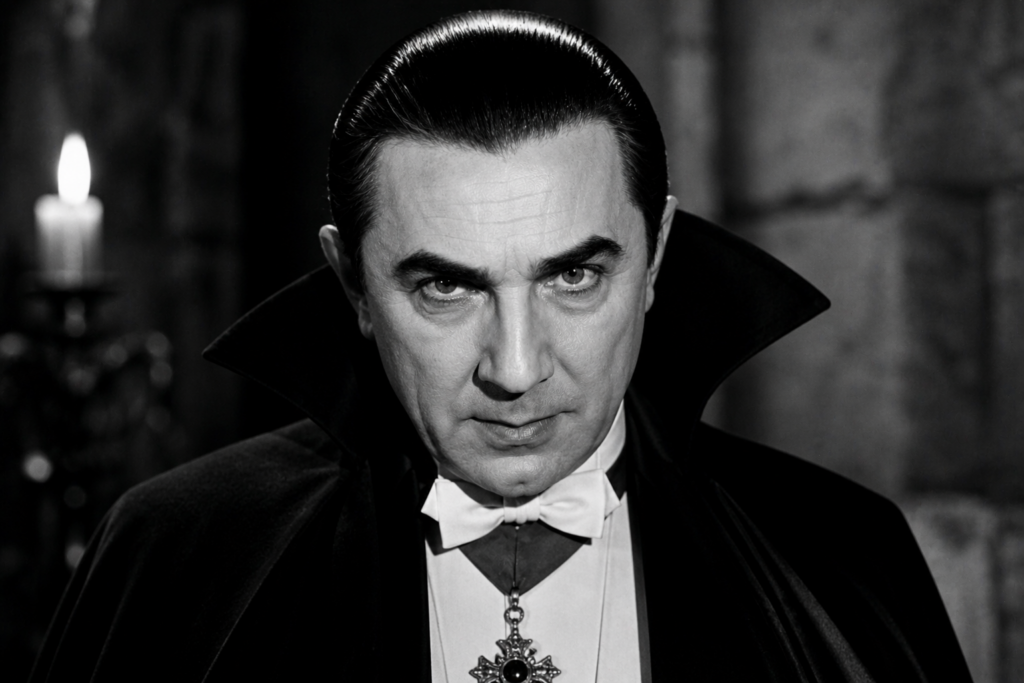
Dracula (1931) became one of the defining films of the Universal monster era. Directed by Tod Browning, the film was atmospheric, theatrical, and strange compared to later horror movies. Lugosi dominated it completely. His thick Hungarian accent, piercing stare, formal movements, and measured delivery created a vampire unlike anything audiences had seen before. Lines such as “I never drink… wine” became immortal largely because of how he delivered them. The cape, slicked-back hair, medallion, and aristocratic demeanor all became foundational vampire imagery for generations afterward.

The success of Dracula should have made Lugosi a major Hollywood star across many genres, but the industry quickly trapped him inside horror and “foreign villain” roles. Studios saw him less as a versatile actor and more as a novelty. Lugosi resisted this typecasting because he considered himself a serious dramatic performer. Nevertheless, horror kept pulling him back.

In Murders in the Rue Morgue (1932), he played the deranged Dr. Mirakle, a scientist obsessed with grotesque experiments involving apes and human blood. The film allowed Lugosi to lean into madness and theatricality. White Zombie (1932) followed soon after and became one of the earliest feature-length zombie films ever made. Lugosi played Murder Legendre, a sinister voodoo master controlling the dead through hypnotic power. His wide-eyed performance remains one of the eeriest of his career and heavily influenced later horror villains.

Throughout the 1930s Lugosi became one of Universal’s defining horror faces alongside Boris Karloff. The two actors were often presented as rivals, though reality was more complicated. Karloff generally received stronger scripts and more prestigious productions after Frankenstein became a massive success. Lugosi reportedly resented this imbalance. He had famously rejected the Frankenstein monster role because he disliked the idea of heavy makeup and mute performance. That decision haunted him for years because Karloff’s career exploded afterward.

The studio paired the two men together in several films including The Black Cat (1934), The Raven (1935), and Son of Frankenstein (1939). These movies became landmarks of gothic horror. The Black Cat in particular stands out because it feels psychologically dark and unusually modern for its time. Lugosi plays a deeply traumatized man seeking revenge against Karloff’s satanic architect. Their onscreen chemistry created tension that audiences loved.

By the late 1930s and early 1940s, however, Lugosi’s career had begun declining. Horror films themselves were increasingly viewed by studios as lower-budget entertainment. Lugosi often found himself in weaker productions with limited resources. Yet even in lesser films, he brought intensity and dignity to roles that could easily have become ridiculous.

One of his strongest late performances came in The Wolf Man (1941), where he played the gypsy Bela who passes the curse of lycanthropy onto Lon Chaney Jr.’s character. He later appeared as Frankenstein’s monster in Frankenstein Meets the Wolf Man (1943), though much of his dialogue was cut from the final film, leaving the performance awkwardly misunderstood by audiences for decades.

Outside Universal, Lugosi worked constantly because he needed money. Financial problems, career frustration, and chronic pain eventually contributed to a morphine addiction after being prescribed medication for leg injuries and exhaustion. By the early 1950s he was no longer viewed as a major star by Hollywood, though horror fans still adored him.

His final chapter became permanently tied to director Ed Wood. Wood worshipped Lugosi and saw him not as a washed-up relic but as a genuine legend. Together they made films including Glen or Glenda (1953), Bride of the Monster (1955), and footage later used in Plan 9 from Outer Space. These productions were chaotic and low-budget, but they gave Lugosi something Hollywood had largely denied him in later years: affection and central importance.

When Bela Lugosi died in 1956 at age 73, he was buried wearing one of his Dracula capes. Whether chosen by family or inspired by legend, the image became symbolic of his entire life. He spent decades trying to escape Dracula’s shadow, yet ultimately the role made him immortal. Long after many technically “greater” actors faded from public memory, Lugosi endured because he created something timeless. He did not simply play Dracula. For millions of people, he became Dracula.

Bela Lugosi’s struggles with drug addiction were tragic, complicated, and deeply tied to both physical pain and the collapse of his Hollywood career. By the time the public became fully aware of his addiction in the 1950s, Lugosi was already a fading star carrying years of frustration, financial pressure, and emotional isolation.

The addiction centered primarily around morphine and later methadone. Unlike many Hollywood addiction stories built around partying or excess, Lugosi’s began through medical treatment. During the 1930s and 1940s he suffered from chronic pain, reportedly linked to severe sciatica and leg injuries sustained over years of physically demanding stage work and film productions. Doctors prescribed painkillers, which at the time were handed out far more casually than they would be today.

What started as pain management slowly became dependence.

Hollywood itself did little to help him. After Dracula made him famous in 1931, Lugosi expected a career filled with major dramatic roles. Instead, studios increasingly treated him as a horror novelty. He watched Boris Karloff rise to prestige status while he himself became trapped in low-budget horror films and stereotyped foreign villain roles. Lugosi took this personally. Friends and biographers later described him as proud, sensitive, and deeply aware that Hollywood no longer respected him.

By the late 1940s the work had dried up significantly. He was earning far less money than audiences probably assumed. At times he accepted almost any role available simply to survive financially. Many of the productions were exploitative and cheaply made. For an actor who once commanded Broadway stages and helped redefine horror cinema, the decline was emotionally brutal.

The addiction worsened during these years. Lugosi reportedly hid the extent of it from many people around him. Unlike alcohol addiction, which often played out publicly in Hollywood circles, morphine dependence could remain hidden behind exhaustion, mood swings, or erratic behavior. There were periods where Lugosi seemed functional and articulate, followed by stretches where he appeared frail and physically diminished.

One important thing often overlooked is that Lugosi still maintained a remarkable level of professionalism despite his struggles. Co-stars frequently noted that he remained polite, theatrical, and committed to performances even when productions themselves were disastrous. He still carried himself with the elegance and old-world formality that had defined him since the Dracula years.

His addiction became public knowledge in 1955 when he voluntarily entered treatment at the Metropolitan State Hospital in California. This was a major moment because celebrity addiction was rarely discussed openly during that era. Lugosi’s decision to seek help publicly required courage. Newspapers covered the story heavily, often with a mix of sympathy and sensationalism. Some articles portrayed him almost like a fallen gothic figure, blurring the line between the man and the Dracula persona that had followed him for decades.

After treatment, Lugosi genuinely tried to rebuild himself. He appeared on television interviews speaking candidly about recovery. In one famous appearance he openly acknowledged his addiction in front of a national audience, something very unusual for the mid-1950s. There was vulnerability in these moments that audiences had rarely seen from him before.

Around this same period he continued working with Ed Wood, the eccentric filmmaker who idolized him. Their relationship has often been misunderstood or mocked because of the bizarre nature of Wood’s films, but there was genuine loyalty between them. Wood gave Lugosi work when much of Hollywood had abandoned him. Lugosi, in turn, seemed grateful simply to still be performing.

Sadly, his health continued declining. Years of addiction, stress, financial instability, and aging had taken a severe toll. Bela Lugosi died of a heart attack on August 16, 1956, at the age of 73.

One reason Lugosi’s addiction story still resonates is because it feels inseparable from the darker side of old Hollywood itself. He was a pioneering immigrant actor who created one of cinema’s most enduring icons, yet the industry often discarded him once it no longer knew how to market him. The morphine addiction became part of a larger narrative about isolation, typecasting, physical suffering, and the psychological cost of fame.

Even so, his legacy survived far beyond those final difficult years. Modern audiences tend to remember the hypnotic stare, the cape, the accent, and the elegance. But behind that image was a man who spent much of his life fighting to retain dignity in an industry that repeatedly reduced him to a caricature of his own success.

Late Night With The Devil

Late Night With The Devil

By Cinema


Late Night with the Devil

There’s a reason this one cut through the noise. On paper it sounds like a gimmick. A possessed girl goes on a 1970s talk show and chaos unfolds live on air. In practice it plays like something much stranger. It feels like a cursed broadcast that somehow slipped through time and landed intact.

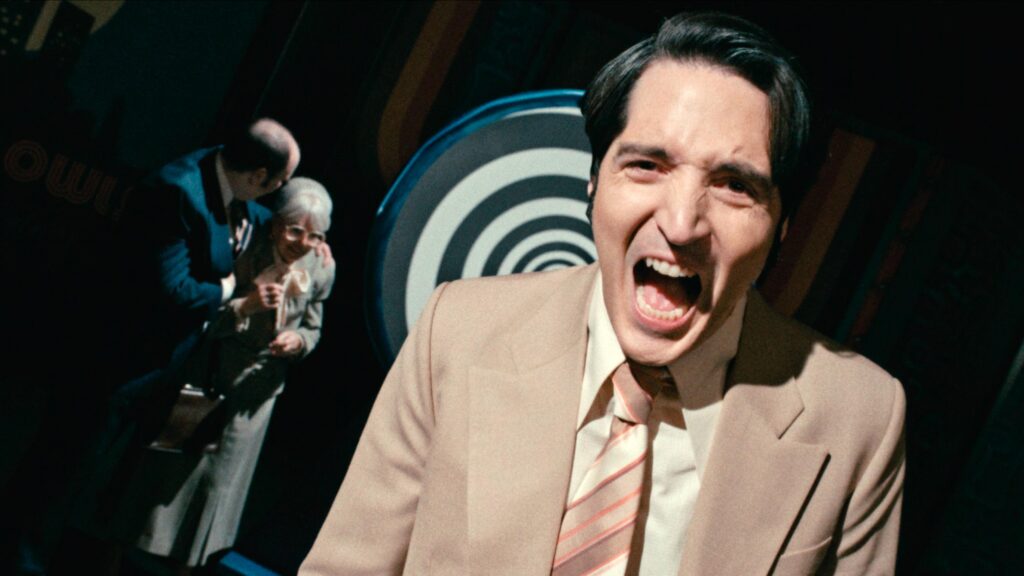
The film is set on Halloween night, 1977, during a fictional episode of Night Owls with Jack Delroy. Jack is a struggling late night host trying to claw back ratings after personal tragedy. That hook matters more than it first appears. This isn’t just about a possession. It’s about desperation, ego, and what someone is willing to invite into the room when their career is dying in front of them.

David Dastmalchian carries the whole thing. He doesn’t play Jack as a caricature. There’s a quiet sadness under the charm. You buy him as a man who has spent years smiling for the camera while something hollow grows underneath. That emotional grounding is what lets the film escalate into full-blown horror without tipping into parody.

Late Night With The Devil

The structure is where it really gets clever. Most of the film is presented as the “live broadcast,” complete with period-accurate cameras, clunky transitions, ad breaks, and studio audience reactions. Between segments, you get black and white behind-the-scenes footage. Those moments are crucial. They strip away the performance and show the tension building in real time. Crew members get uneasy. Guests start to feel off. Jack himself becomes harder to read. It creates this creeping sense that whatever is happening isn’t contained to the show anymore.

From a production standpoint, the attention to detail is obsessive. The Cairnes brothers leaned hard into authenticity. The set design mirrors 70s network television down to the wood paneling, lighting rigs, and slightly cheap-looking props. The cameras behave like actual broadcast cameras from the era, not modern gear pretending to be old. Even the pacing feels right. There’s that slow, almost awkward rhythm those shows used to have, which makes the later breakdown hit harder.

They also made a key decision that pays off massively. Practical effects over heavy CGI. When things start to go wrong, it feels tactile. There’s weight to it. You’re not watching polished digital horror. You’re watching something messy, immediate, and uncomfortable, like it’s happening in front of an audience that didn’t sign up for it.

Behind the scenes, the filmmakers have talked about wanting the movie to feel like a recovered tape. That idea shapes everything. The lighting is imperfect. The audio dips and distorts. The edits aren’t clean. Even the performances lean slightly heightened, like television personalities of the time. It all feeds into the illusion that this could be real.

The occult layer is where it gets interesting for you. The film doesn’t just throw in possession as a shock device. It pulls from real 1970s occult paranoia. That era was obsessed with demons, cults, and televised spirituality. Think The Exorcist, the Satanic panic building in the background, and the rise of self-help gurus mixing psychology with mysticism.

Jack himself is tied to a shadowy group called “The Grove,” which carries a very clear nod to real-world elite societies and secret rituals. It never over-explains this, which is the right call. The suggestion is enough. It frames Jack not as an innocent host who stumbled into horror, but as someone who may have brushed up against darker ideas long before the show went off the rails.

The possession narrative also plays with control and performance. The young girl, Lily, is introduced through a parapsychologist as a survivor of a satanic cult. The film never fully confirms where the truth ends and manipulation begins. Is this a genuine demonic presence, or a constructed spectacle that goes too far? That ambiguity is key. It keeps the horror grounded in psychology while still allowing the supernatural to bleed through.

Reactions have been strong for a reason. Audiences tend to fall into two camps. One group gets completely pulled into the illusion and finds it genuinely unsettling. The other admires the craft but keeps a bit of distance because of the format. Either way, almost everyone agrees Dastmalchian’s performance and the commitment to the bit are what sell it.

Where it really lands is in its final stretch. Without giving anything away, the film abandons its controlled format and lets things unravel. That shift can be divisive. Some people love the escalation. Others prefer the tighter, broadcast-driven tension of the earlier acts. But even if you don’t love the ending, it sticks. It doesn’t fade out quietly.

At its core, this isn’t just a horror film. It’s about the cost of chasing attention. Jack isn’t battling a demon in the traditional sense. He’s dealing with the consequences of needing to be seen, to be relevant, to win. The occult becomes a vehicle for that. A force that steps in when the performance stops being enough.

If you’re coming at it from an occult angle, it hits a sweet spot. It respects the aesthetic and mythology without turning into cheap shock tactics. It understands that the real tension comes from belief, suggestion, and the thin line between ritual and showmanship.

It feels like something that could have existed. And that’s what makes it linger.

Ready Or Not 2

Ready Or Not 2: Here I Come

By Cinema

In the 2019 a horror film landed that had fans of the genre in raptures. While it wasn’t expected to be one of the big hits of the year the arrival of Ready Or Not had people raving. Finally there was a horror film that had everything – twists, turns, action, gore and a few laughs along the way.

What is surprising is the fact that it has taken 7 years for the next film in the franchise to hit cinemas. But thankfully directors Matt Bettinelli-Olpin (Abigail) and Tyler Gillett (Scream VI) have returned back to the franchise that everybody wants to see them working in and delivered a film that is certainly not going to disappoint those that loved the first film.

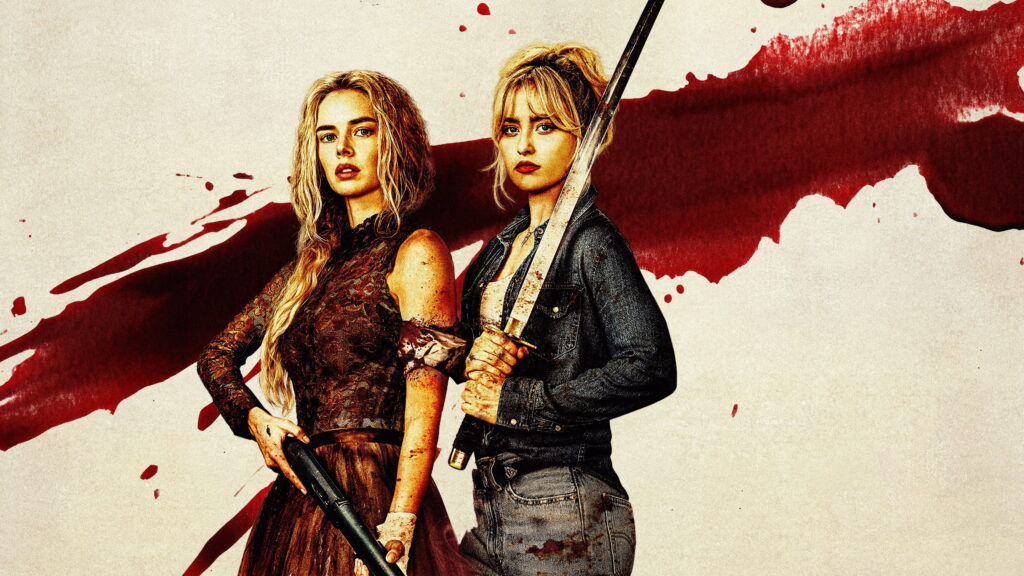
Ready Or Not 2: Here I Come literally begins where the last film finished. Grace MacCaullay (Samara Weaving – Guns Akimbo) collapses onto the ground having just survived the ‘game’ that saw her new in-laws try to kill her to appease their Dark Lord.

However, when she wakes up in hospital she finds out that things are not exactly how she expected them to be. First of all her sister, Faith (Kathryn Newton – Freaky), is there ready to remind Grace how much she hates her and then she finds herself being hunted by a man she has never met before.

After a short burst of freedom Grace finds herself captured once again. This time she and Faith find themselves trapped on a luxurious estate run by the Danforth family. Here they are told by a mysterious lawyer (Elija Wood – Lord Of The Rings) that are once again prey. This time the game is a little different – the family that kills them will take control of a powerful Order that pretty much gives them all the power in the world.

Desperate to take the mantle that once belonged to their father are twins Titus (Shawn Hatosy – The Faculty) and Ursula Danforth (Sarah Michelle Gellar – I Know What You Did Last Summer) but in order to do so they are going to have to beat all the other families to killing Grace and she certainly is not going to go down without a fight.

The fact that the game in Here I Come mirrors the one in the first one so much leaves me in two minds. On one hand I would have liked to have seen the screenwriters come up with something new and original but on the other hand at least they manage to find new ways to kill characters while still being able to mix horror, comedy and action all together brilliantly well.

One of the most intriguing parts of Here I Come are the characters themselves. No two characters are the same and the writers have even managed to avoid cliches by giving them actual characterisation outside of the particular sets of skills that they may possess as part of the game. Sure some of the characters have been purposefully made annoying, which makes you as an audience member want to see them bumped off by Grace, but at least they are different enough so they don’t all bled in together.

The two most interesting characters when it comes to the villains are certainly Titus and Ursula. While Ursula is conniving and calculating Titus is a pure psychopath. As soon as it is established that Titus will kill anyone that gets in his way that adds to the suspense of the film. Some of his dealings with Faith are particularly violent which not only adds to his character but also has you praying for the moment that he finally comes up against Grace.

Likewise, some of the most memorable scenes here are between Sarah Michelle Gellar and Samara Weaving. The witty lines written for Gellar are reminiscent of what she got to play with during her Buffy The Vampire Slayer days and she absolutely shines when she gets to deliver them.

Of course, what most are wanting to see here though is the horror element of the film. Bettinelli-Olpin and Gillett certainly deliver there. The horror aspect of the film is intense and lifted to a whole new level as the pair device new and gory ways to kill off most of the players in the game. The only thing that perhaps lets the film down a little is the over-the-top ending that seems to be mainly played for laughs. It works but true horror fans maybe expecting something very different.

If you enjoyed the first Ready Or Not film then there is a good chance that you are going to love Here I Come. Once again the film mixes genres amazingly well while the acting performances of Weaving, Gellar and Wood are priceless. While it may not be everyone’s cup of tea this is a sequel for the ages.

Synopsis

Ready or Not 2: Here I Come picks up immediately after the original film, with Grace once again dragged into a deadly satanic game after surviving the massacre of the Le Domas family. This time, rival elite bloodlines hunt her and her estranged sister Faith in a brutal battle for power, forcing Grace into another night of violence, betrayal, and blood-soaked survival.

Whistle

By Cinema

Do you remember back in the 90s and the early 2000s where there were a bunch of horror movies hitting cinemas that were made for teenagers and younger horror fans? Even if you were older they were still enjoyable films.


Films like The Faculty, Disturbing Behavior and Valentine – they were simple horrors with some great mystery and no political agendas. Now you flash forward to 2026 and most horror films either see directors trying to be all artistic and different which often gets in the way of the plot and tripping up the film badly. They throw in a supernatural horror that makes no sense in the end and worse still the characters are so unlikable you don’t really care when the killing starts.

Sometimes that’s all you really need from a horror film – relatable characters that you don’t want to see fall victim to the killer next. That is exactly what director Corin Hardy (The Nun) and screenwriter Owen Egerton (Mercy Black) have achieved with Whistle – a basic horror but with characters you actually care about.

Whistle centres around a High School student named Chrysanthemum (Dafne Keen – Deadpool & Wolverine). After the death of her father, who was her only parent, she has to move to another town and live with her cousin, Rel (Sky Yang – Last Days)l who is a bit of a misfit like her.

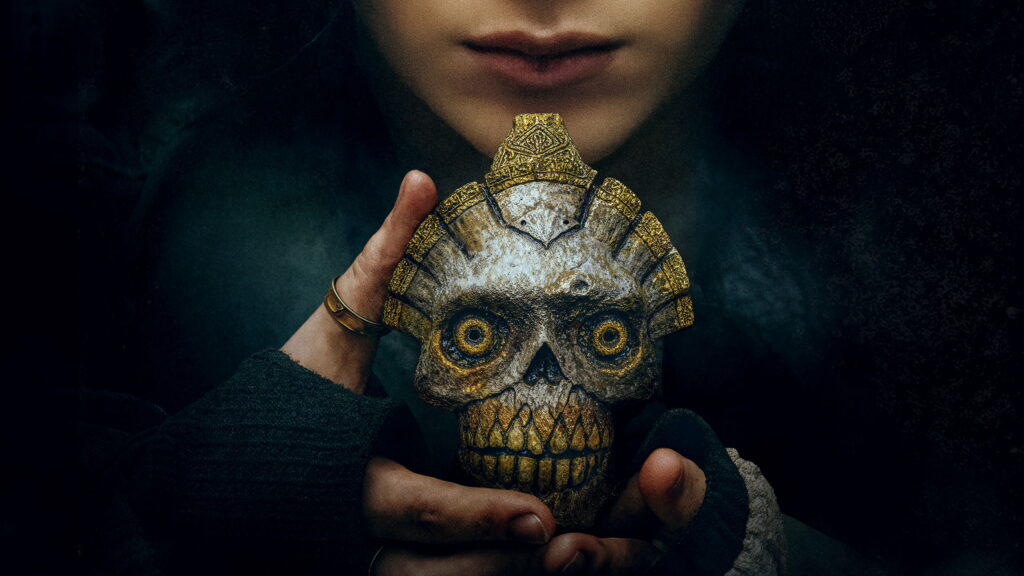
On her first day at the new school she finds an Aztec Death Whistle in her locker and quickly discovers that it belonged to a student who recently died in a horrific way.  She also learns that his best friend, jock Dean (Jhaleil Swaby – White Dog), is not happy that she has been given the locker. The resulting fight results in teacher Mr Craven (Nick Frost – Paul) giving Chrys, Rel, Dean, Dean’s girlfriend – Grace (Ali Skovbye – Breakthrough) and her friend Ellie Gains (Sophie Nelisse – The Book Thief).

During the detention Mr Craven confiscates the whistle and makes the mistake of blowing it. Later in the night the teens steal the whistle back and Grace blows it where all can hear. That sets the wheels in motion and soon all ‘their deaths’ are coming for them.

The plot for Whistle sounds pretty basic but to the credit of Hardy and Egerton have found a way to bring some pretty intense horror and suspense to the film. Some of the teen’s death are creative and have been brought to the screen with the same amazing special effects that Hardy got to work with on The Nun. One of the deaths is actually so creative that it is likely to stay etched in the audience’s mind for a long time.

Egerton’s screenplay is also something special. It feels like he is constantly a few scenes ahead of the audience and nothing has been placed in this film to be filler. For awhile I was wondering about why they had introduced a drug dealing Youth Pastor, named Noah Haggerty (Percy Hynes White – My Old Ass), had been introduced into the mix. But as the plot plays out he becomes an important part of Egerton’s jigsaw puzzle – and when all those pieces fall into place you realise that nothing in this film happens by chance.

While the characters of this film do remain relatable to anyone that has been through High School it also delves into some deep topics and themes. Chrys is actually a recovering drug addict who is proud of the fact that she has got herself sober so when she sees her ‘death’ coming for her is depicted with a syringe in her arm the screenplay explores what it is like for a recovering addict to face the fear of relapsing. At the same time she is battling her feelings for Ellie which sees her exploring her sexuality – something many teens find themselves facing these days.

That’s why this film is so relatable. As I watched Whistle I found myself thinking things like – I had friends like that at High School or I’ve found myself in that situation. That relatability is what makes this film such a great watch – you love the characters and you don’t want anything to happen to them.

Whistle is one of the best horror films to surface over the past few years. It reveals Corin Hardy as a director to watch while transporting its audience back to the good old days of 90s horror – it is a must see for all horror fans.

Whistle is currently screening in cinemas.

Synopsis

Whistle follows a group of high school students who discover an ancient Aztec Death Whistle hidden inside a locker. After blowing it, they become cursed and are hunted by terrifying manifestations of their own future deaths. As the body count rises, the group races to uncover the whistle’s dark origins before their gruesome fates catch up with them.

They Will Kill You

By Cinema

They Will Kill You

Every now and then a movie comes along that is so difficult to write about that I actually find myself procrastinating about it when I sit down to write about it. I have certainly found that that is the case for the brand new film from director Kirill Sokolov (Why Don’t You Just Die) – They Will Kill You.

One the surface this isn’t such a bad film – in fact if you like violent action films with a tinge of horror you will probably quite enjoy watching it. The issue here is that while you are watching it you begin to release that there is nothing new or different about the film. In fact it feels like nearly every scene is playing homage to another film or a famous director. Even the entire premise of the film feels like he has taken two Keanu Reeves films – Constantine and John Wick – and blended them together.

The film itself begins with Asia Reaves (Zazie Beetz – Deadpool 2) trying to escape the clutches of her abusive father alongside her sister Maria (Myha’la – Dead Man’s Wire). As the pair are confronted by their father and his friend Asia opens fire shooting her father. The result of that is Maria being forced to go back to her father while Asia goes on the run. 

Years later Asia turns up to work at an exclusive high-rise apartment building known at The Virgil. When she arrives she is welcomed by building manager, Lily Woodhouse (Patricia Arquette – Stigmata), but soon she begins to realise that things aren’t as they seem.

First of all the staff seem to be acting weird, then when she steps out of the shower someone has left a cryptic message on her bathroom mirror – “THEY WILL KILL YOU!” Then while she sleeps a group of The Virgil’s residents, led by Sharon (Heather Graham – Boogie Nights) and Kevin (Tom Felton – Harry Potter & The Deathly Hallows), break into her room and attack her.

As she fights for her life Asia asks them a serious question – where is her sister Maria? That is when the fight really starts. Asia fights for her life while scouring The Virgil for her sister while trying to outrun those who want her dead.

So far in his career Sokolov has famously emulated his filmmaking heroes with his work but with They Will Kill You it feels like he has gone too far or possibly flown too close to the sun with this one. No matter how much I was enjoying the great battle sequences and creative deaths during the film I just couldn’t get Kill Bill out of my head. As if to cement my suspicions about this being a Quentin Tarantino homage the film even contains a ‘women’s foot close-up shot’ – something that has become somewhat of a trademark with Tarantino’s films over the years.

What Sokolov does have working in his favour though is the skills of Zazie Beetz. With so many similarities to other films Beetz is what makes They Will Kill You memorable. Whether it be the deeply emotional sequences of her begging for the life of her sister or her brilliant ‘combat’ sequences as she goes to war with whatever The Virgil throws at her Beetz (excuse the pun) never misses a beat. Long after you left the cinema it is Beetz’s performance that you will remember whenever someone mentions the film.

Sadly, though she is let down by the screenplay (or lack of) here. Written by Alex Litvak (Predators) the screenplay itself is one of the reasons why They Will Kill You is reminiscent of so many other films. The supernatural element is very similar to Constantine while it feels like some important elements of the ‘realm’ itself are never fully explained. 

Then there is the ridiculously over-the-top pig’s head finale which just takes the film into a new level of craziness. When you compare that to how the Satanic worship storyline was  resolved in Ready Or Not 2: Here I Come you see just how badly Litvak’s screenplay handled things here.

While there is some creativity with the fight sequences of They Will Kill You largely this feels like a film you have seen many times in the past. While the one-person army revenge flick is the in-thing in Hollywood at the moment they only work if the filmmaker and screenwriter involved have an idea that separates their film from the rest.

Synopsis

They Will Kill You follows Asia Reaves, an ex-convict who takes a housekeeping job inside a mysterious New York high-rise while searching for her missing sister. Once inside the building known as The Virgil, she discovers its wealthy residents are part of a violent satanic cult that uses human sacrifice to maintain its dark power, forcing her into a brutal fight for survival.

The Bride

By Cinema

The Bride

Here is a little bit of a cinematic receipt. Take a little bit of Gothic literature and then blend in some musical and dance sequences that would make Baz Luhrmann extremely proud, Then add a Bonnie & Clyde storyline and for good measure introduce one of the world’s most talented actresses, Jessie Buckley (Hamnet) into the mix. What do you get?

You get director Maggie Gyllenhaal’s (The Lost Daughter) brand new film The Bride! – which is pretty much a re-telling of the 1935 film Bride Of Frankenstein with her own slant on it.

The concept of a bride for Frankenstein’s monster is not a new one. Even the 1935 film didn’t create it. Author Mary Shelley actually briefly mentioned the character in her original Frankenstein novel,. It was a brief idea mentioned by the monster himself but quickly squashed by Dr. Frankenstein himself. Just as director James Whale did in the 30s Maggie Gyllenhaal takes that original concept and lets her mind run wild. And that is something that she does magically well.

Gyllenhaal’s story begins with the monster himself, now known as Frank (Christian Bale – Batman Begins), finding himself alive in the 1930s after over a century of being ‘alive.’ Overcome with loneliness he tracks down a doctor in America, named Dr Euphronius (Annette Bening – American Beauty), who has made a name for herself for re-animating animals. He tells her his woes and after some convincing she agrees to re-animate a ‘bride’ for him in return for being allowed to study his body.

They soon find the perfect body for the procedure. It is that of Ida (Jessie Buckley), a woman who was killed after making allegations against a mobster during an outburst in a crowded restaurant.

After her re-animation Ida has no memory of her past and is lied to by Frank who tells her that they were previously engaged. To celebrate her recovery from her ‘accident’ they head out to a nightclub where the two of them are hassled by two men. In a fit of rage Frank kills them both and it soon becomes public knowledge that two monsters are on the loose.

As they begin a journey across America, following in the footsteps of Frank’s favourite actor Ronnie Reed (Jake Gyllenhaal – Nightcrawler) they are pursued by two Detectives. One is Jake Wiles (Peter Sarsgaard – September 5) who has a connection to Ida’s murder while the other is Myrna Mallow (Penelope Cruz – Vicky Cristina Barcelona) who due to being female has to introduce herself as his assistant.

To describe The Bride! is actually quite difficult. As I mentioned before it is part Bonnie & Clyde crime story, part musical and dance (which are scenes that Christian Bale, Jessie Buckley and Jake Gyllenhaal seem to lap up but on the other hand it is an ode to 1930s cinema. There are nods to many classic films throughout the film while Gyllenhaal’s screenplay places the monster into the 1930s exceptionally well. Some how taking him out of 1800s Europe and placing him amongst Rat Pack parties and jazz music works exceptionally well. Even a scene with the ‘monsters’ being chased by men with torches and pitchforks doesn’t seem out of place in the 1930s setting.

Gyllenhaal places her creativity throughout the film. While the idea of using Mary Shelley as a character who frames the story is not new (it was also in the 1935 version) Gyllenhaal lets Buckley run with the idea to the extreme of where at times Ida and Shelley almost seem like the same character. Likewise that creativity re-surfaces when she lets some very modern ideas seep into the film.

As Ida stands up for herself and the prostitutes that have been killed by the mobster the revolution that starts is very reminiscent of both the feminism and #MeToo movements which become picturesque centrepieces as the film goes on. The cinematography of these scenes is so powerful that it really stays with you.

Even the topic of depression and loneliness in men is explored thoroughly and to his credit Christian Bale’s performance is one of the reasons why it works so well on the screen. Bale plays pained and tortured exceptionally well and this is one of the best performances that we have ever seen him deliver.

Likewise, Jessie Buckley’s performance here is remarkable. I thought her work on Hamnet was the best of her career but she manages to even eclipse that here. It is a shame this film didn’t come out during the Awards season because she would have found herself being nominated for The Bride! as well.

The Bride! is an absolute masterpiece. At times it feels chaotic but that just makes it a beautiful mess that you want to watch over and over. Bale and Buckley are sensational while Maggie Gyllenhaal has delivered the most Tim Burtonesque film that Burton himself has not directed. This is something magical and special about this film and every lover of serious cinema needs to see it.

Synopsis

The Bride! (2026), written and directed by Maggie Gyllenhaal, is a Gothic romance loosely inspired by Bride of Frankenstein and Mary Shelley’s Frankenstein. Set in 1930s Chicago, the story follows Frankenstein’s monster (Christian Bale), who goes by Frank, as he asks scientist Dr. Euphronius (Annette Bening) to create him a companion. A young woman named Ida (Jessie Buckley) is murdered by criminals, reanimated, and becomes the Bride — and the two fall into a combustible romance.