


There’s something deeply compelling about places that refuse to move on. Buildings that linger long after the story everyone cares about has ended. People Standing In Front of Danzig’s House understands this instinct perfectly. On paper, it’s a modest, zine-format photography book. In practice, it’s a slow, oddly affectionate meditation on decay, fandom, and the kind of joke that becomes funnier the longer you commit to it.

The premise is aggressively literal. The book contains photographs of people standing in front of a single house in Los Angeles — a sagging, overgrown, borderline haunted structure that once belonged to Glenn Danzig. This was Danzig’s home for nearly thirty years, a fact that somehow makes the place feel even stranger now that it sits abandoned and visibly deteriorating, surrounded by a neighborhood that has long since polished itself into something sleek and unaffordable.
The project comes from Dan Ozzi, a writer and photographer whose previous work has focused on punk rock’s many contradictions, compromises, and slow-motion sellouts. His books have dissected scenes, labels, and personalities, but here he turns his attention to something far more minimal and, in its own way, more honest. No interviews. No thesis statements. Just a camera, a sidewalk, and a house that looks like it’s actively being reclaimed by the earth.
Ozzi has explained that it started casually. Whenever he happened to be nearby, he’d photograph whoever he was with standing in front of the house. Friends. Musicians. Passersby. Over time, the repetition became the point. The house never changes much, but the people do. Hairstyles, fashions, expressions, eras of punk credibility — all of it cycles through while the building remains stubbornly, grotesquely constant.
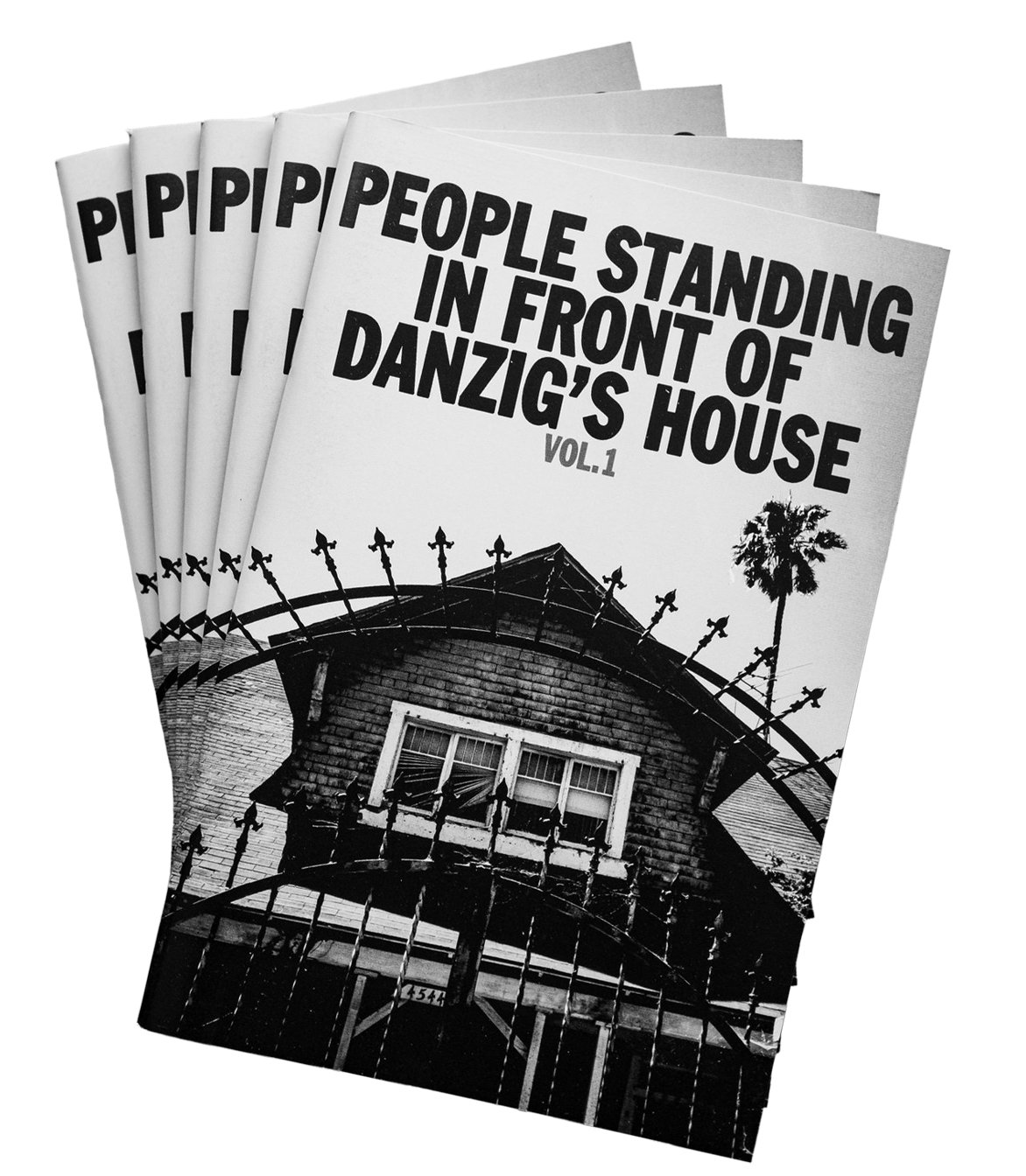
There’s an important clarification baked into the project: Danzig doesn’t live there anymore. He hasn’t for years. The house was put on the market in 2017 for a reported $1.2 million, then quietly slipped off listings, its fate unresolved. Whether Danzig still owns it or not is beside the point. What matters is the residue. The lingering presence. The way a place can retain cultural gravity long after its most famous occupant has vanished.
Physically, the book mirrors its subject. It’s unpretentious, compact, and intentionally rough around the edges. Forty-eight pages of black-and-white giclée prints, sized at 6×9 inches, bound like a proper zine rather than a precious art object. The photographs aren’t glamorous. People stand stiffly, awkwardly, sometimes reverently, sometimes ironically, framed against peeling paint, dark windows, and creeping vegetation. The house looms in the background like a silent collaborator.
At fifteen dollars (US) via BigCartel, People Standing In Front of Danzig’s House isn’t trying to convince you it’s important. It doesn’t need to. It’s funny in a dry, committed way. It’s obsessive without being precious. And beneath the joke, there’s a surprisingly effective snapshot of how underground culture preserves its landmarks — not with plaques or museums, but with repetition, rumor, and people stopping on the sidewalk to say, “Wait. Is this the house?”
It’s a book about standing still, about looking at something long enough for it to start looking back.
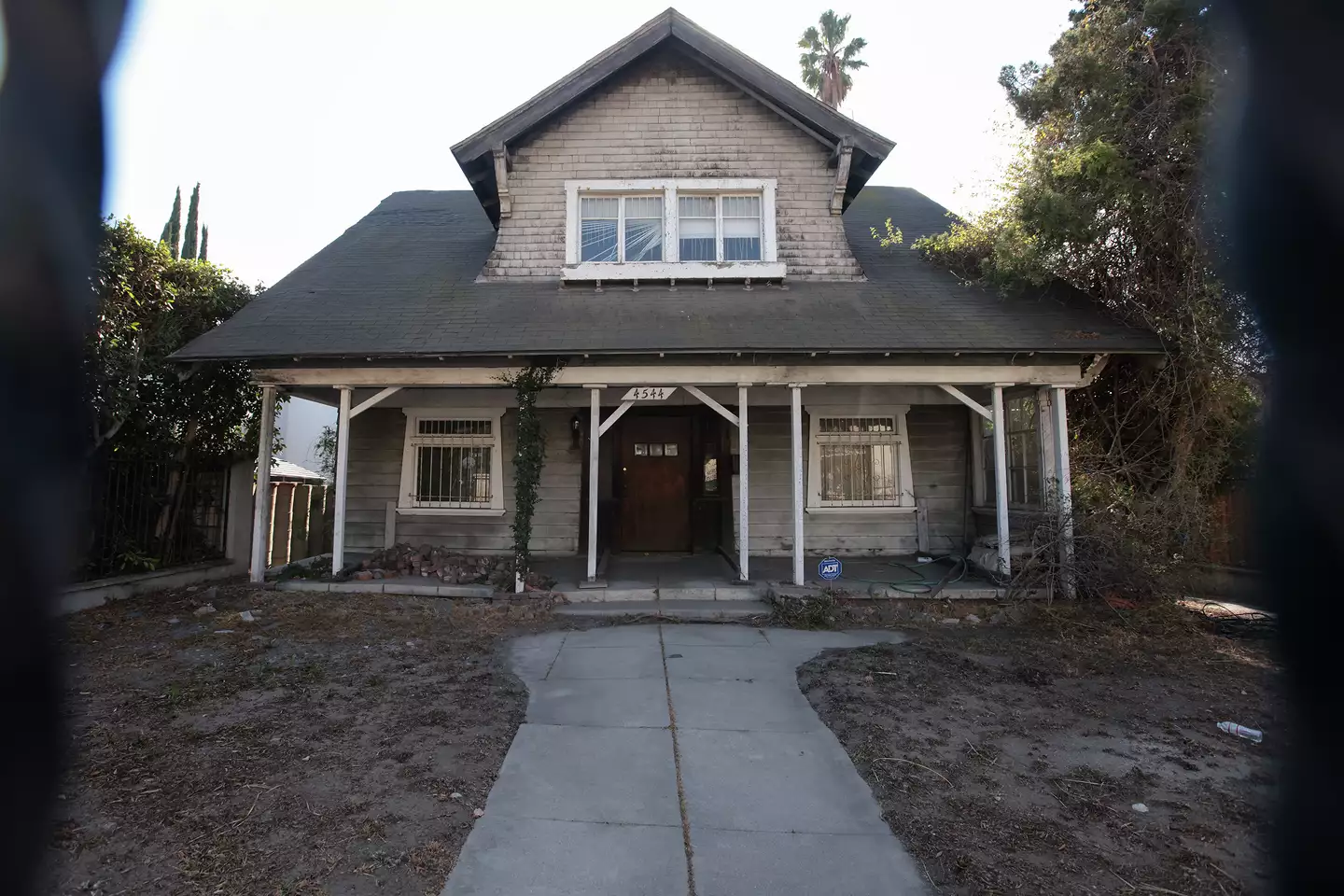 Photo by Jessie Alcheh/SFGATE
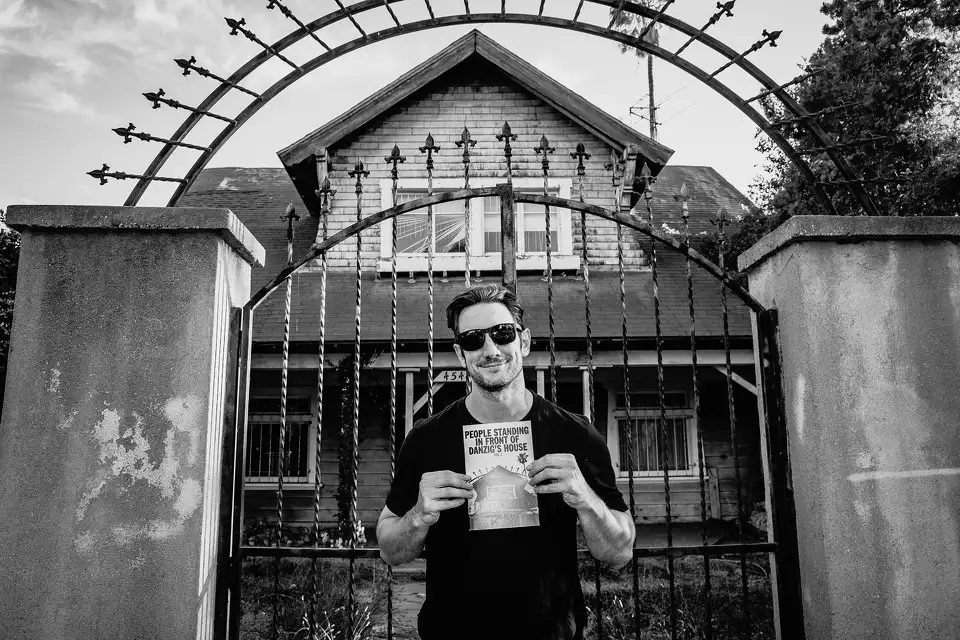
Author Dan Ozzi in front of Danzig’s house in Los Angeles.