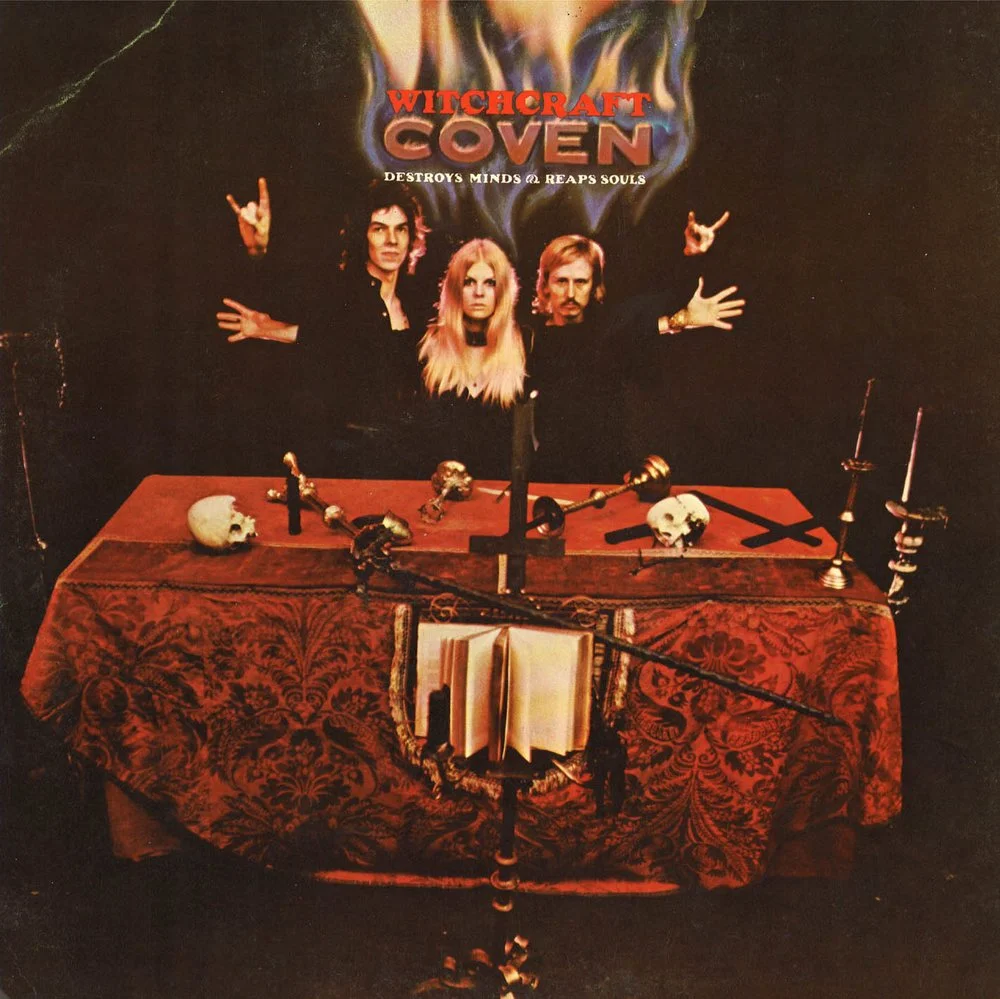
Before Black Sabbath ever struck their first ominous chord, before Metal even had a name, there was Coven.
Born in Chicago in the mid-1960s, Coven weren’t just another psychedelic band flirting with the occult for shock value. They were the real thing. Led by Jinx Dawson, a striking woman with aristocratic roots and a flair for the theatrical, they were the first to take Satanism out of whispered rumor and put it right there on stage, in the flesh.
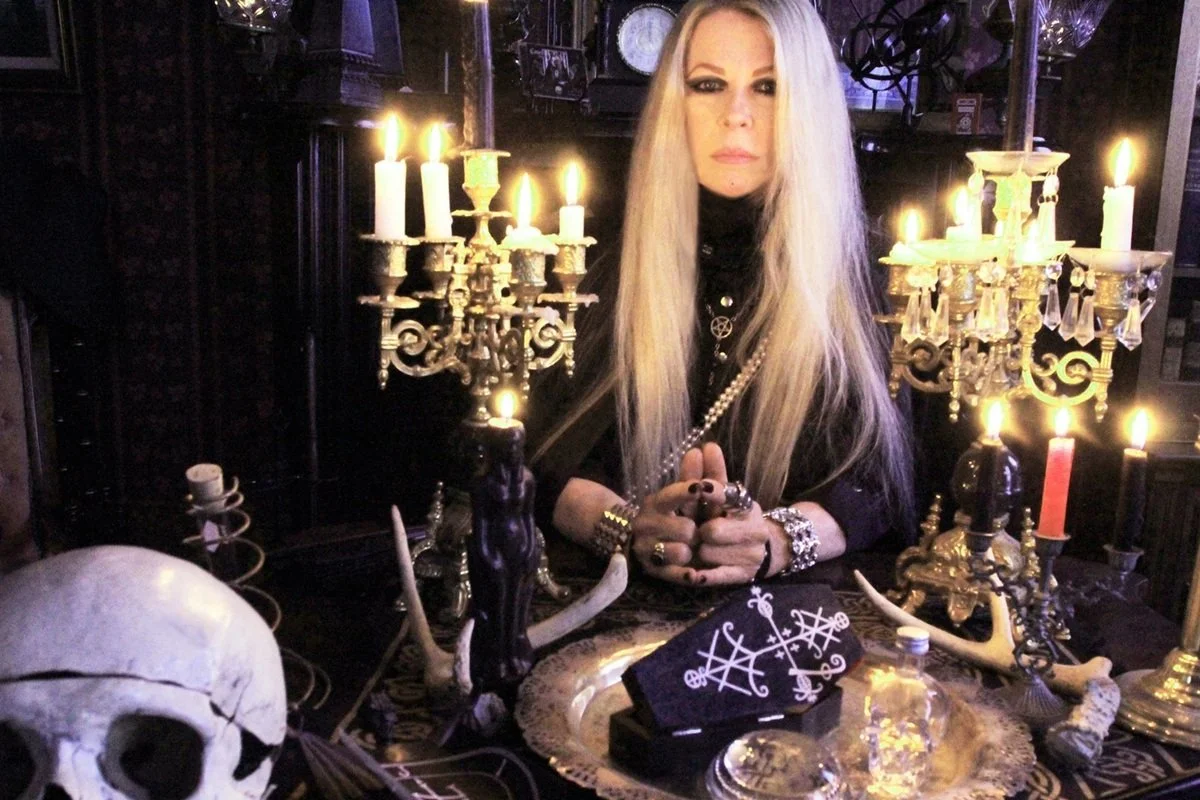
“I just thought, if everyone is doing what they like – the hippie life, flowers, love, or whatever – why can’t I mix what I like into the music?” – says Dawson.
Jinx wasn’t pretending. She grew up surrounded by old books, family secrets, and stories of ritual and mysticism that most kids would never hear. While everyone else in the late sixties was preaching peace and light, she found beauty in the shadows. She didn’t see the Devil as an enemy but as a symbol of rebellion, self-acceptance, and personal power. That conviction became the heartbeat of Coven.
“I was born into a very long lineage of Occult Adepts and Practitioners of the Ancient Arts … So it was natural for me to want to mix my heritage with my music.” -continues Dawson.
Their early shows in Chicago’s underground clubs were something else entirely. No love beads, no flower crowns. The stage glowed with candlelight instead of strobes, heavy with the scent of incense and the hiss of burning wax. Dawson appeared draped in black robes, eyes like daggers, leading the band through what felt less like a concert and more like a ceremony. The audience didn’t know whether to clap or cross themselves. There were chalices, crosses turned upside down, and moments where music and ritual blurred into one unsettling spectacle.
In 1969, Coven released Witchcraft Destroys Minds & Reaps Souls through Mercury Records. Even the title sounded dangerous. The songs were a wild mix of fuzz guitars, ritual chants, and lyrics that dared to say what others only hinted at. The tracklist read like a forbidden text: Black Sabbath, Pact with Lucifer, Dignitaries of Hell, Wicked Woman. And then came Satanic Mass—a thirteen-minute recording of an actual Black Mass, complete with Latin invocations and organ accompaniment. No one had ever done anything like it. This wasn’t shock rock. It was conviction pressed into vinyl.
Says Dawson, “It was actually meant to be a scholarly work; it really was not meant to be a band like the other rock bands. It was almost meant just for the stage, a sort of rock opera situation. I knew back then it was the definitive musical release on witchcraft and the occult as it was meant as a scholarly work. I am happy to see that it has held its position in occult research as many films and television shows have looked to the album for inspiration as have many bands over the years.”
On the back cover, the band threw the “sign of the horns,” a gesture that would later become synonymous with Heavy Metal. But in 1969, it was a scandal. America was already suspicious of the counterculture, and Coven looked like the smoking gun. When the Manson Family murders exploded across headlines that same summer, the country plunged into paranoia. Words like “occult” and “ritual” suddenly meant danger. Mercury Records panicked and pulled Coven’s album from shelves. Most copies were destroyed. In one brutal stroke, the band’s career was cut off before it could even start.
“Never met Manson. His unnecessary blood-party hurt our mission. The Manson murders didn’t help the situation…” says Dawson
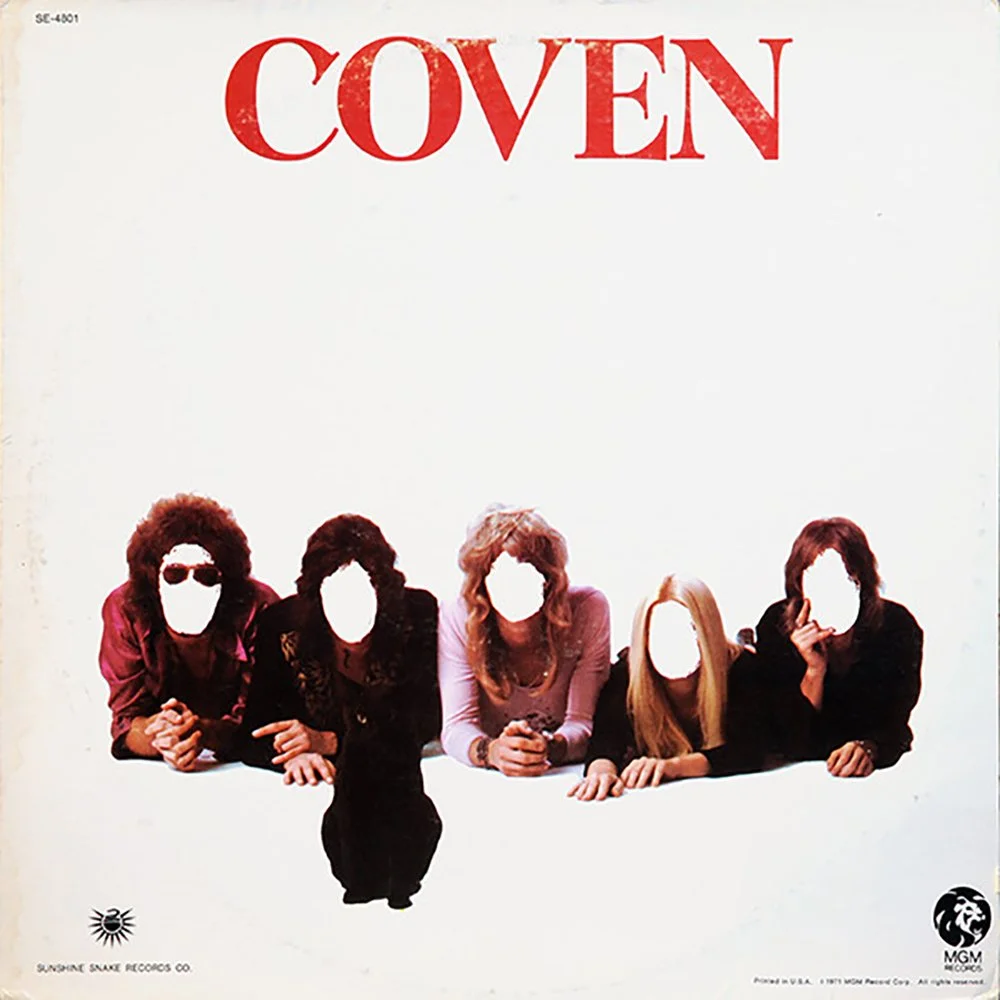
They tried to regroup a few years later with a new approach. Their 1972 self-titled album traded darkness for light, featuring One Tin Soldier, an anti-war anthem that ended up being a surprise hit after it appeared in the film Billy Jack. Ironically, the song that made them famous was the complete opposite of everything that had made them dangerous. For some fans, it felt like betrayal. For the mainstream, it was the first time Coven seemed safe to listen to.
Coven’s self-titled second album, released in 1972 on MGM Records, marked a sharp turn from the dark rituals and Satanic symbolism that had defined their infamous debut Witchcraft Destroys Minds & Reaps Souls. After the uproar surrounding their first record and the moral panic that followed the Manson murders, the band decided to move toward a more accessible sound. The new record leaned heavily into mainstream rock and pop influences, focusing on melody rather than menace. Songs like Nightingale, Shooting Star, Dark Day in Chinatown, and I Guess It’s a Beautiful Day Today showed a more polished, radio-friendly side of the band. The standout track, One Tin Soldier (The Legend of Billy Jack), became a surprise hit after it was used in the film Billy Jack, earning Coven a level of mainstream success they had never experienced before. The album traded the ritualistic atmosphere of their debut for heartfelt songwriting and a sense of cautious optimism. Critics were mixed in their response, with some praising its strong hooks and Dawson’s voice, while others missed the fearless edge that once set them apart. Looking back, the record feels like the sound of a band trying to find its footing after being burned by controversy. It may not have carried the same occult fire, but it captured a moment when Coven tried to reconcile who they were with what the world would allow them to be.
Coven’s third album, Blood on the Snow, released in 1974 on Buddah Records, showed the band once again reinventing themselves. This time they leaned back toward a heavier rock sound, though still stripped of the full occult imagery that had once made them infamous. The album was more confident and muscular than their 1972 release, blending elements of hard rock and early glam with a sense of drama that had always been part of Coven’s identity. Songs like Night Crawler, Don’t Call Me, and the title track Blood on the Snow carried a raw energy that hinted at what the band could have become if the world had caught up to them sooner. The record is also notable for featuring one of the first promotional music videos ever made for a rock band, a bold move that predated MTV by nearly a decade. The video, created for the title track, showed the band performing amid moody visuals and theatrical lighting, capturing their flair for ritual and spectacle without relying on overt Satanic themes. Despite its creativity, Blood on the Snow didn’t make a commercial impact, and the lack of label support led the band to fade from the spotlight soon after. In hindsight, the album feels like the last gasp of an era—a record that bridged the wild experimentation of the late 1960s with the hard-edged sound that would define rock in the years to come. It stands today as an underrated but fascinating piece of Coven’s story, a glimpse of a band still burning with vision even as the world stopped watching.
Then came the eighties. Metal got darker. Bands like Venom, Mercyful Fate, and Slayer began embracing the kind of imagery Coven had pioneered years earlier. Collectors started hunting for Witchcraft Destroys Minds & Reaps Souls, passing around bootlegs and writing about this mysterious group who had recorded a Black Mass before Black Sabbath even released their debut. Slowly, the legend returned. Jinx Dawson was no longer an odd footnote—she was recognized as the first woman to drag real Satanism into rock music.
By the 2000s, Dawson reappeared, performing again after decades of silence. She was older, sure, but still every bit the High Priestess. Her presence was commanding, her voice untouched by time. Audiences at festivals like Roadburn and Sweden Rock watched in awe as she performed the same songs that had once been banned. It wasn’t nostalgia—it felt like justice.
Coven’s influence runs deep now. You can hear their shadow in the ritual theatrics of Ghost, the mystic storytelling of Blood Ceremony, the dark ceremony of The Devil’s Blood. They created the blueprint before anyone else had the courage to. The horns, the inverted cross, the invocation of the Left Hand Path—all of it started with Coven.
Black Sabbath may have defined what metal sounded like, but Coven defined what it looked and felt like. They were the spark that lit the black flame, the ones who proved that music could be both rebellion and ritual.
Jinx Dawson didn’t just front a band. She created a myth. She struck the first match, lit the first black candle, and invited the world to stare straight into the fire. It just took the rest of us fifty years to catch up.
Jinx Dawson – High Priestess of Occult Rock
Few figures in rock history are as enigmatic and influential as Jinx Dawson, the frontwoman of Coven and one of the first women in rock to openly embrace the occult. Long before theatrical Satanism became a hallmark of heavy metal, Dawson was lighting black candles on stage, flashing the horns of the Devil, and singing invocations to Lucifer with operatic flair.
Born into a wealthy Midwestern family with aristocratic roots, Dawson has often spoken of her exposure to esoteric traditions from an early age. Whether literal or symbolic, this background gave her a foundation upon which she built her artistic persona: a mixture of elegance, menace, and ritual authority. Unlike many of her contemporaries, for whom occult references were little more than countercultural window dressing, Dawson embodied the role of a High Priestess, carrying herself with theatrical seriousness and conviction.
In 1969, she became one of the most infamous women in rock with the release of Coven’s Witchcraft Destroys Minds & Reaps Souls. On the album’s back cover, she and her bandmates boldly displayed the “sign of the horns” for the first time in rock history, decades before the gesture would be immortalized by Ronnie James Dio. Onstage and on vinyl, Dawson presided over a full-length Satanic Mass, her voice weaving through ritual chants that shocked a nation already trembling from the Manson murders and moral panic.
But Dawson was more than a provocateur. She was an innovator. With her commanding stage presence, she carved out a space for female authority in the male-dominated world of heavy music, embodying a figure of occult power rather than a submissive muse. Where most women in rock were relegated to supporting roles or objectified positions, Dawson declared herself a priestess of the Left-Hand Path, commanding the stage with equal parts grace and menace.
After Coven’s fall from mainstream view in the 1970s, Dawson largely disappeared from the spotlight. Yet she remained a cult figure, whispered about among record collectors and occultists. When she returned in the 2000s and 2010s for a new wave of Coven performances, audiences were stunned to see that she still carried the aura of mystery and darkness that had defined her youth. Appearing at festivals like Roadburn, she proved that her presence remained undimmed — a timeless icon of ritual theater in music.
Today, Jinx Dawson is celebrated as the forgotten mother of metal’s occult tradition. Her influence can be seen in every band that uses ritual imagery, every singer who adopts the role of dark priest or priestess, and every stage set ablaze with candles and inverted symbols. If Black Sabbath fathered heavy metal, then Jinx Dawson and Coven gave it its soul — dark, mysterious, and forever bound to the forbidden.