Why We Can’t Let Go of the Hellfire Club
If you’ve ever found yourself deep in a rabbit hole about the 18th century, you’ve probably bumped into the “Hellfire Club.” It’s one of those historical nuggets that just refuses to go away. Mention it, and people immediately picture a dark, gothic fever dream: masked aristocrats, midnight orgies in ruined abbeys, black candles, and maybe a literal pact with the Devil.
But if we’re being honest, the reality of the Hellfire Club is actually far more human—and, in many ways, much more fascinating—than the horror stories suggest. It’s a story about bored elites, the intoxicating power of secrecy, and the very human need to stick a finger in the eye of polite society.
The Myth of the “One” Club
First, let’s clear the air: there wasn’t just *one* Hellfire Club. That’s a bit like saying there’s only one “secret society” in the world. The term was a catch-all brand for a bunch of rowdy, exclusive groups that popped up in 18th-century Britain and Ireland.
The original, founded around 1718 by Philip, Duke of Wharton, was basically an aristocratic “party hard” group that thrived on blasphemy and shock value. Wharton was a rich, politically connected mess—a guy who would break into churches just to urinate on the baptismal font just to see if he could get away with it. But the group we’re *actually* obsessed with? That’s Sir Francis Dashwood’s crowd.
Sir Francis Dashwood: The Architect of Scandal
Dashwood wasn’t some shadowy hermit. He was a politician, a man of the world, and a veteran of the “Grand Tour”—that rite of passage where wealthy young Englishmen traveled through Europe, soaking up art, culture, and, in Dashwood’s case, a love for the exotic and the transgressive.
When he returned to England, he didn’t want to settle down into a boring, quiet life. He wanted to bring the theater of his travels home. He leased Medmenham Abbey on the Thames—a dilapidated, evocative ruin—and transformed it into a private playground for his inner circle: the “Order of the Friars of St. Francis of Wycombe”.
And yes, they had a motto: *“Fay ce que voudras”*—”Do what you will.” It sounds like a demonic invocation, but it was actually lifted from the French writer François Rabelais. It was their cheeky way of signaling that, within these walls, the rigid, stuffy rules of Georgian England didn’t apply.
While Sir Francis Dashwood’s political career is a matter of public record, his true infamy lies in the intersection of his private obsessions and the architectural landscape he crafted at West Wycombe.
The Rituals: Myth vs. Reality
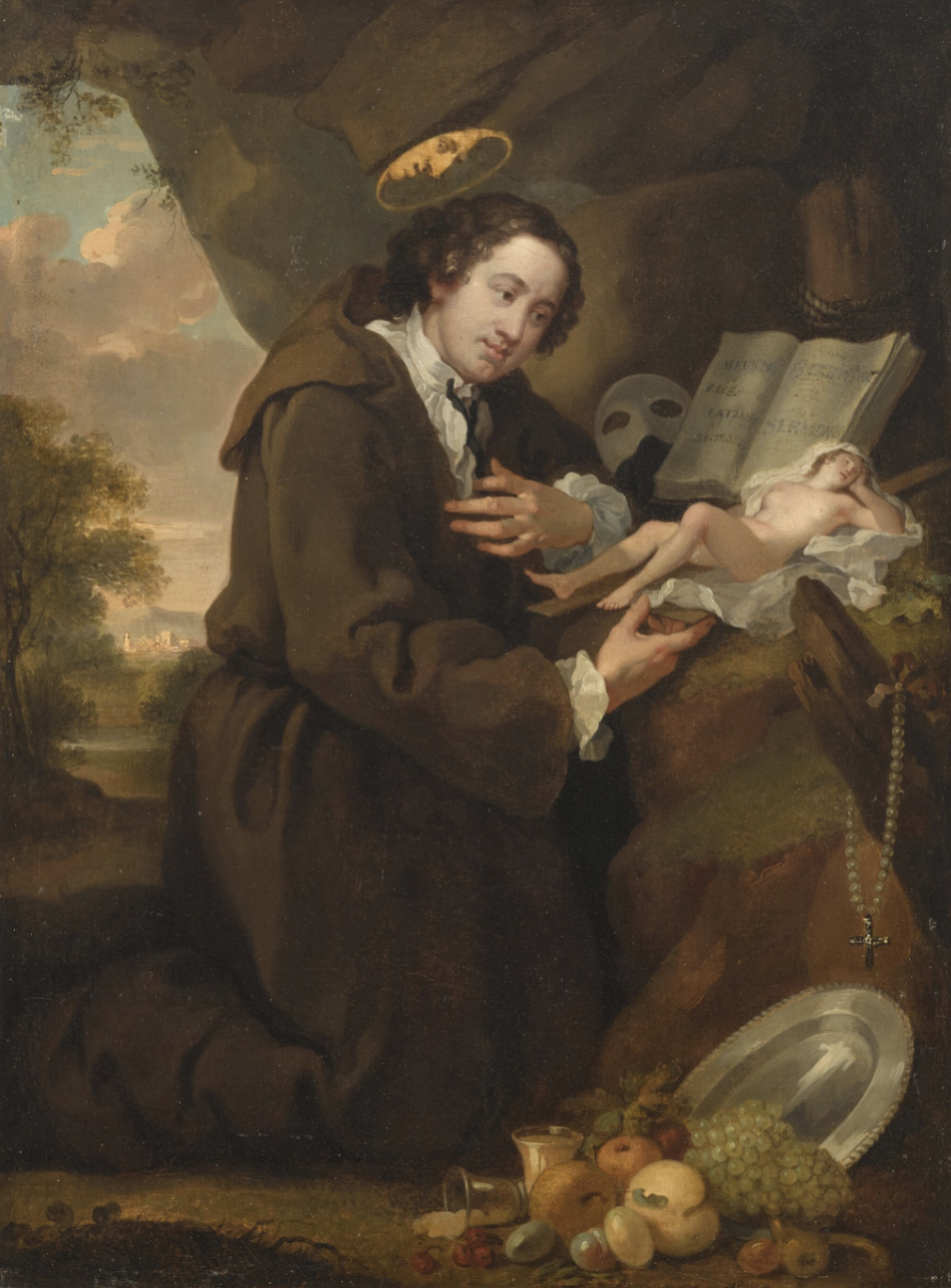
- The Nature of the Club: While 18th-century tabloids and later folklore painted the Hellfire Club as a hotbed of “Black Masses” and literal devil worship, most historians agree the reality was more focused on political satire and extreme Epicureanism.
- The “Knights”: The club was effectively a high-society fraternity where the elite—politicians, aristocrats, and artists—could shed the stifling morality of the Enlightenment. Their “rituals” often involved heavy drinking, illicit dalliances, and elaborate parodies of religious rites, designed to shock the prudish upper crust of London society.
- The “Secret” Agenda: There is evidence that the club served as a space for influential men to discuss taboo political ideas. By wrapping these discussions in a veil of occult theatrics, Dashwood and his associates effectively insulated themselves from mainstream scrutiny.
The Architecture of Excess
Dashwood’s West Wycombe estate remains one of the most visible expressions of his complex psyche:
- The Hellfire Caves: Dashwood commissioned the excavation of these chalk mines primarily to provide employment for the local population during a period of famine. However, he transformed the mundane mining effort into a labyrinth of tunnels and chambers, creating a subterranean sanctuary for the club’s meetings, away from the prying eyes of the public.
- The Church of St. Lawrence: Perched atop West Wycombe Hill, the church is topped by a conspicuous golden ball. It is rumored that Dashwood used this hollow, gilded globe as a private “sky lounge” for the club to dine and drink, literally towering over the local parishioners below.
- The Temple of Venus: A testament to his commitment to classical aesthetics, this structure served as a focal point for the estate’s gardens, emphasizing the club’s devotion to the “pleasures of the flesh” and Greco-Roman hedonism.
A Legacy of Contradiction
Sir Francis Dashwood remains an enigma because he lived in the tension between two worlds. He was a man who simultaneously funded the restoration of the local parish church and built secret caves for debauchery. He was a Chancellor of the Exchequer who engaged in lighthearted, sometimes mocking, impersonations of foreign royalty.
For the modern seeker, Dashwood serves as a reminder that history is rarely black and white. He was a man who embraced the darkness and the light with equal vigor, leaving behind a legacy that continues to fuel our fascination with the intersection of the sacred and the profane.
What Actually Happened Behind Closed Doors?
This is where the legend collides with reality. If you read the gossip of the time, you’d think the place was a den of Satanic murder. But based on the letters, poems, and records that survived, it sounds less like a cult and more like the ultimate fraternity house.
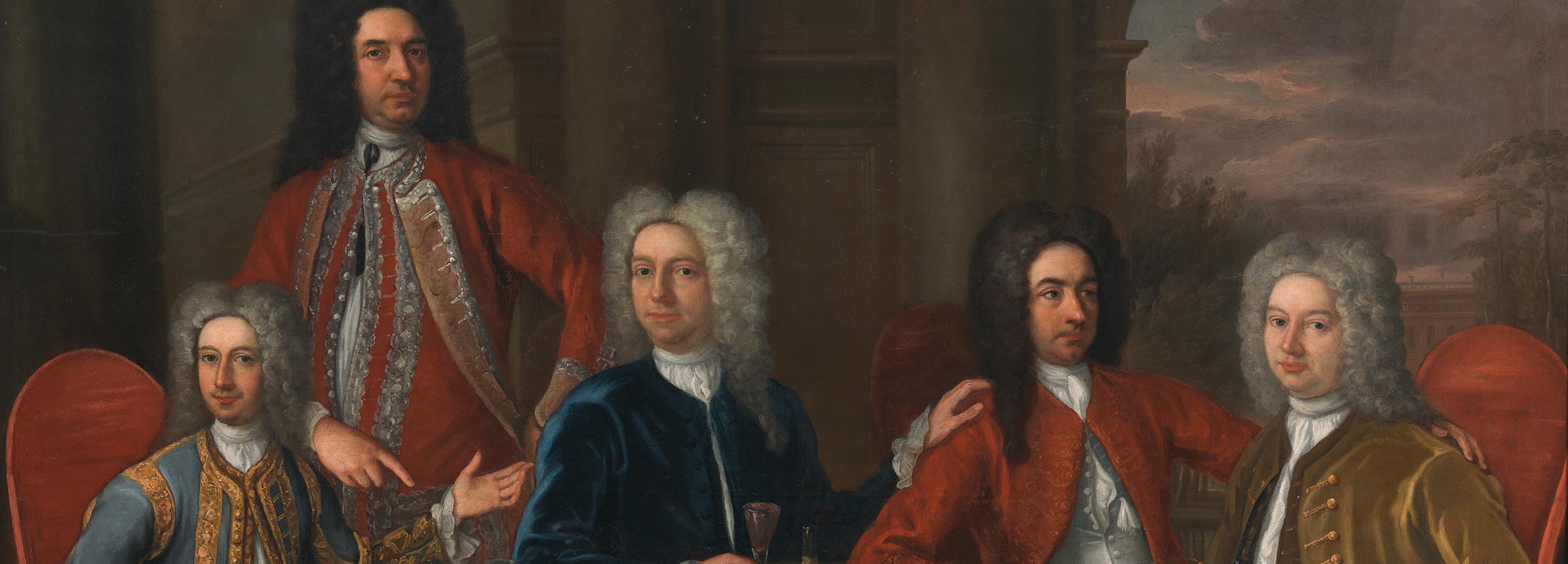
Members, which included names like John Wilkes, Thomas Potter, and (allegedly) Benjamin Franklin, would gather for extended retreats. They wore mock-religious costumes—white jackets, trousers, and hoods—and the “Abbot” (elected annually) wore a red ensemble.
The menu was part of the joke: “Holy Ghost Pie,” “Breast of Venus,” and “Devil’s Loin,” all washed down with “Hell Fire Punch.” They invited “nuns”—a polite euphemism for sex workers brought in from London—to join the revelry. They spent their time drinking, singing ribald songs, reading erotic poetry, and mocking the stuffy religious authorities of the day.
The West Wycombe Caves—those creepy, chalk tunnels carved deep into the hill—were their subterranean staging ground. Dashwood actually had the caves excavated to provide work for local men during a string of brutal harvest failures, which is a surprisingly compassionate act for a man later painted as a villain. Inside, they had rooms named after their members and a section of the caves they jokingly called the “River Styx,” a nod to Dashwood’s love of Greek mythology.
The Betrayal That Ended the Party
So, why did it all end? It wasn’t the Devil. It was politics and human ego.
John Wilkes, one of the club’s most active members, had a falling out with some of the other power brokers in the group. When his political career stalled and he felt slighted by the establishment, he did something unthinkable: he turned on his friends. He used his connections and his printing press to leak the secrets of the Medmenham monks to the public.
Suddenly, a private, expensive, and deeply indecorous club became a national scandal. In the 18th century, reputation was everything. Faced with the glare of public scrutiny and the threat of political ruin, the “monks” packed up, burnt their records (literally, in 1774), and went back to being “respectable” members of high society.
Why We Still Can’t Let Go
The Hellfire Club has survived for 250 years because it hits every psychological trigger we have: secret societies, forbidden sex, the abuse of power, and the thrill of the “what if.”
Even today, you can visit the caves and feel that chill—partly because of the environment, but mostly because of the stories we’ve projected onto the walls. Over the centuries, people have turned a group of snobbish, bored aristocrats into monsters, just because it’s more fun than admitting they were just humans with too much money and not enough common sense.
But maybe that’s the most haunting part of all. The Devil didn’t need to be there. These men were perfectly capable of being “wicked” all on their own—and they were powerful enough that society let them get away with it for as long as they liked. That’s the real secret of the Hellfire Club: the monsters weren’t summoned; they were already at the dinner table.