Norway’s New Black Metal Coven
Black Metal has always loved danger. It has lived in corpsepaint, frost, bad decisions, church smoke, cheap distortion, and the kind of screaming that makes normal people leave the room. Then Witch Club Satan came along and dragged the whole thing into a different kind of ritual. Oh boy did they what!
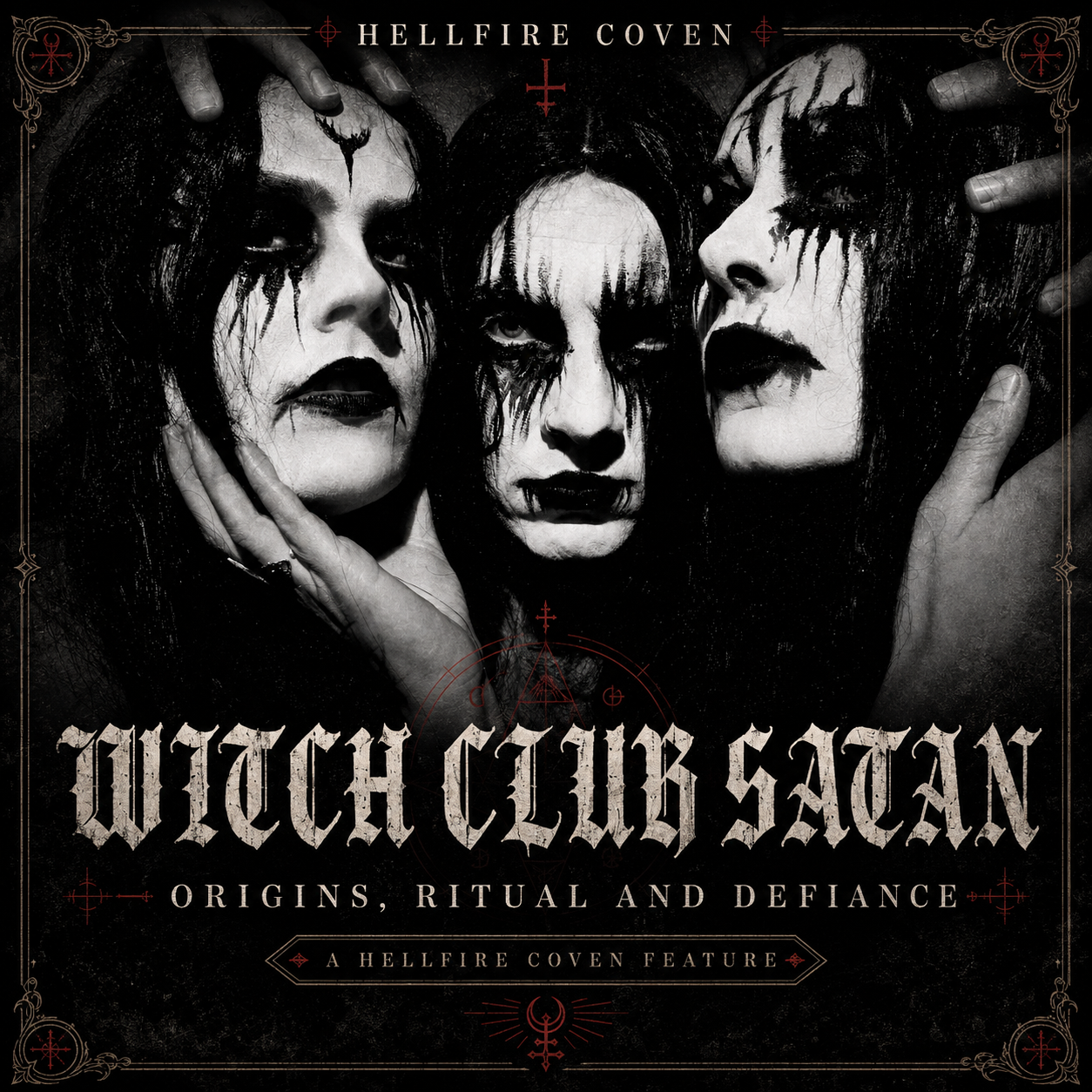
Formed in Norway around 2021 to early 2022, Witch Club Satan are Nikoline Spjelkavik on guitar, Victoria F. S. Røising on bass, and Johanna Holt Kleive on drums and vocals. The dates shift slightly depending on the source, with Metal Archives listing 2021 and Metal Hammer describing them as forming at the start of 2022, but the origin story is consistent where it matters: three women from performance, theatre, literature, and art backgrounds found each other during the dead air of the pandemic and decided that polite creativity was not going to cut it.
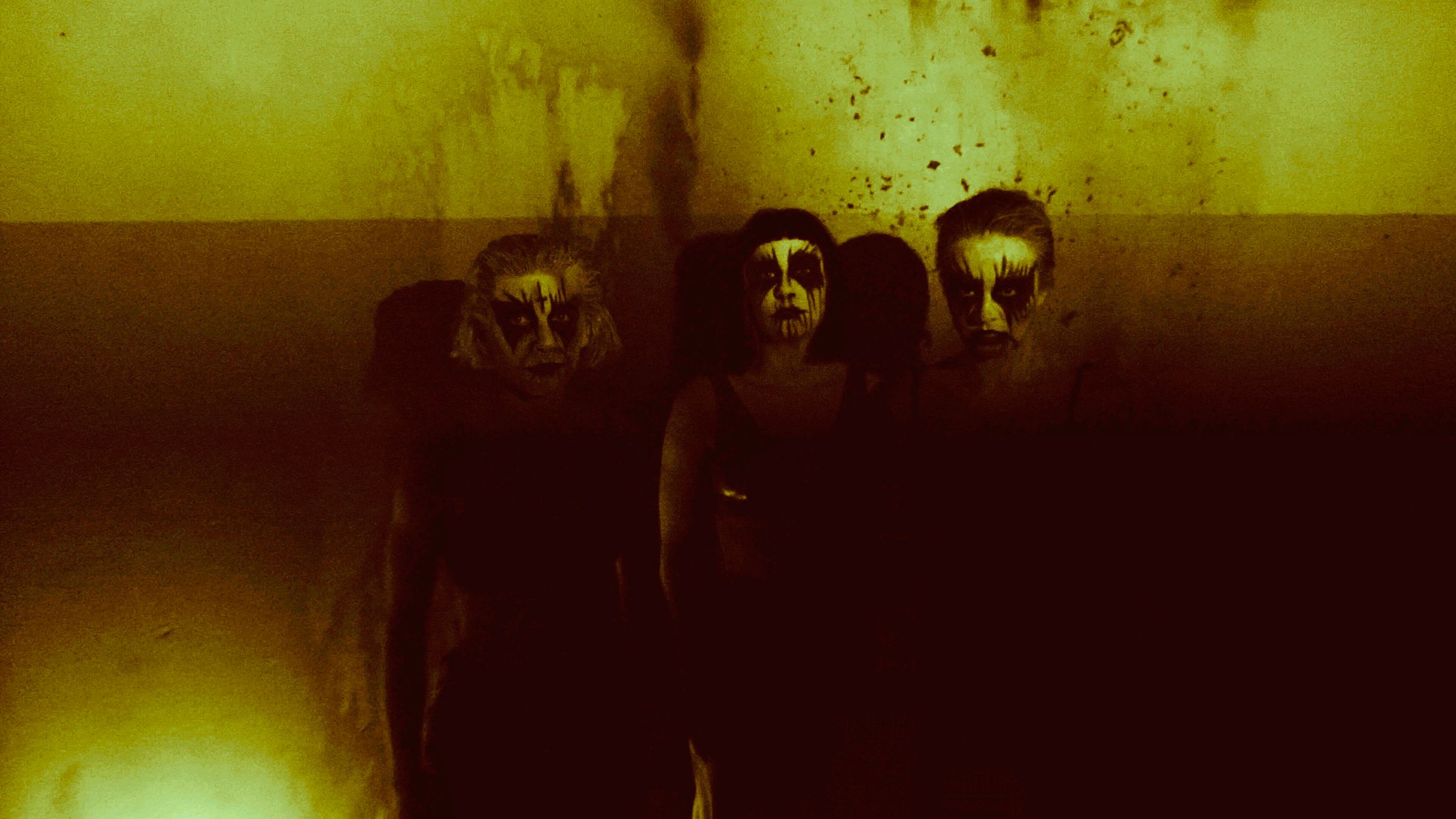
 That origin is important, because Witch Club Satan are not just another band putting on occult jewellery and hoping the fog machine does the rest. Their roots are in theatre and performance art, and you can feel that in everything they do. The music is raw, nasty and primitive, but the presentation is deliberate. They build a world around it. Blood, ritual, costume, bodies, screams, ugliness, humour, rage, and the old language of black metal all get thrown into the same fire. Their official site calls them an “occult, feminist, black metal band,” and it is not just branding. They frame the whole project as a club, a coven, and a community rather than some untouchable band on a distant stage.
The beautiful thing is that they started with almost no traditional band credentials. Johanna had some percussion experience, but they were largely learning their instruments from the ground up. In a genre that has always praised rawness when it comes from scowling men in basements, Witch Club Satan took that same primitive spirit and made it their own. Victoria has described that confidence, doing the thing before you have mastered it, as an act of feminism in itself. Fair enough too. Black metal was never supposed to be polished showroom music. It was supposed to sound like someone broke into the room and started a fire.
Musically, they sit in the Norwegian Black Metal bloodline, but they are not trying to cosplay 1993. You can hear the dirt, the blastbeats, the thin-wire guitar violence, the shrieked vocals and the punk pulse underneath it all. The band have described their sound as raw and primitive, rooted in the experimental brutality of early black metal and tied closely to punk. That makes sense. The best Witch Club Satan material does not feel like museum Black Metal. It feels alive, hostile, theatrical, and slightly – ever-so-slightly out of control.
Their self-titled debut album landed on March 8, 2024, deliberately released on International Women’s Day. That is not a subtle move, and why should it be? The record comes loaded with titles like “Birth,” “Fresh Blood, Fresh Pussy,” “Black Metal Is Krig,” “Steilneset,” “Reverse This Fuck,” “Mother Sea,” “Hysteria,” “Wild Whores,” “Hex,” “I Was Made By Fire,” “Salvation,” and “Mother.” On paper, that reads like a manifesto scratched into a bathroom wall. On record, it sounds like a band trying to exorcise centuries of being told to be quiet.
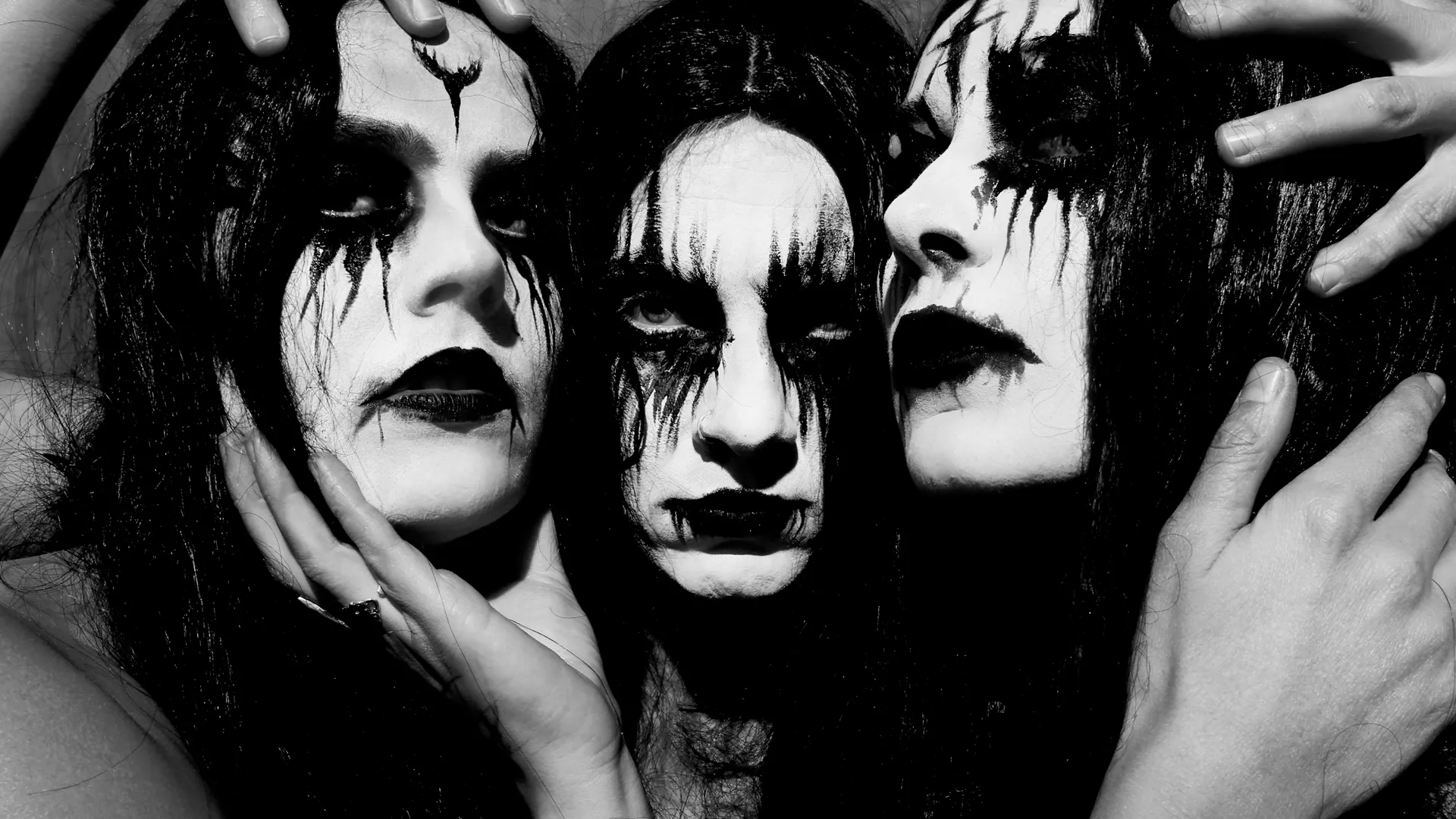
The album was co-produced by Anders Odden, known for his work with Satyricon and Celtic Frost, which gives the record some extra metal-world weight without sanding off its rough edges. That matters, because the whole appeal of Witch Club Satan is that they do not sound safe. The production gives the chaos enough shape to hit hard, but it still feels like a ritual happening too close to your face.
Lyrically and visually, the band pull heavily from witchcraft, the history of women accused and killed as witches, and the idea of screaming through those buried voices. They have spoken about studying Norwegian witch trials and wanting to hear what those women would say now. That is where the project gets heavier than simple shock value. The witch, for them, is not just a spooky Halloween figure. She is the outsider, the punished woman, the loud woman, the woman who knew too much, wanted too much, refused too much. In their hands, Black Metal becomes the perfect weapon for that kind of resurrection.
And yes, they use the word Satan with intent. Nikoline has described Satan as a joker figure, tied to rebellion and freedom. That is a smart reading, especially inside Black Metal, where Satan has always been part monster, part theatre, part middle finger. Witch Club Satan are not using the name like a plastic Halloween skull. They are using it as a symbol of opposition. Against dullness. Against silence. Against the old boys’ club idea of who gets to be ugly, extreme, furious, and free.
Their live shows are where the full thing seems to detonate. They treat songs as spells and the gig as a ritual. The band have said music has transformative power, and that they perform their songs as spells, with ritualistic acts changing according to the moment and the state of the world. That is exactly the kind of thing that would sound unbearable from a lesser band. With Witch Club Satan, it feels earned because the music has the teeth to back it up.
There is also a political edge running right through the project. They have addressed environmental destruction through “Mother Sea,” dedicated “Black Metal Is Krig” to Gaza, and publicly challenged parts of metal culture they see as rotten or cowardly. Whether everyone in the black metal crowd likes that is another matter. Plenty will not. Good. Black Metal without confrontation is just cold wallpaper. Witch Club Satan understand that amplification is power, and they are not pretending music exists in some clean little vacuum away from the world.
They have also had support from unexpected corners of the old guard. Mayhem’s Necrobutcher has been mentioned as an early mentor figure, with the band recalling that he heard their first demo and recognised something primitive and pure in it. That detail says a lot. Witch Club Satan may be pushing against parts of black metal history, especially its uglier politics and gatekeeping, but they are not outsiders in the sense of being clueless tourists. They know the genre. They love parts of it. They are also willing to drag it somewhere less comfortable.
By 2025 and 2026, they were already moving beyond the debut album with singles like “You Wildflower” and “The Kids Will Kill Us,” while continuing to build the “club” side of the name into something larger than a band logo. Their official site talks about growing a community or movement of witches, and recent interviews still circle back to that same idea: the show as a temporary community, the songs as spells, the band as a meeting place for people who want their heavy music strange, political, magical, and unashamed.
So who are Witch Club Satan? They are a Norwegian Black Metal trio. They are a performance-art coven. They are feminist, theatrical, occult, abrasive, sometimes ridiculous in the best possible way, and completely aware of the history they are stepping into. They take the bones of black metal and dress them in menstrual blood, witch trial smoke, punk defiance, and stage-lit madness.
And what are they? A threat to boring Metal and a male dominated sub-genre that occasionally needs its kick teeth in to slap it out of its cliche ridden depths.
Not because they are the heaviest band on earth. Not because nobody has ever screamed about Satan before. But because they remember that black metal should feel dangerous. It should make people argue. It should upset the comfortable. It should sound like someone is trying to tear a hole through the room.
Witch Club Satan do that with purpose, heart, and a wicked sense of theatre. They are not here to ask permission from the old guard. They are here to form a coven, plug in, scream, and make black metal feel alive again.