
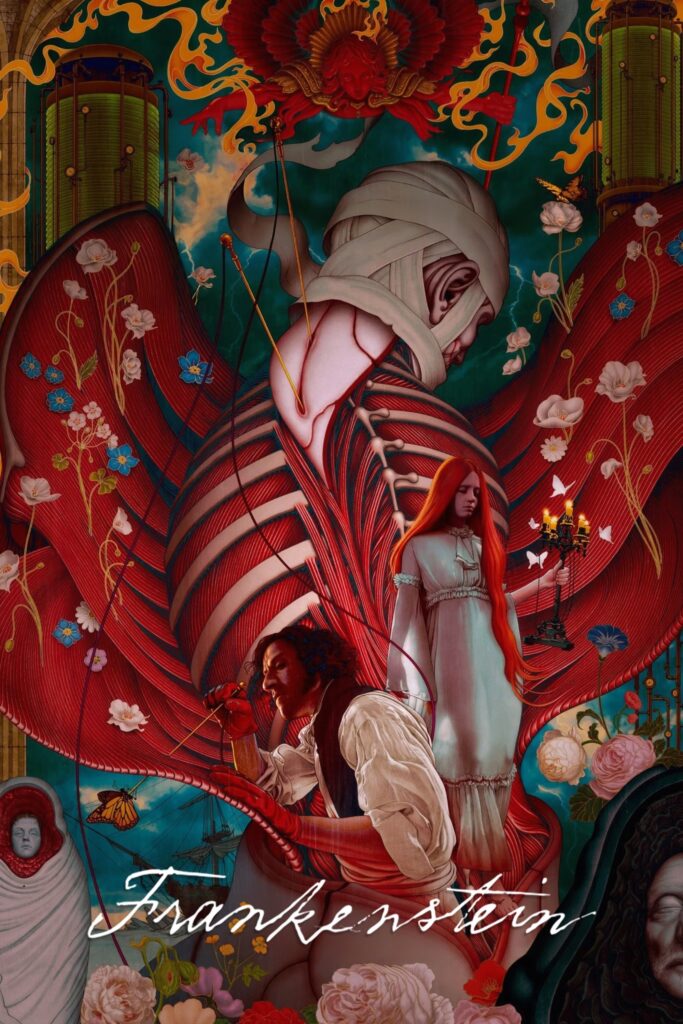
Dark Masterpiece of Creation and Consequence
Guillermo del Toro has finally done it. After decades of circling the idea, sketching monsters in notebooks, dropping hints in interviews, his long-awaited adaptation of Frankenstein has arrived — and it’s every bit the dark, melancholic dream you’d expect from him. The film stars Oscar Isaac as Victor Frankenstein, Jacob Elordi as the Creature, and Mia Goth as Elizabeth, with Netflix backing it on a reported budget of around US$120 million.
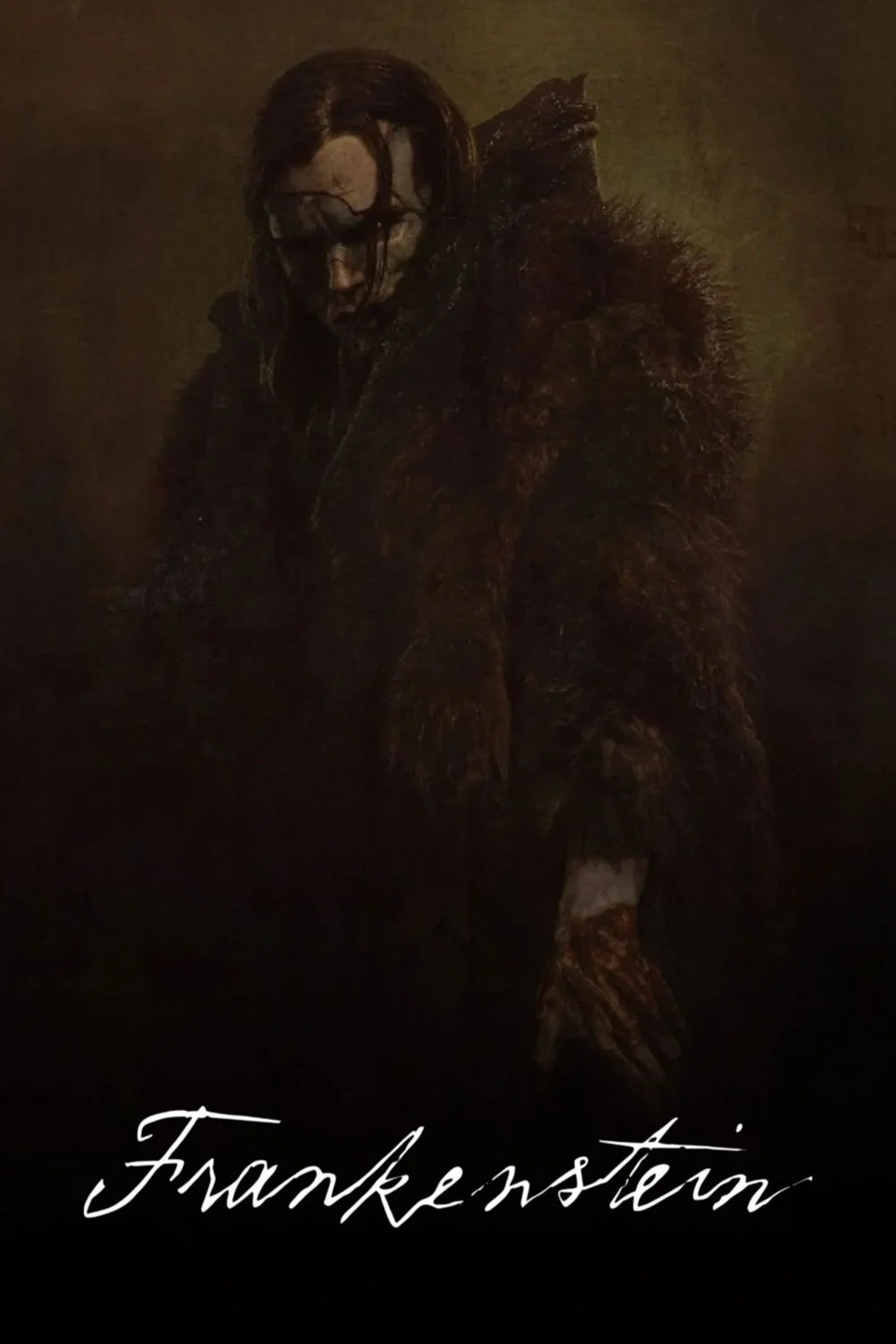
When watching Victor Frankenstein, you can’t help but feel the sadness that the film is conveying. As a surgeon of ambitious means, supported by an arms dealer, Frankenstein gathers his materials from the battlefields and execution sites of the past. The movie is less about horror and more about the results of creating something.
Well-known as a silent, imposing figure, the Creature has been reimagined by Del Toro and Elordi, and now it has a voice, a body, and an unmistakable humanity. Its tentative steps and ever-changing facial expressions speak of his pain and longing and also show a lot of what’s been passed down from his creator.
Oscar Isaac’s performance as Frankenstein is nothing short of mesmerizing.
An artist who has fallen under the curse of his own ego, he doesn’t fit into the common image of a’mad scientist’.
He’s someone who gets completely absorbed by his work, and can’t live with the limits that nature has set. Coming into contact with his creation is a bit like a sacramental ritual for him, but this sense of devotion turns into dread and denial when the creature starts to stir and grow more self-aware.
Frankenstein is very much divided between its characters, Victor as God and child, crafting something that he can’t love, and running away from its reflection. The film gives its main character the softest look when portraying him as the newborn Creature. In his journey from innocence to wounded exile, he becomes the emotional anchor of the movie, and when he confronts his creator, turns it into a Greek tragedy.
Mia Goth brings the film its heart and sense of purpose. She is not just a heartbroken fiancée, she is basically the moral compass of the story, stuck between her love and her disgust for Frankenstein. It’s one of her best performances, delicate, clever, and chilling, and completely redefines the story’s power dynamics. Visually, Frankenstein is a masterpiece. Ruined hospitals and metallic glint of surgical tools, when watching Frankenstein you can’t help but feel you’re gazing at the decaying grandeur of 19th-century Europe, a time of flickering gaslights. Del Toro’s camera moves through the scenes in a way that shows each frame as if it’s been painted on an easel, and splits the colors between warm, comforting sepia tones and chilling industrial blues, in a poetic tribute to the circle of life and death and the machinery that brings them together. There isn’t any digital overindulgence, the effects are all practically applied, rough and visceral and soaked in blood. Every stitch, every morgue slab leaves its mark on you.
Coming from a thematic standpoint, Frankenstein takes on the same fundamental ideas as the original novel, creation, identity, and duty. Del Toro is very much avoiding clichés in the monster movie genre, instead plunging into a study of emotional inheritance. The things that we pass on to what we create, including our imperfections, fears and loneliness. The Creature, seen through the eyes of Victor Frankenstein, is also a reflection of the director’s own, and one that he calls “the patron saints of imperfection” and is omnipresent in this movie.
Marc Desplat’s score is a masterpiece that glides like a requiem mass, dripping in cellos and mournful choruses.
Rather than traditional horror music it is a wistful dirge: the sound of something sacred falling apart.
When Frankenstein premiered at the Venice Film Festival it earned a ten minute standing ovation, up to thirteen minutes, and it’s easy to see why, because it’s not a film that plays for the masses, but it’s emotionally haunting in a way that most movies don’t dare to be. It’s not horror film, it’s basically love, asking you to look at the monster and to see yourself.
Well-known for its sumptuousness, the film’s most stirring moments are very small: the Creature’s very first breath, Victor’s quivering hand, and Elizabeth’s beautiful gaze over a candlelit room. Del Toro is not only adapting the source material, but is in a way communing with the spirit of Mary Shelley.
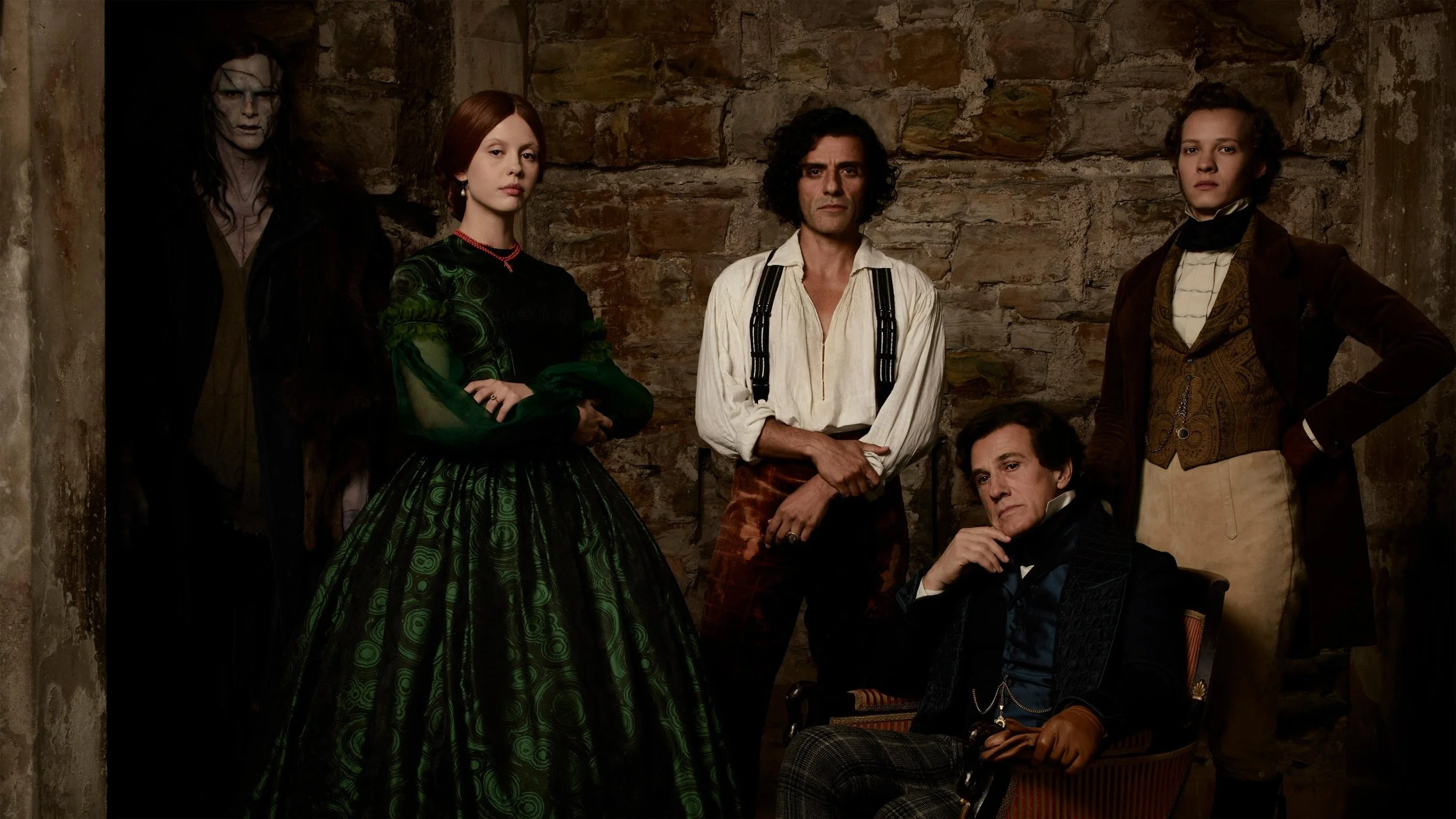
Inside the Lab: The Making of Guillermo del Toro’s Frankenstein
You’ll notice the film’s haunted, otherworldly feel, and that’s not just because of the monstrous creature at the heart of the story, Mary Shelley’s Frankenstein, when you watch Guillermo del Toro’s Frankenstein. The movie is also haunted by the years of fixation, sketchbooks, rewrites and setbacks that made it finally come to life in ’25, and for del Toro, marks the climax of a lifelong romance with his creation.
Well-known for speaking out about wanting to bring Frankenstein to the big screen since the ’90s, when he called it his “holy grail” and “a story that won’t let me go,” del Toro had the Creature in his mind for years before the movie was greenlit and wouldn’t rest until he could bring it to the screen on his own terms, and that sense of pride and perfection is present in every frame.
When Netflix came aboard with a reported $120 million budget, del Toro’s vision of the film started taking shape. The movie was filmed in Toronto, Edinburgh, and Lincolnshire, in locations with a haunting, gothic decay. Even the hotel where del Toro stayed in Scotland was allegedly haunted, and he didn’t mind sharing space with the dead as long as they didn’t disturb him during filming, a strange but funny statement.
The look of the film was a collaboration with production designer Tamara Deverell, who built imposing, gut-wrenching sets that eerily recall the twisted nightmares of Shelley’s.
The disintegrating anatomy tower, the dripping autopsy room and the massive ship Horisont, which serves as the backdrop for a lot of scenes. Everything, bar a couple of exceptions, was constructed practically, with the help of a minuscule amount of green screen and making it all look so real. The air is heavy with metallic smells and formaldehyde.
The Cinematographer, Dan Laustsen, who’s worked with del Toro on Crimson Peak and The Shape of Water, described the approach as painting with darkness. He and the director went by the mantra “don’t be afraid of the darkness, but make sure you can see into it”, which, gave a picture that’s got depth, where shadows reveal more than they hide. Looking at back on the film Frankenstein, every flicker of candlelight, every reflection in a puddle feels alive.
Coming hotfooting from the initial casting of Andrew Garfield, the part of the Creature was remade when Jacob Elordi took over. The makeup team had a nine-week deadline to completely rebuild the prosthetics, re-jig the outfit to fit Elordi’s physique and took cues from some of the earliest Universal monster designs, Goya’s pencil sketches and del Toro’s own artwork. The final result is hauntingly beautiful, it’s skin as rough as old stone, eyes that are overflowing with heartache, and stitches that seem almost ritualistic.
Mia Goth’s wardrobe, on the other hand, was an entirely different world. The costume designer Kate Hawley collaborated with del Toro to create a brand-new language of color for each character. The red of Victor’s madness, the pale blue of Elizabeth’s ethereal calmness, and the black of the Creature’s silhouette, all symbolic of the character’s transformations. The concentric circles that can be seen in the film, from the windows of the lab to the patterns on the floor represent the cycle of creation and destruction that entangles all of them.
There’s poetry in the disarray behind the scenes. During filming, del Toro is said to have played classical music, from Mahler, Bach and the early ideas for the score by Desplat. The actors would move through fog machines as soft organ melodies waft through the studio. It wasn’t done for show, it was a tradition. Del Toro calls it “the liturgy of creation”.
One of the most striking behind-the-scenes moments came during the scene of the Creature’s rebirth. The entire cast and crew was silent, no one said a word. As Elordi opened his eyes for the very first time under blinding laboratory lights, del Toro leaned forward and said, “He’s alive” and stepped back with tears in his eyes and let the cameras roll.
Del Toro has always thought of monsters as metaphors for the brokenness of human beings, a philosophy that was palpable in all aspects of the film, the sets, and prosthetics, designed to breathe and deteriorate, and so nothing in Frankenstein is neat and sterile, it’s all lived-in, rotting and holy.