
Tag

Occult Horror

Late Night With The Devil

Late Night With The Devil

By Cinema


Late Night with the Devil

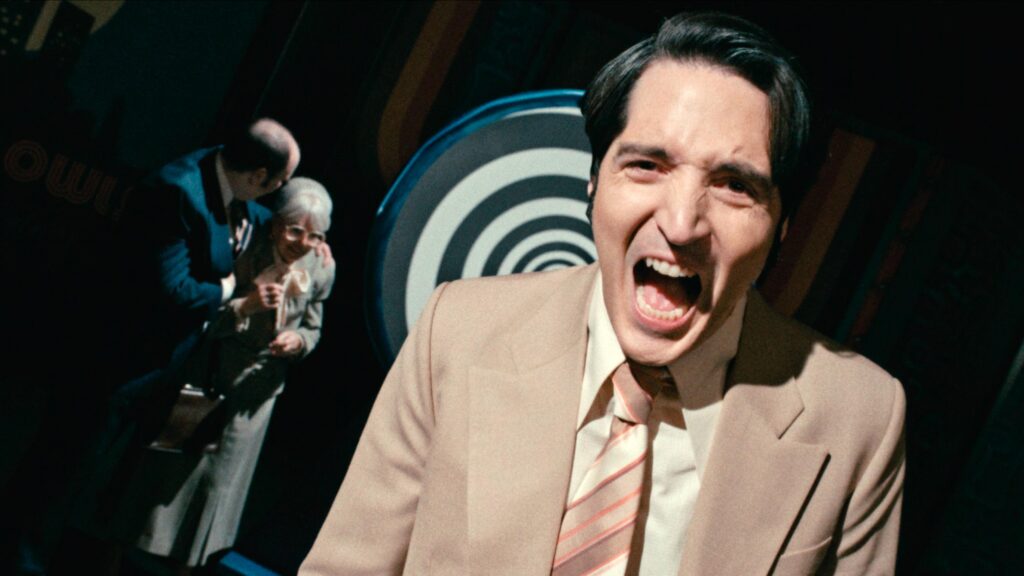
There’s a reason this one cut through the noise. On paper it sounds like a gimmick. A possessed girl goes on a 1970s talk show and chaos unfolds live on air. In practice it plays like something much stranger. It feels like a cursed broadcast that somehow slipped through time and landed intact.

The film is set on Halloween night, 1977, during a fictional episode of Night Owls with Jack Delroy. Jack is a struggling late night host trying to claw back ratings after personal tragedy. That hook matters more than it first appears. This isn’t just about a possession. It’s about desperation, ego, and what someone is willing to invite into the room when their career is dying in front of them.

David Dastmalchian carries the whole thing. He doesn’t play Jack as a caricature. There’s a quiet sadness under the charm. You buy him as a man who has spent years smiling for the camera while something hollow grows underneath. That emotional grounding is what lets the film escalate into full-blown horror without tipping into parody.

Late Night With The Devil

The structure is where it really gets clever. Most of the film is presented as the “live broadcast,” complete with period-accurate cameras, clunky transitions, ad breaks, and studio audience reactions. Between segments, you get black and white behind-the-scenes footage. Those moments are crucial. They strip away the performance and show the tension building in real time. Crew members get uneasy. Guests start to feel off. Jack himself becomes harder to read. It creates this creeping sense that whatever is happening isn’t contained to the show anymore.

From a production standpoint, the attention to detail is obsessive. The Cairnes brothers leaned hard into authenticity. The set design mirrors 70s network television down to the wood paneling, lighting rigs, and slightly cheap-looking props. The cameras behave like actual broadcast cameras from the era, not modern gear pretending to be old. Even the pacing feels right. There’s that slow, almost awkward rhythm those shows used to have, which makes the later breakdown hit harder.

They also made a key decision that pays off massively. Practical effects over heavy CGI. When things start to go wrong, it feels tactile. There’s weight to it. You’re not watching polished digital horror. You’re watching something messy, immediate, and uncomfortable, like it’s happening in front of an audience that didn’t sign up for it.

Behind the scenes, the filmmakers have talked about wanting the movie to feel like a recovered tape. That idea shapes everything. The lighting is imperfect. The audio dips and distorts. The edits aren’t clean. Even the performances lean slightly heightened, like television personalities of the time. It all feeds into the illusion that this could be real.

The occult layer is where it gets interesting for you. The film doesn’t just throw in possession as a shock device. It pulls from real 1970s occult paranoia. That era was obsessed with demons, cults, and televised spirituality. Think The Exorcist, the Satanic panic building in the background, and the rise of self-help gurus mixing psychology with mysticism.

Jack himself is tied to a shadowy group called “The Grove,” which carries a very clear nod to real-world elite societies and secret rituals. It never over-explains this, which is the right call. The suggestion is enough. It frames Jack not as an innocent host who stumbled into horror, but as someone who may have brushed up against darker ideas long before the show went off the rails.

The possession narrative also plays with control and performance. The young girl, Lily, is introduced through a parapsychologist as a survivor of a satanic cult. The film never fully confirms where the truth ends and manipulation begins. Is this a genuine demonic presence, or a constructed spectacle that goes too far? That ambiguity is key. It keeps the horror grounded in psychology while still allowing the supernatural to bleed through.

Reactions have been strong for a reason. Audiences tend to fall into two camps. One group gets completely pulled into the illusion and finds it genuinely unsettling. The other admires the craft but keeps a bit of distance because of the format. Either way, almost everyone agrees Dastmalchian’s performance and the commitment to the bit are what sell it.

Where it really lands is in its final stretch. Without giving anything away, the film abandons its controlled format and lets things unravel. That shift can be divisive. Some people love the escalation. Others prefer the tighter, broadcast-driven tension of the earlier acts. But even if you don’t love the ending, it sticks. It doesn’t fade out quietly.

At its core, this isn’t just a horror film. It’s about the cost of chasing attention. Jack isn’t battling a demon in the traditional sense. He’s dealing with the consequences of needing to be seen, to be relevant, to win. The occult becomes a vehicle for that. A force that steps in when the performance stops being enough.

If you’re coming at it from an occult angle, it hits a sweet spot. It respects the aesthetic and mythology without turning into cheap shock tactics. It understands that the real tension comes from belief, suggestion, and the thin line between ritual and showmanship.

It feels like something that could have existed. And that’s what makes it linger.

Whistle

By Cinema

Do you remember back in the 90s and the early 2000s where there were a bunch of horror movies hitting cinemas that were made for teenagers and younger horror fans? Even if you were older they were still enjoyable films.

Films like The Faculty, Disturbing Behavior and Valentine – they were simple horrors with some great mystery and no political agendas. Now you flash forward to 2026 and most horror films either see directors trying to be all artistic and different which often gets in the way of the plot and tripping up the film badly. They throw in a supernatural horror that makes no sense in the end and worse still the characters are so unlikable you don’t really care when the killing starts.

Sometimes that’s all you really need from a horror film – relatable characters that you don’t want to see fall victim to the killer next. That is exactly what director Corin Hardy (The Nun) and screenwriter Owen Egerton (Mercy Black) have achieved with Whistle – a basic horror but with characters you actually care about.

Whistle centres around a High School student named Chrysanthemum (Dafne Keen – Deadpool & Wolverine). After the death of her father, who was her only parent, she has to move to another town and live with her cousin, Rel (Sky Yang – Last Days)l who is a bit of a misfit like her.

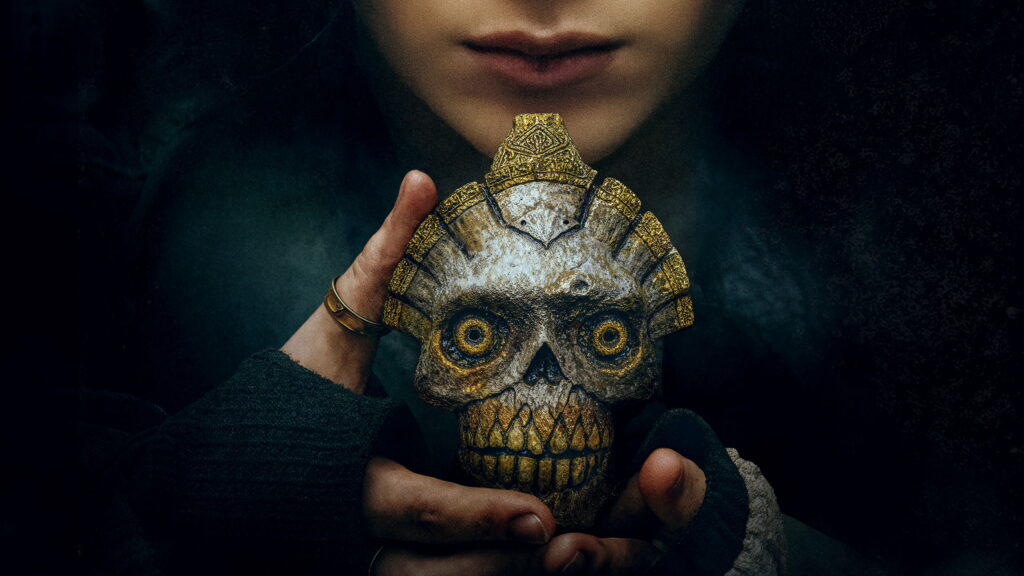
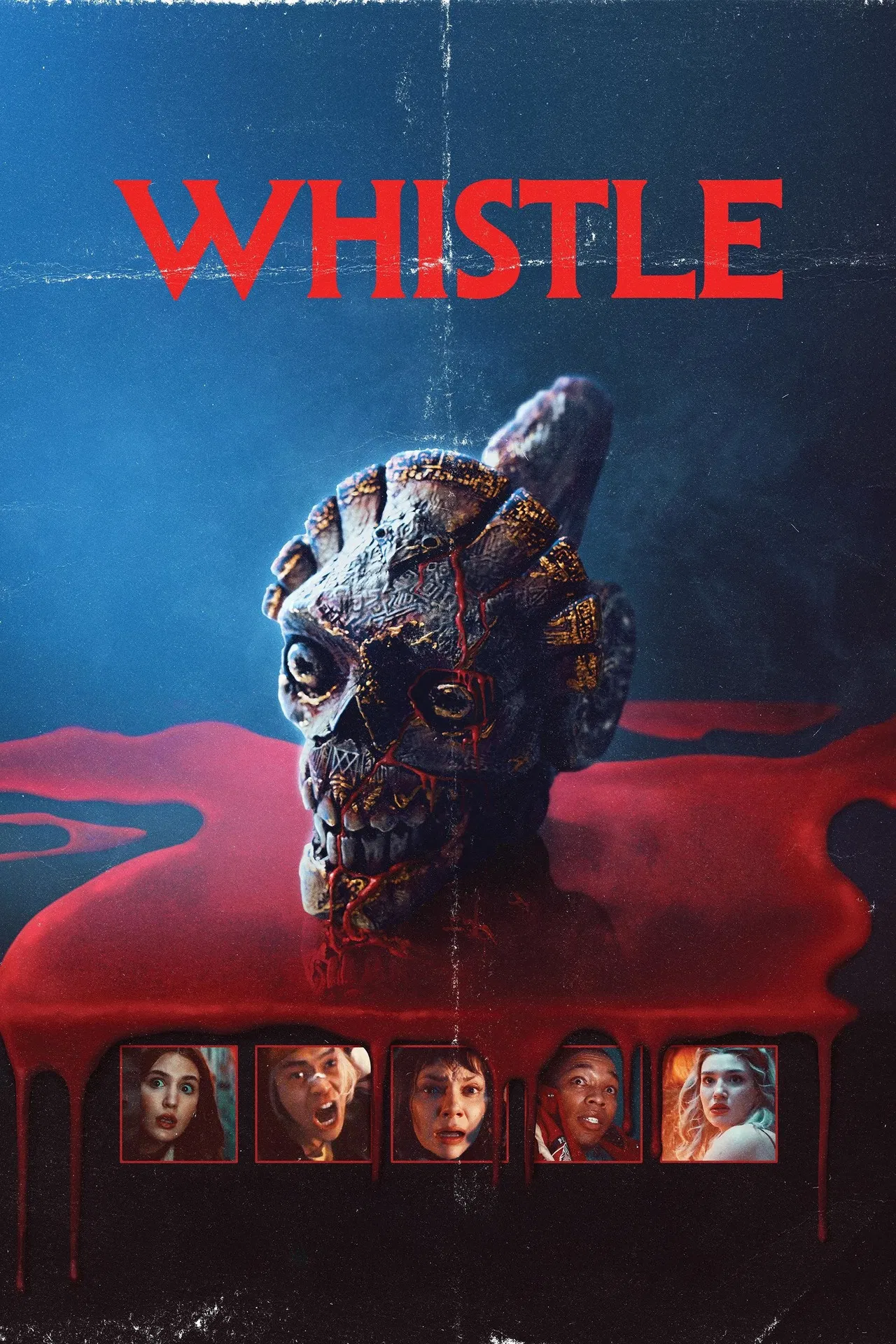
On her first day at the new school she finds an Aztec Death Whistle in her locker and quickly discovers that it belonged to a student who recently died in a horrific way.  She also learns that his best friend, jock Dean (Jhaleil Swaby – White Dog), is not happy that she has been given the locker. The resulting fight results in teacher Mr Craven (Nick Frost – Paul) giving Chrys, Rel, Dean, Dean’s girlfriend – Grace (Ali Skovbye – Breakthrough) and her friend Ellie Gains (Sophie Nelisse – The Book Thief).

During the detention Mr Craven confiscates the whistle and makes the mistake of blowing it. Later in the night the teens steal the whistle back and Grace blows it where all can hear. That sets the wheels in motion and soon all ‘their deaths’ are coming for them.

The plot for Whistle sounds pretty basic but to the credit of Hardy and Egerton have found a way to bring some pretty intense horror and suspense to the film. Some of the teen’s death are creative and have been brought to the screen with the same amazing special effects that Hardy got to work with on The Nun. One of the deaths is actually so creative that it is likely to stay etched in the audience’s mind for a long time.

Egerton’s screenplay is also something special. It feels like he is constantly a few scenes ahead of the audience and nothing has been placed in this film to be filler. For awhile I was wondering about why they had introduced a drug dealing Youth Pastor, named Noah Haggerty (Percy Hynes White – My Old Ass), had been introduced into the mix. But as the plot plays out he becomes an important part of Egerton’s jigsaw puzzle – and when all those pieces fall into place you realise that nothing in this film happens by chance.

While the characters of this film do remain relatable to anyone that has been through High School it also delves into some deep topics and themes. Chrys is actually a recovering drug addict who is proud of the fact that she has got herself sober so when she sees her ‘death’ coming for her is depicted with a syringe in her arm the screenplay explores what it is like for a recovering addict to face the fear of relapsing. At the same time she is battling her feelings for Ellie which sees her exploring her sexuality – something many teens find themselves facing these days.

That’s why this film is so relatable. As I watched Whistle I found myself thinking things like – I had friends like that at High School or I’ve found myself in that situation. That relatability is what makes this film such a great watch – you love the characters and you don’t want anything to happen to them.

Whistle is one of the best horror films to surface over the past few years. It reveals Corin Hardy as a director to watch while transporting its audience back to the good old days of 90s horror – it is a must see for all horror fans.

Whistle is currently screening in cinemas.

Synopsis

Whistle follows a group of high school students who discover an ancient Aztec Death Whistle hidden inside a locker. After blowing it, they become cursed and are hunted by terrifying manifestations of their own future deaths. As the body count rises, the group races to uncover the whistle’s dark origins before their gruesome fates catch up with them.

They Will Kill You

By Cinema

They Will Kill You

Every now and then a movie comes along that is so difficult to write about that I actually find myself procrastinating about it when I sit down to write about it. I have certainly found that that is the case for the brand new film from director Kirill Sokolov (Why Don’t You Just Die) – They Will Kill You.

One the surface this isn’t such a bad film – in fact if you like violent action films with a tinge of horror you will probably quite enjoy watching it. The issue here is that while you are watching it you begin to release that there is nothing new or different about the film. In fact it feels like nearly every scene is playing homage to another film or a famous director. Even the entire premise of the film feels like he has taken two Keanu Reeves films – Constantine and John Wick – and blended them together.

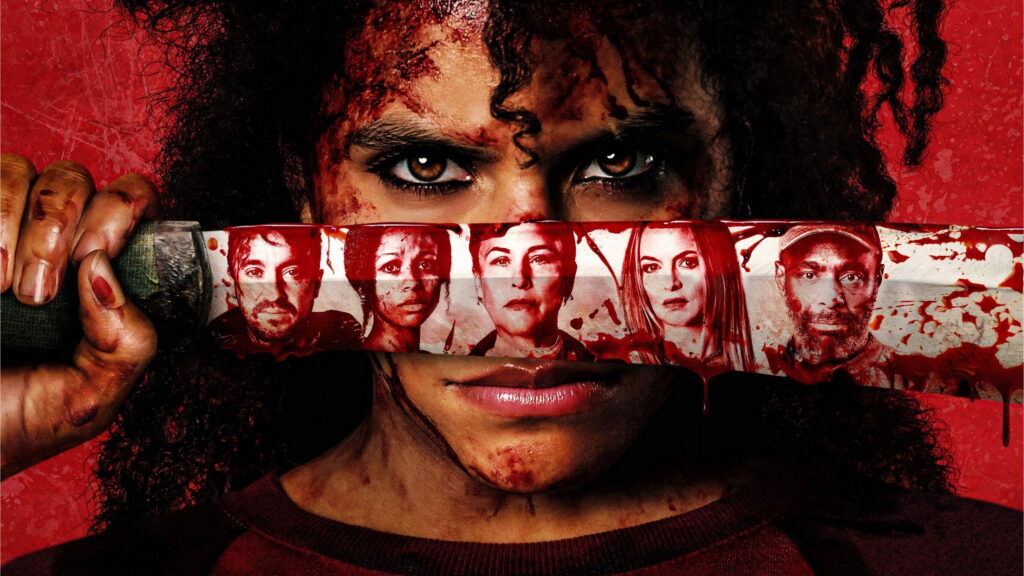
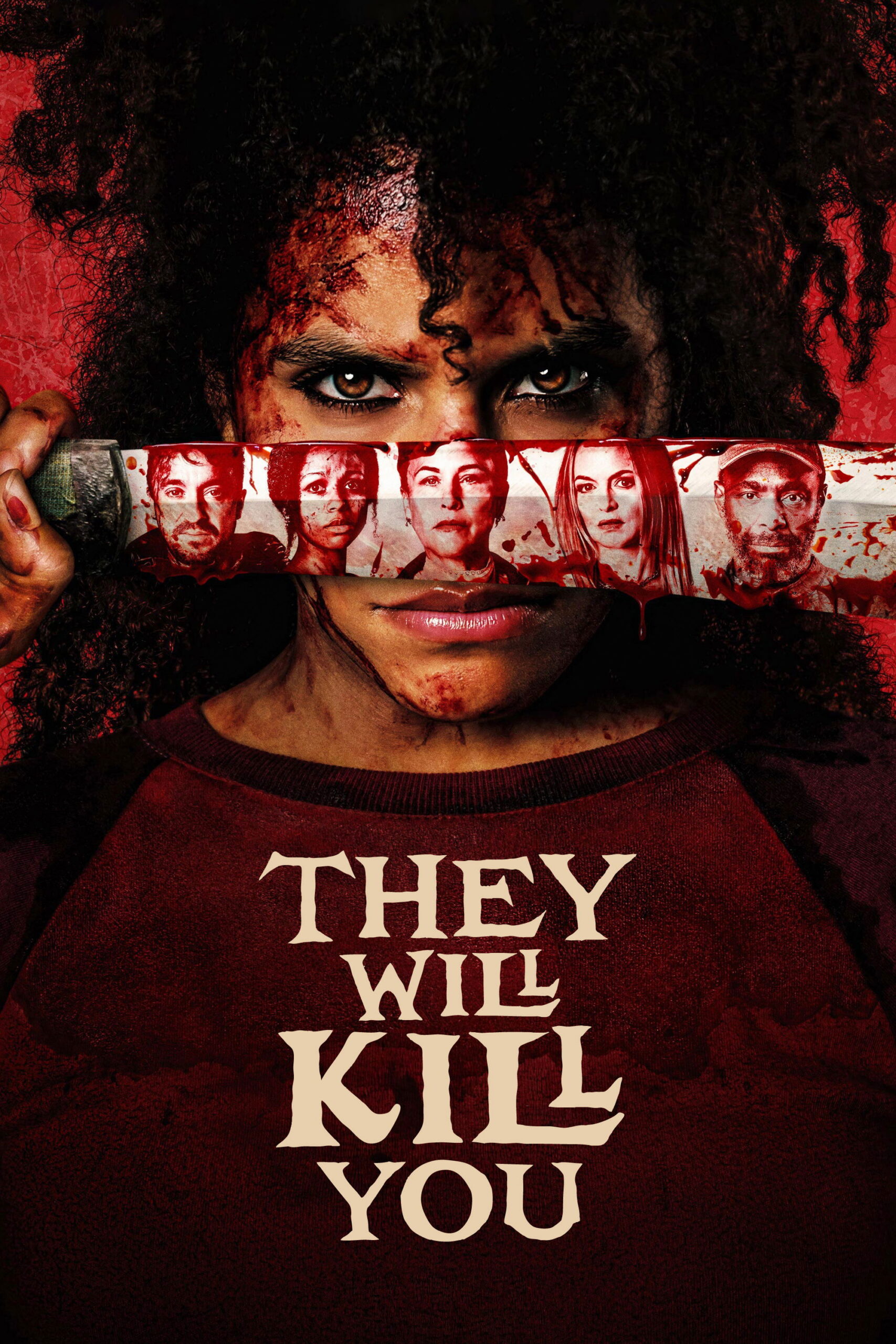
The film itself begins with Asia Reaves (Zazie Beetz – Deadpool 2) trying to escape the clutches of her abusive father alongside her sister Maria (Myha’la – Dead Man’s Wire). As the pair are confronted by their father and his friend Asia opens fire shooting her father. The result of that is Maria being forced to go back to her father while Asia goes on the run. 

Years later Asia turns up to work at an exclusive high-rise apartment building known at The Virgil. When she arrives she is welcomed by building manager, Lily Woodhouse (Patricia Arquette – Stigmata), but soon she begins to realise that things aren’t as they seem.

First of all the staff seem to be acting weird, then when she steps out of the shower someone has left a cryptic message on her bathroom mirror – “THEY WILL KILL YOU!” Then while she sleeps a group of The Virgil’s residents, led by Sharon (Heather Graham – Boogie Nights) and Kevin (Tom Felton – Harry Potter & The Deathly Hallows), break into her room and attack her.

As she fights for her life Asia asks them a serious question – where is her sister Maria? That is when the fight really starts. Asia fights for her life while scouring The Virgil for her sister while trying to outrun those who want her dead.

So far in his career Sokolov has famously emulated his filmmaking heroes with his work but with They Will Kill You it feels like he has gone too far or possibly flown too close to the sun with this one. No matter how much I was enjoying the great battle sequences and creative deaths during the film I just couldn’t get Kill Bill out of my head. As if to cement my suspicions about this being a Quentin Tarantino homage the film even contains a ‘women’s foot close-up shot’ – something that has become somewhat of a trademark with Tarantino’s films over the years.

What Sokolov does have working in his favour though is the skills of Zazie Beetz. With so many similarities to other films Beetz is what makes They Will Kill You memorable. Whether it be the deeply emotional sequences of her begging for the life of her sister or her brilliant ‘combat’ sequences as she goes to war with whatever The Virgil throws at her Beetz (excuse the pun) never misses a beat. Long after you left the cinema it is Beetz’s performance that you will remember whenever someone mentions the film.

Sadly, though she is let down by the screenplay (or lack of) here. Written by Alex Litvak (Predators) the screenplay itself is one of the reasons why They Will Kill You is reminiscent of so many other films. The supernatural element is very similar to Constantine while it feels like some important elements of the ‘realm’ itself are never fully explained. 

Then there is the ridiculously over-the-top pig’s head finale which just takes the film into a new level of craziness. When you compare that to how the Satanic worship storyline was  resolved in Ready Or Not 2: Here I Come you see just how badly Litvak’s screenplay handled things here.

While there is some creativity with the fight sequences of They Will Kill You largely this feels like a film you have seen many times in the past. While the one-person army revenge flick is the in-thing in Hollywood at the moment they only work if the filmmaker and screenwriter involved have an idea that separates their film from the rest.

Synopsis

They Will Kill You follows Asia Reaves, an ex-convict who takes a housekeeping job inside a mysterious New York high-rise while searching for her missing sister. Once inside the building known as The Virgil, she discovers its wealthy residents are part of a violent satanic cult that uses human sacrifice to maintain its dark power, forcing her into a brutal fight for survival.