

Tag

Classic Horror

The Exorcist III: Legion

By Cinema

The Sequel That Crawled Out Of The Shadow Of A Masterpiece

I have a strange relationship with The Exorcist III.

For years, it sat in that awkward little corner of horror history where certain films get dumped because nobody quite knows what to do with them. It wasn’t the original, obviously. Nothing is. And it sure as hell wasn’t Exorcist II: The Heretic, that bizarre fever accident of a film that still feels like somebody tried to make a religious sci-fi epic after eating bad seafood. The Exorcist III was the other one. The George C. Scott one. The hospital corridor one. The one horror fans whispered about like it was some half-buried secret.

But the more I return to it, the more I think it may be one of the most genuinely haunted horror sequels ever made.

Not haunted in the cheap sense. Not in the creaky-door, loud-noise, ghost-in-the-corner sense. Haunted by grief. Haunted by faith. Haunted by the original film. Haunted by the idea that Father Karras’ sacrifice at the end of The Exorcist may not have been the clean victory we all wanted it to be.

And that, to me, is where The Exorcist III gets under the skin.

The original Exorcist is one of the great horror films because it feels like evil has broken into an ordinary room. A mother. A child. A house. A priest losing his faith. Another priest old enough to know exactly what he is facing. It is intimate, ugly, terrifying, and completely serious about the battle it is showing us. William Friedkin directed it like a man trying to make a documentary about Hell.

The Exorcist III cannot recreate that. It would be foolish to even try. The first film had already kicked open the door. The shock of it, the cultural weight of it, the sheer violation of that little girl’s bedroom, all of that belonged to 1973. You cannot just wheel it out again, sprinkle in some pea soup, and expect lightning to hit the same crucifix twice.

William Peter Blatty seemed to understand that.

So instead of giving us a retread, he gives us something stranger. Older. More bitter. A film about what remains after the screaming stops.

At its centre is Lieutenant Kinderman, now played by George C. Scott. And what a piece of casting that is. Scott does not play Kinderman as a tidy movie detective. He plays him as a man whose soul has been worn down by years of murder, bureaucracy, stupidity, grief, and the dawning suspicion that the world may be far worse than even a homicide cop is prepared to admit.

He is cranky. He is funny. He is theatrical. He talks like a man who has too many thoughts and not enough peace. He can be tender one moment and volcanic the next. Scott gives the film a huge, bruised human presence. You feel the weight of him in every scene. He does not glide through the movie. He stomps, mutters, complains, mourns, and rages his way through it.

And somehow, that is exactly what the film needs.
Because The Exorcist III is not really about a demon jumping out from behind the curtains. It is about a man trying to understand why evil keeps repeating itself.

The murders that draw Kinderman back into the nightmare are grotesque, ritualised, and impossible. They appear to be the work of the Gemini Killer, a serial murderer who should not be able to kill anyone because he is already dead. That alone would be enough for a solid horror-thriller. But Blatty is not interested in just making a supernatural serial killer film. He is interested in punishment. In desecration. In the long afterlife of cruelty.

Then comes the horrible revelation: the spirit of the Gemini Killer has been placed inside the body of Father Damien Karras.

That idea is obscene.

And I mean that as praise.

Karras, the man who gave his life to save Regan in the original film, has not been allowed rest. His body has become a jail cell. His sacrifice has been mocked. Evil has taken the most sacred act in the first story and spat on it.

That is why The Exorcist III matters. It does not simply say, “The demon is back.” It says, “What if evil remembered? What if evil held a grudge? What if the victory at the end of The Exorcist was real, but not final?”

That is a much nastier idea than another spinning head.

And then you have Brad Dourif.

Good grief.

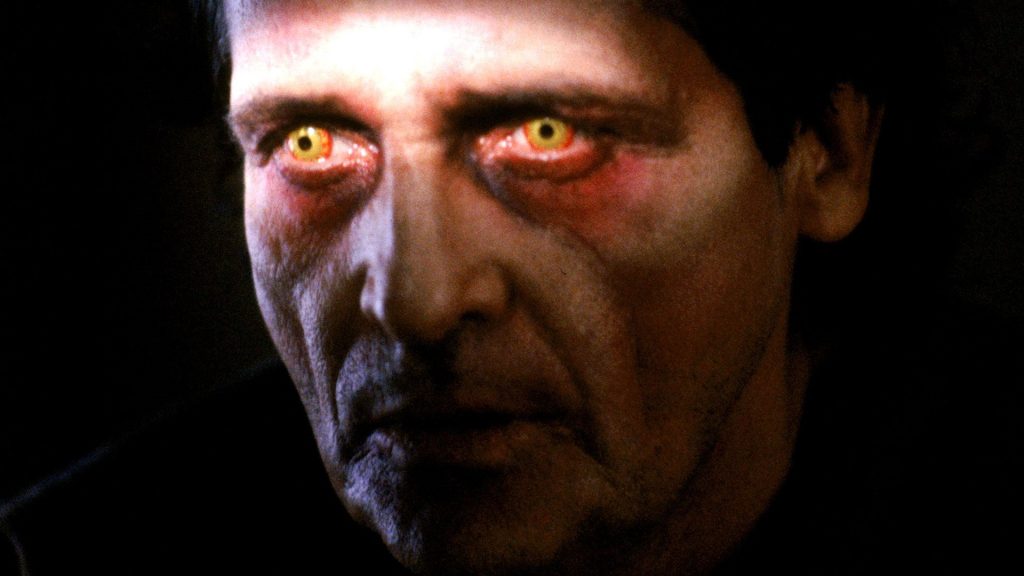
Dourif as the Gemini Killer is one of those performances that feels like it was smuggled in from a stage play being performed in a condemned asylum. He does not just chew scenery. He poisons it. He turns words into weapons. One moment he is whispering like a broken man. The next he is roaring with this awful, smug, theatrical hatred. He makes the cell scenes feel dangerous even when he is just sitting there.

The brilliance of Dourif’s performance is that he understands vanity. The Gemini Killer is not frightening because he is physically powerful. He is frightening because he wants to be admired for his evil. He wants an audience. He wants authorship. He wants his crimes to have style. That makes him pathetic, but it also makes him revolting.

There is a particular kind of evil that cannot stand being ignored. Dourif nails it.

Jason Miller’s presence hangs over the film as well, even though the production history around Karras and Patient X is messy. But emotionally, it works. Every time Karras seems to surface through the horror, you remember the ending of the original film. You remember him taking the demon into himself. You remember him throwing himself down those steps. You remember that this man already paid.

And yet here he is.

Still suffering.

That is what gives the film its ache.

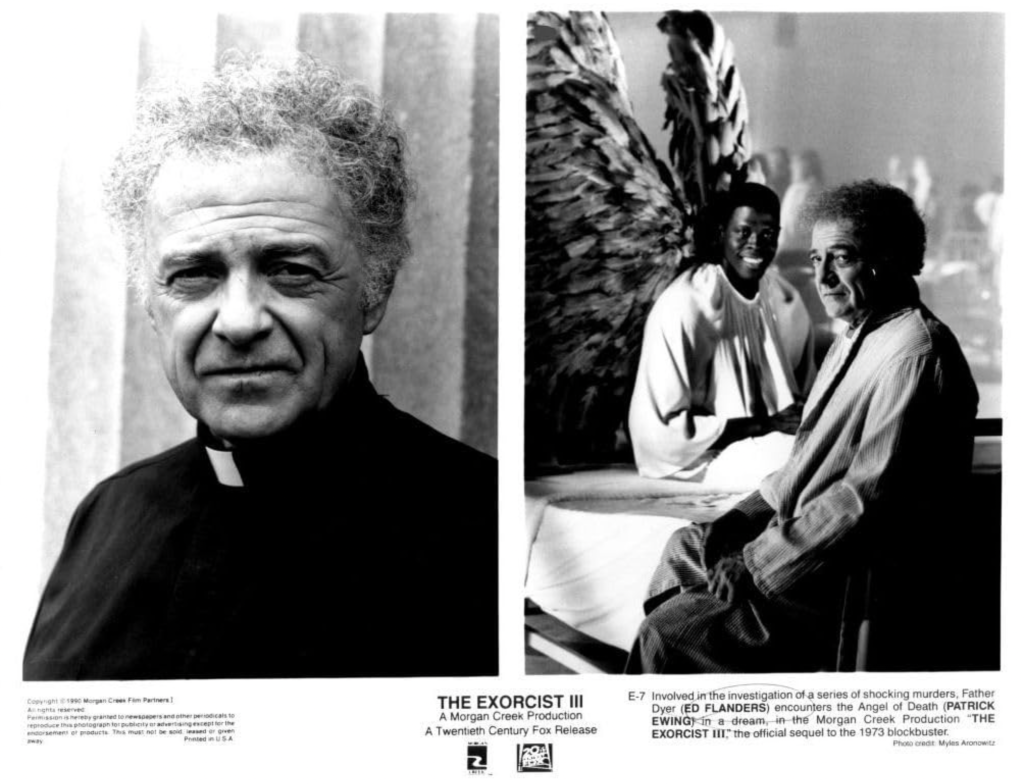
For all its reputation as a cult horror sequel, The Exorcist III is incredibly sad. It is full of old men, sick rooms, institutional corridors, religious doubt, and conversations that feel like they are happening at three in the morning when nobody has the strength to lie anymore. Even the humour has a tiredness to it. Kinderman and Father Dyer have this lovely, lived-in friendship, full of bickering and warmth. They talk about movies and food and the absurdity of existence. They feel like real old friends, not screenwriting devices.

That makes what happens later feel like a violation.

The horror in this film often comes from desecration. Bodies are desecrated. Faith is desecrated. Friendship is desecrated. Karras himself is desecrated. It is not about blood for blood’s sake. It is about the humiliation of the sacred.

That is very Blatty.

Blatty’s Catholicism was not decorative. It was not there for spooky wallpaper. His work is full of anguish over the existence of evil, but also a stubborn belief that goodness matters even when it looks ridiculous, even when it loses, even when it is exhausted. That is one of the reasons I love both The Exorcist and The Exorcist III. They do not treat evil like a cool aesthetic. Evil is not fun in these films. Evil is cruel, vain, parasitic, and childish. It breaks things because it cannot create anything worth loving.

That is a far more serious view of evil than most horror films are willing to offer.

Of course, we have to talk about the scare.

The hallway scene.

It has been praised to death, and somehow it still deserves every word. A nurse doing her rounds. A static corridor. Normal movement. Silence. Doors. Waiting. Waiting a little longer than is comfortable. Then that sudden white figure coming in with the shears.

It is a perfect jump scare because the film earns it. Blatty does not just crank the music and throw something at the lens. He lets the frame breathe until you start to relax into it. You begin watching the wrong things. You begin trusting the routine. And then the film punishes that trust.

It is beautiful, vicious filmmaking.

But I almost hate that the scene has become the film’s calling card, because The Exorcist III is so much more than one famous shock. The atmosphere around that scene is what makes it work. The hospital already feels wrong. Too clean. Too quiet. Too drained of life. The whole place feels like death has learned to use fluorescent lighting.

The film is full of that kind of dread. Not constant terror. Dread. There is a difference. Terror jumps out. Dread sits in the chair beside you and waits.

And this film waits.

That may also be why some people bounce off it. The Exorcist III is talky. Very talky. Characters do not just exchange plot points. They ramble. They argue. They philosophise. They complain about carp. They speak in long, strange, theatrical bursts that would probably be laughed out of a modern studio note session.

But I love that about it.

The talk gives the film character. It makes the people feel as though they existed before the camera arrived. Kinderman does not speak like a streamlined protagonist. Father Dyer does not speak like a stock priest. The Gemini Killer does not speak like a modern horror villain delivering trailer lines. Everyone in this movie has too much going on inside them, and sometimes it spills out in odd ways.

That is human. Messy, yes, but human.

The film itself is messy too. There is no getting around that. The studio interference is obvious. The added exorcism material at the end does not feel entirely organic. Father Morning turns up late, and you can almost hear the executives saying, “Can we please have an actual exorcist in our Exorcist movie?” The final act becomes louder and more conventional than the film wants to be.

But here is the thing: even compromised, it still works.

Not perfectly. But emotionally, it works.

Because the ending comes back to Karras. It comes back to mercy. It comes back to Kinderman, this tired, furious, decent man, having to perform one final act for his friend. That is the part that lands. Not the spectacle. Not the lightning. Not the ritual noise. The sadness.

The sadness is the soul of the film.

That is why I find The Exorcist III so much more valuable than a cleaner, safer sequel would have been. It has fingerprints all over it. Blatty’s fingerprints. Studio fingerprints. Actor fingerprints. Scars. Clashes. Strange choices. Odd humour. Big speeches. Sudden brutality. Moments of genius. Moments that wobble. It feels alive in a way many horror sequels do not.
It feels argued into existence.

And I will take that any day over a slick franchise product that knows exactly where every scare goes and has nothing rattling around inside its head.

The other thing that strikes me more and more is how much The Exorcist III feels like a bridge between eras. It has the moral seriousness of 1970s horror, the serial killer dread that would dominate parts of the 1990s, and the psychological moodiness that later horror would try to dress up as prestige. It is not fashionable. It does not feel engineered for teenagers on a Friday night. It feels like a grim little sermon delivered by a man who has had enough of easy answers.

And maybe that is why it has aged so well.

The original Exorcist will always stand alone. It is one of the monuments. You do not improve it. You do not replace it. You stand in its shadow and hope you brought something worth saying.

The Exorcist III did.

It brought grief. It brought rage. It brought Brad Dourif in a cell, tearing language apart. It brought George C. Scott barking at the darkness like he could bully Hell into explaining itself. It brought back Damien Karras, not for a cheap cameo, but as a wound reopened. It brought one of the greatest scares in horror history. It brought a strange, bruised, deeply religious sadness that no other sequel in this series has come close to matching.

For me, that is the reason the film lasts.

Not because it is flawless. It is not.

It lasts because it feels like somebody meant it.

There is conviction in it. Pain in it. A real anger at evil. A real love for the characters who have been damaged by it. And underneath all the murder, possession, police work and studio-mandated exorcism, there is a question that has been sitting there since the first film:

What does a good man do when the Devil refuses to leave the room?

In The Exorcist, Father Karras answers by sacrificing himself.

In The Exorcist III, Kinderman answers by remembering him.

That is why I keep going back to it. Not just for the scare. Not just for Dourif. Not just because it is underrated, although it is. I go back because it understands that horror is not only about the moment evil appears.

Sometimes it is about what evil leaves behind.

And The Exorcist III is absolutely covered in fingerprints.
Synopsis:

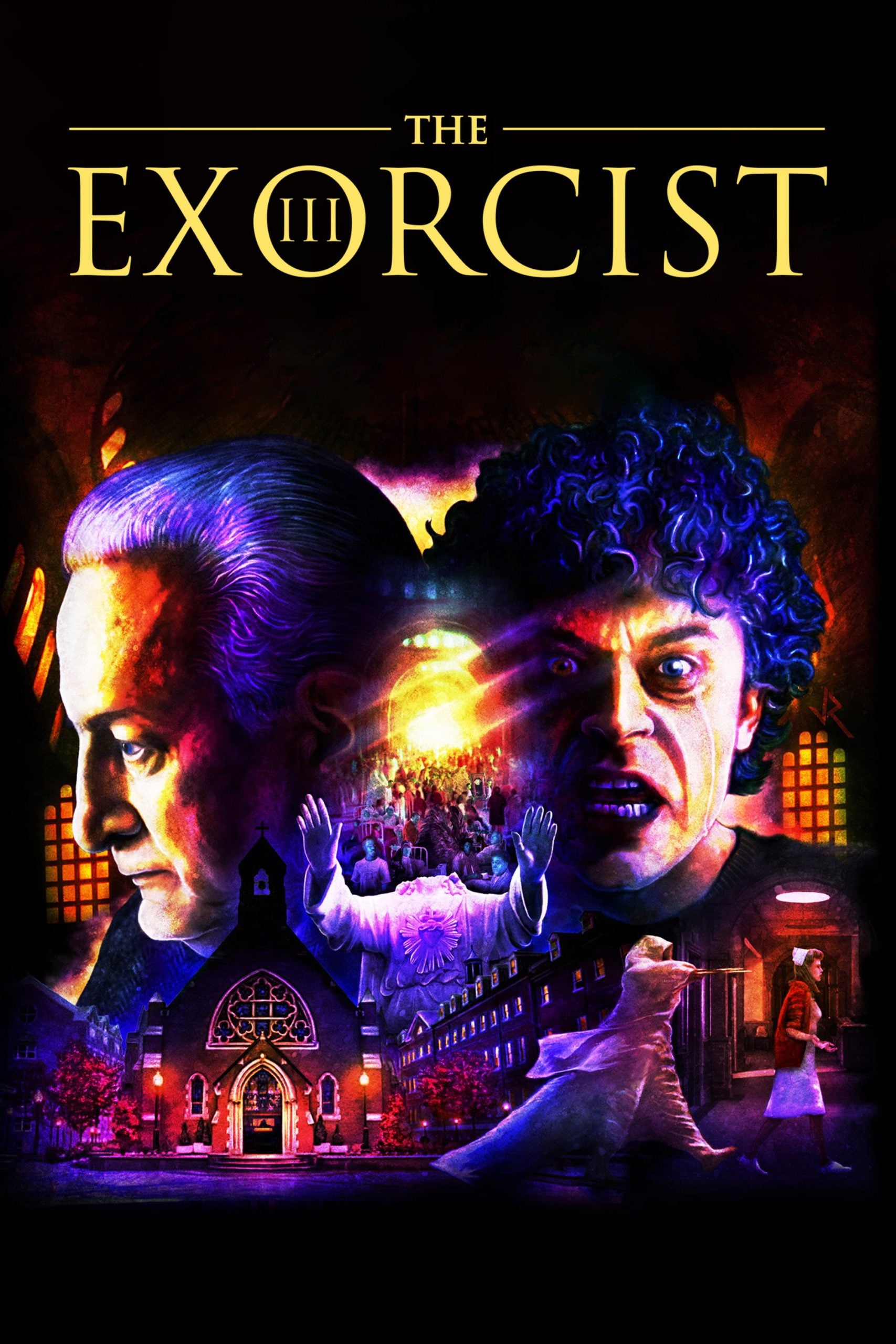
The Exorcist III: Legion follows Lieutenant Kinderman as he investigates a series of brutal murders in Georgetown that appear to mimic the work of the long-dead Gemini Killer. His search leads him to a psychiatric ward, where a mysterious patient bears a horrifying connection to Father Damien Karras, the priest who sacrificed himself at the end of The Exorcist. As Kinderman digs deeper, he discovers that evil has not vanished at all. It has simply waited, wearing a dead man’s face and turning Karras’ final act of faith into one last cruel torment. A grim, intelligent and deeply unsettling sequel, the film blends supernatural horror, serial killer dread and spiritual anguish into a story about faith, grief and the terrible things evil leaves behind.

The Legend Of Bela Lugosi

By Cinema

The Man Who Became Dracula

Bela Lugosi was born Béla Ferenc Dezső Blaskó on October 20, 1882, in the small town of Lugos in the Kingdom of Hungary, now Lugoj in modern-day Romania. The town itself would later become inseparable from his identity, because “Lugosi” literally means “from Lugos.” Long before he became cinema’s most famous vampire, he came from a rigid, conservative household shaped by discipline, religion, and the social tensions of late 19th century Eastern Europe.

His father, István Blaskó, worked as a banker and expected strict obedience from his children. Accounts from those who knew Bela later in life suggest the relationship was tense and authoritarian. Bela did not grow up in an artistic or bohemian environment. The family valued structure, respectability, and hard work. His mother, Paula de Vojnich, reportedly provided more warmth and emotional balance inside the home, but the household overall was still deeply traditional. Bela was the youngest of four children, and from an early age he showed signs of rebellion against authority.

The Hungary Bela grew up in was politically unstable beneath the surface. National identity, class division, and social unrest simmered throughout the Austro-Hungarian Empire. These tensions would later shape his politics and worldview. As a child, however, Bela was more interested in imagination and performance than academics. He disliked school and reportedly struggled with formal education. He eventually left school as a teenager, which deeply disappointed his father.

One of the most important aspects of Lugosi’s childhood was his fascination with storytelling and theatre. In the late 1800s, traveling theatrical productions moved through towns across Hungary and Transylvania, bringing melodrama, folklore, gothic literature, and romantic tragedy to rural audiences. Young Bela became obsessed with these productions. The theatricality that later defined Dracula was rooted in these early experiences. He admired actors not simply for fame, but because they seemed larger than life. Theatre represented escape from the constraints of his upbringing.

As a teenager he ran away from home several times. This was not a symbolic act of teenage rebellion. It was literal. He wanted independence and refused to accept the path his father envisioned for him. During these years he worked odd jobs including factory labor and mining work. The physical hardship mattered because it gave him an outsider mentality he carried throughout his life. Unlike many polished stage actors of the era who came from privilege or formal education, Lugosi built himself from almost nothing.

There is also an important regional influence that shaped his future image. Lugosi grew up geographically close to the region associated with vampire folklore and superstition. Even though Dracula was an Irish invention by Bram Stoker, Western audiences later connected Lugosi’s accent and Eastern European background with “authentic” gothic mystery. As a child, Bela would have grown up hearing local legends, folk stories, and rural superstitions common throughout Hungary and Transylvania. Death rituals, religious imagery, and fear of the supernatural were woven into everyday life in many villages during that era. This atmosphere later became part of his screen presence even if indirectly.

By his late teens he was already gravitating toward acting troupes and small theatre companies. He adopted the stage surname “Lugosi” as a way of reinventing himself and tying his identity to his birthplace. Reinvention became a recurring theme throughout his life. Bela Lugosi was not born as the aristocratic, hypnotic figure audiences later saw onscreen. He constructed that identity piece by piece through ambition, performance, and survival.

His difficult childhood also left emotional scars. Throughout adulthood, Lugosi often seemed caught between pride and insecurity. He desperately wanted recognition as a serious actor, not merely a horror novelty. Many biographers trace this tension back to his early life, where approval was difficult to earn and rebellion came with consequences.

What makes Bela Lugosi’s childhood so compelling is how unlikely his eventual rise truly was. A boy from a strict provincial Hungarian family, with limited education and few advantages, would eventually become one of the most recognizable faces in horror history. Yet even at the height of fame, traces of that young outsider from Lugos never disappeared. The accent remained. The intensity remained. The hunger to transform himself remained. Those elements began long before Dracula ever stepped from the shadows.

Bela Lugosi’s path into film was anything but immediate. Before Hollywood ever discovered him, he spent years on the Hungarian stage developing the dramatic intensity that later became his trademark. In the early 1900s he worked with regional theatre companies before eventually earning roles at the National Theatre of Hungary, a significant achievement for someone with little formal education. He performed in classical dramas and romantic roles, often playing soldiers, aristocrats, or emotionally tortured men. At this stage there was no indication he would become permanently associated with horror.

His earliest film appearances came during the silent era in Hungary around 1917. These films are largely lost today, but they showed Lugosi experimenting with cinema at a time when motion pictures were still developing as an art form. He appeared in romantic dramas, adventure stories, and patriotic productions during World War I. The collapse of the Austro-Hungarian Empire and political turmoil following the war changed everything. Lugosi became involved in actors’ unions and political activism during the short-lived Hungarian Soviet Republic of 1919. When the government fell, many associated with it faced persecution. Lugosi fled Hungary and spent time in Germany before eventually immigrating to the United States in the early 1920s.

America was not immediately welcoming. Lugosi arrived speaking very little English and had to rebuild his career from scratch. He worked in immigrant theatre circles, particularly among Hungarian-speaking communities in New York. His heavy accent, which later became legendary, initially limited opportunities in mainstream productions. Yet the very thing Hollywood viewed as a problem eventually became his greatest weapon.

The breakthrough came on stage rather than film. In 1927 Lugosi was cast in the Broadway adaptation of Bram Stoker’s Dracula. His performance stunned audiences. He played the Count not as a snarling monster but as an elegant predator. Calm. Hypnotic. Controlled. He used stillness and voice in ways that felt unsettlingly intimate. Critics and audiences became fascinated with him. The production ran for hundreds of performances and turned Lugosi into a sensation.

Universal Pictures eventually adapted Dracula into film in 1931. Lugosi desperately wanted the role but studio executives initially hesitated. They considered him too foreign and not well known enough for a major production. Some accounts suggest he even accepted a relatively small salary just to secure the part. The gamble changed horror cinema forever.

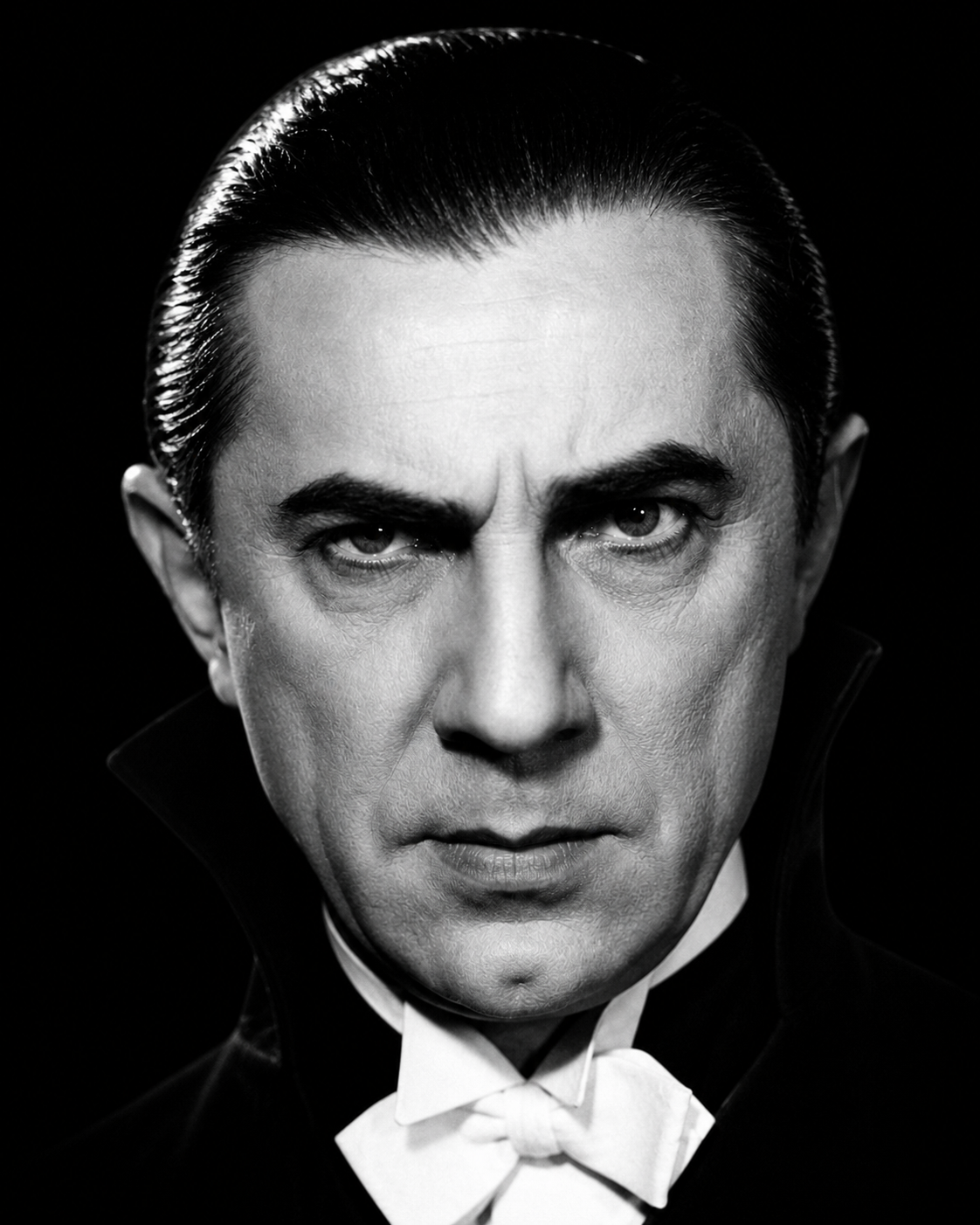
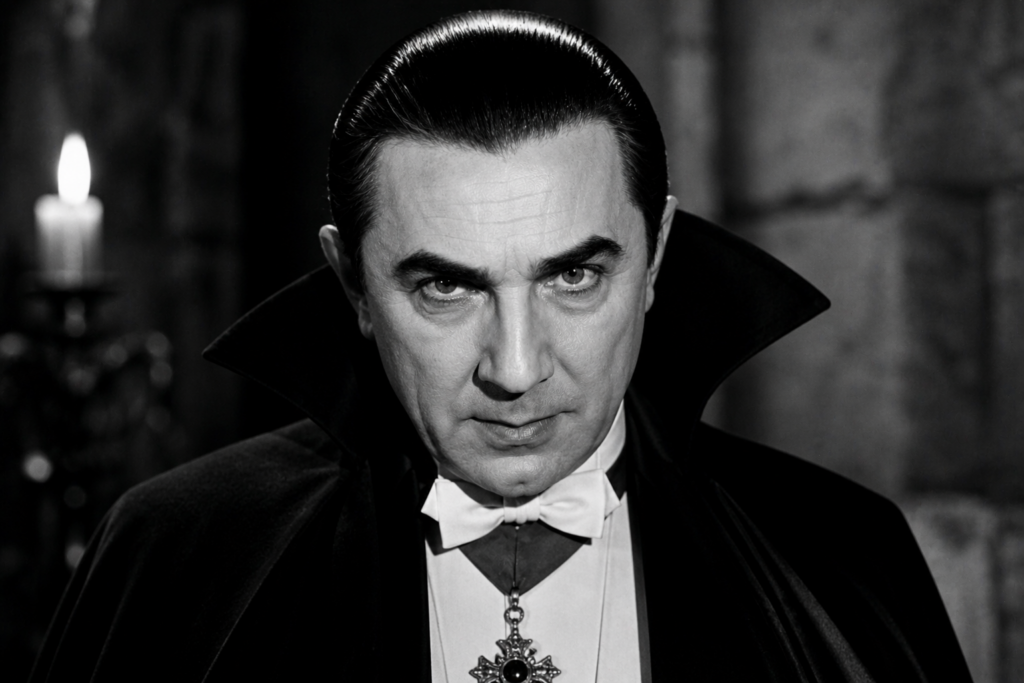
Dracula (1931) became one of the defining films of the Universal monster era. Directed by Tod Browning, the film was atmospheric, theatrical, and strange compared to later horror movies. Lugosi dominated it completely. His thick Hungarian accent, piercing stare, formal movements, and measured delivery created a vampire unlike anything audiences had seen before. Lines such as “I never drink… wine” became immortal largely because of how he delivered them. The cape, slicked-back hair, medallion, and aristocratic demeanor all became foundational vampire imagery for generations afterward.

The success of Dracula should have made Lugosi a major Hollywood star across many genres, but the industry quickly trapped him inside horror and “foreign villain” roles. Studios saw him less as a versatile actor and more as a novelty. Lugosi resisted this typecasting because he considered himself a serious dramatic performer. Nevertheless, horror kept pulling him back.

In Murders in the Rue Morgue (1932), he played the deranged Dr. Mirakle, a scientist obsessed with grotesque experiments involving apes and human blood. The film allowed Lugosi to lean into madness and theatricality. White Zombie (1932) followed soon after and became one of the earliest feature-length zombie films ever made. Lugosi played Murder Legendre, a sinister voodoo master controlling the dead through hypnotic power. His wide-eyed performance remains one of the eeriest of his career and heavily influenced later horror villains.

Throughout the 1930s Lugosi became one of Universal’s defining horror faces alongside Boris Karloff. The two actors were often presented as rivals, though reality was more complicated. Karloff generally received stronger scripts and more prestigious productions after Frankenstein became a massive success. Lugosi reportedly resented this imbalance. He had famously rejected the Frankenstein monster role because he disliked the idea of heavy makeup and mute performance. That decision haunted him for years because Karloff’s career exploded afterward.

The studio paired the two men together in several films including The Black Cat (1934), The Raven (1935), and Son of Frankenstein (1939). These movies became landmarks of gothic horror. The Black Cat in particular stands out because it feels psychologically dark and unusually modern for its time. Lugosi plays a deeply traumatized man seeking revenge against Karloff’s satanic architect. Their onscreen chemistry created tension that audiences loved.

By the late 1930s and early 1940s, however, Lugosi’s career had begun declining. Horror films themselves were increasingly viewed by studios as lower-budget entertainment. Lugosi often found himself in weaker productions with limited resources. Yet even in lesser films, he brought intensity and dignity to roles that could easily have become ridiculous.

One of his strongest late performances came in The Wolf Man (1941), where he played the gypsy Bela who passes the curse of lycanthropy onto Lon Chaney Jr.’s character. He later appeared as Frankenstein’s monster in Frankenstein Meets the Wolf Man (1943), though much of his dialogue was cut from the final film, leaving the performance awkwardly misunderstood by audiences for decades.

Outside Universal, Lugosi worked constantly because he needed money. Financial problems, career frustration, and chronic pain eventually contributed to a morphine addiction after being prescribed medication for leg injuries and exhaustion. By the early 1950s he was no longer viewed as a major star by Hollywood, though horror fans still adored him.

His final chapter became permanently tied to director Ed Wood. Wood worshipped Lugosi and saw him not as a washed-up relic but as a genuine legend. Together they made films including Glen or Glenda (1953), Bride of the Monster (1955), and footage later used in Plan 9 from Outer Space. These productions were chaotic and low-budget, but they gave Lugosi something Hollywood had largely denied him in later years: affection and central importance.

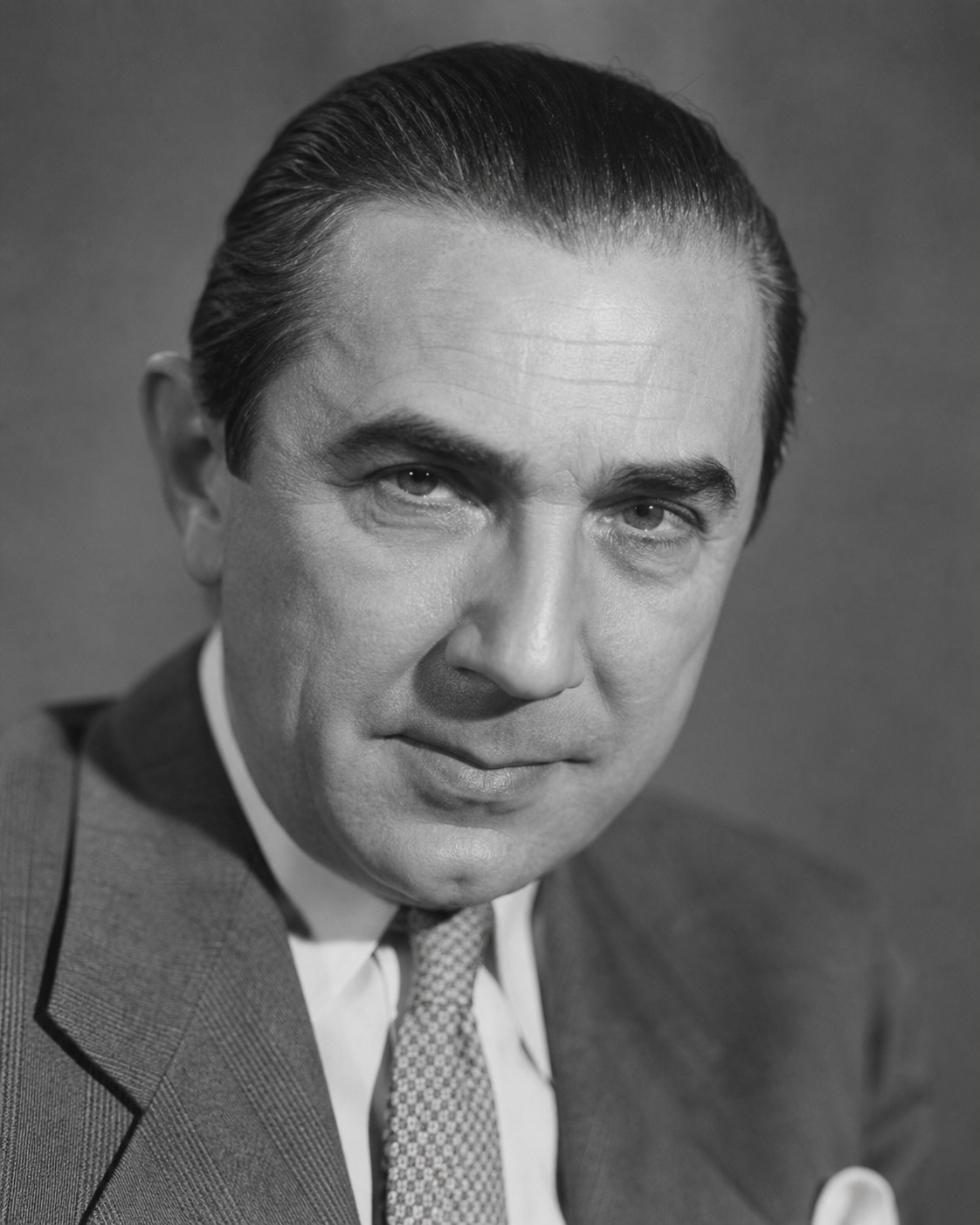
When Bela Lugosi died in 1956 at age 73, he was buried wearing one of his Dracula capes. Whether chosen by family or inspired by legend, the image became symbolic of his entire life. He spent decades trying to escape Dracula’s shadow, yet ultimately the role made him immortal. Long after many technically “greater” actors faded from public memory, Lugosi endured because he created something timeless. He did not simply play Dracula. For millions of people, he became Dracula.

Bela Lugosi’s struggles with drug addiction were tragic, complicated, and deeply tied to both physical pain and the collapse of his Hollywood career. By the time the public became fully aware of his addiction in the 1950s, Lugosi was already a fading star carrying years of frustration, financial pressure, and emotional isolation.

The addiction centered primarily around morphine and later methadone. Unlike many Hollywood addiction stories built around partying or excess, Lugosi’s began through medical treatment. During the 1930s and 1940s he suffered from chronic pain, reportedly linked to severe sciatica and leg injuries sustained over years of physically demanding stage work and film productions. Doctors prescribed painkillers, which at the time were handed out far more casually than they would be today.

What started as pain management slowly became dependence.

Hollywood itself did little to help him. After Dracula made him famous in 1931, Lugosi expected a career filled with major dramatic roles. Instead, studios increasingly treated him as a horror novelty. He watched Boris Karloff rise to prestige status while he himself became trapped in low-budget horror films and stereotyped foreign villain roles. Lugosi took this personally. Friends and biographers later described him as proud, sensitive, and deeply aware that Hollywood no longer respected him.

By the late 1940s the work had dried up significantly. He was earning far less money than audiences probably assumed. At times he accepted almost any role available simply to survive financially. Many of the productions were exploitative and cheaply made. For an actor who once commanded Broadway stages and helped redefine horror cinema, the decline was emotionally brutal.

The addiction worsened during these years. Lugosi reportedly hid the extent of it from many people around him. Unlike alcohol addiction, which often played out publicly in Hollywood circles, morphine dependence could remain hidden behind exhaustion, mood swings, or erratic behavior. There were periods where Lugosi seemed functional and articulate, followed by stretches where he appeared frail and physically diminished.

One important thing often overlooked is that Lugosi still maintained a remarkable level of professionalism despite his struggles. Co-stars frequently noted that he remained polite, theatrical, and committed to performances even when productions themselves were disastrous. He still carried himself with the elegance and old-world formality that had defined him since the Dracula years.

His addiction became public knowledge in 1955 when he voluntarily entered treatment at the Metropolitan State Hospital in California. This was a major moment because celebrity addiction was rarely discussed openly during that era. Lugosi’s decision to seek help publicly required courage. Newspapers covered the story heavily, often with a mix of sympathy and sensationalism. Some articles portrayed him almost like a fallen gothic figure, blurring the line between the man and the Dracula persona that had followed him for decades.

After treatment, Lugosi genuinely tried to rebuild himself. He appeared on television interviews speaking candidly about recovery. In one famous appearance he openly acknowledged his addiction in front of a national audience, something very unusual for the mid-1950s. There was vulnerability in these moments that audiences had rarely seen from him before.

Around this same period he continued working with Ed Wood, the eccentric filmmaker who idolized him. Their relationship has often been misunderstood or mocked because of the bizarre nature of Wood’s films, but there was genuine loyalty between them. Wood gave Lugosi work when much of Hollywood had abandoned him. Lugosi, in turn, seemed grateful simply to still be performing.

Sadly, his health continued declining. Years of addiction, stress, financial instability, and aging had taken a severe toll. Bela Lugosi died of a heart attack on August 16, 1956, at the age of 73.

One reason Lugosi’s addiction story still resonates is because it feels inseparable from the darker side of old Hollywood itself. He was a pioneering immigrant actor who created one of cinema’s most enduring icons, yet the industry often discarded him once it no longer knew how to market him. The morphine addiction became part of a larger narrative about isolation, typecasting, physical suffering, and the psychological cost of fame.

Even so, his legacy survived far beyond those final difficult years. Modern audiences tend to remember the hypnotic stare, the cape, the accent, and the elegance. But behind that image was a man who spent much of his life fighting to retain dignity in an industry that repeatedly reduced him to a caricature of his own success.